What Are the Sons of God in Genesis 6? A Biblical Look at a Difficult Passage
Genesis 6 is four verses long and it has generated centuries of debate. The sons of God in Genesis 6 show up, they take wives from among human women, the Nephilim appear, and then immediately God looks at the earth and decides to judge it. Whatever happened here, it wasn’t minor. It sits right at the hinge point between a world multiplying and a world collapsing.
The text doesn’t explain itself. It doesn’t tell you who the sons of God were or what exactly crossed the line. It just tells you that something did — and that the flood followed.
Three serious interpretations have been held by faithful believers for centuries. Each one deserves a straight look.

Before getting into the interpretations, here’s what Genesis 6:1-4 actually says:
“When man began to multiply on the face of the land and daughters were born to them, the sons of God saw that the daughters of man were attractive. And they took as their wives any they chose. Then the LORD said, ‘My Spirit shall not abide in man forever, for he is flesh: his days shall be 120 years.’ The Nephilim were on the earth in those days, and also afterward, when the sons of God came into the daughters of man and they bore children to them. These were the mighty men who were of old, the men of renown.”
Three things are introduced — the sons of God, the daughters of man, and the Nephilim. Then the narrative shifts immediately to God’s verdict on human wickedness and the decision to send the flood.
Something happened here that contributed to judgment. The question is what.ns of God in Genesis 6 for centuries.
View 1 — Heavenly Beings

The oldest interpretation — found in ancient Jewish writings, early Christian teachers, and a significant number of modern scholars — is that the sons of God in Genesis 6 were heavenly beings who crossed a boundary God had established.
The primary reason this view carries weight is the language itself. Everywhere else the phrase “sons of God” appears in the Old Testament it refers to heavenly beings, not humans. Job 1:6 — “the sons of God came to present themselves before the LORD.” Job 38:7 — “the morning stars sang together and all the sons of God shouted for joy.” In both cases the reference is clearly to members of the divine council, not to human beings.
The New Testament adds context. Peter writes in 2 Peter 2:4-5 — “God did not spare angels when they sinned, but cast them into hell… if He did not spare the ancient world, but preserved Noah.” Jude 6 — “the angels who did not stay within their own position of authority… He has kept in eternal chains under gloomy darkness until the judgment.” Both passages place angelic sin in the same era as Noah. Neither explicitly identifies it as Genesis 6, but the connection is close enough that many scholars read them together.
The common objection is Matthew 22:30 — Jesus says angels in heaven do not marry. But that passage is describing angels in their proper state, not angels who have abandoned it. It’s a fair objection. It keeps you from being too dogmatic. It doesn’t settle the question.
This view makes the best sense of the language. It also makes the sin more obviously catastrophic — which fits the severity of the judgment that follows.
View 2 — The Godly Line of Seth
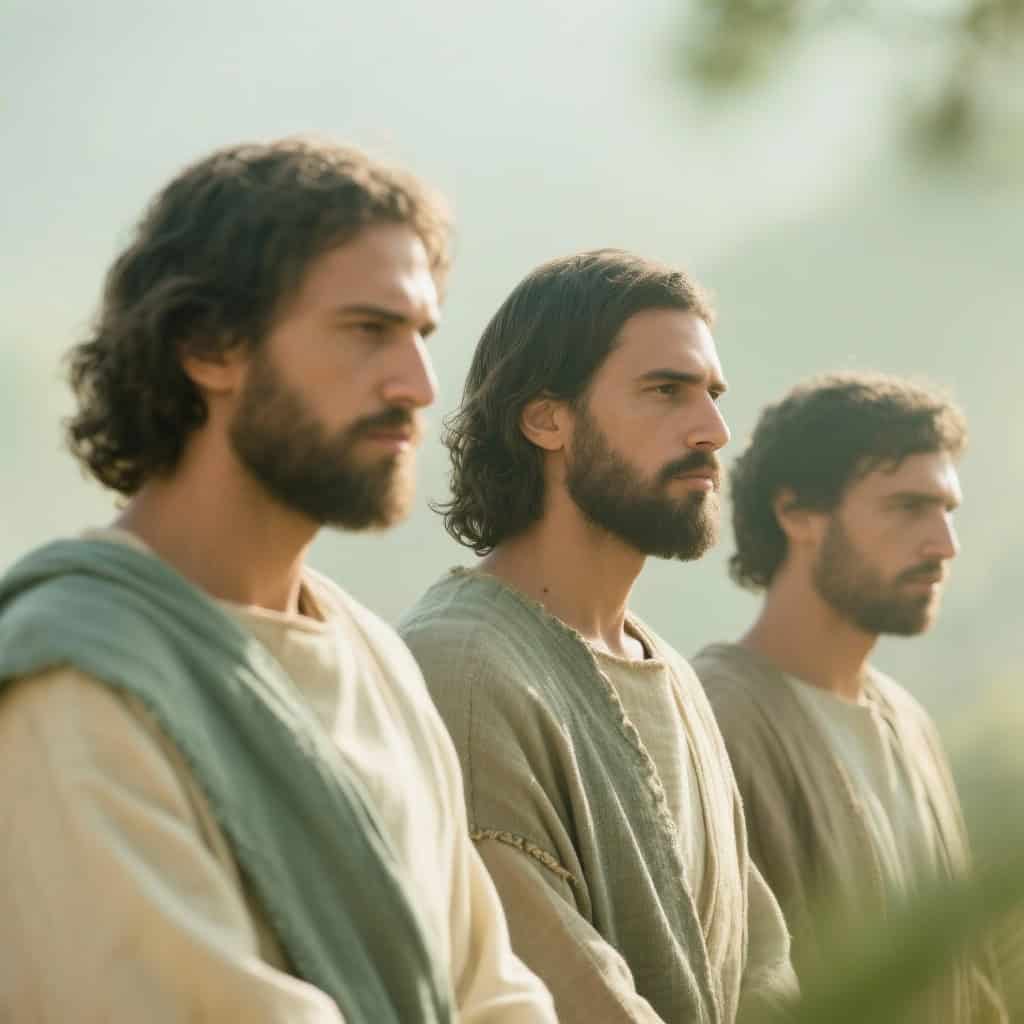
The second interpretation, more familiar in evangelical circles, reads the sons of God as the descendants of Seth — Adam’s godly line — intermarrying with the daughters of Cain’s line and losing their covenant distinctiveness in the process.
The strength of this view is its moral clarity. Covenant compromise is a consistent biblical theme. God’s people mixing with the ungodly and drifting away from him — that pattern runs from Genesis to Revelation. This interpretation fits that pattern cleanly and requires no crossing of a spiritual-human boundary.
The weakness is the language. The phrase “sons of God” just doesn’t carry that meaning elsewhere in the Old Testament. Forcing it to mean “descendants of Seth” requires the phrase to work differently here than it does anywhere else it appears. That’s a significant textual problem the view doesn’t fully resolve.
View 3 — Powerful Human Rulers

The third interpretation reads the sons of God as powerful kings or rulers — men who treated themselves as godlike and took any woman they wanted, the way ancient Near Eastern rulers often did.
The phrase “took as their wives any they chose” does carry the flavor of coercive power — the language of rulers who operate outside the constraints that apply to everyone else. And the ancient world regularly described kings as sons of the gods. This view keeps everything within the human sphere while explaining the violence and corruption that follows.
Its weakness is the same as the Seth view — the phrase “sons of God” sits awkwardly when applied to human rulers in a Hebrew context.
What About the Nephilim?
The Nephilim appear twice in Scripture — here in Genesis 6 and in Numbers 13:33, when the Israelite spies describe the inhabitants of Canaan as Nephilim and say they felt like grasshoppers by comparison.
The word likely means “fallen ones” or refers to warriors of unusual size or strength. Scripture doesn’t give us their dimensions or a detailed account of their nature. It calls them “mighty men” and “men of renown” and moves on.
Whether they were the literal offspring of heavenly beings and human women, or simply powerful warriors who lived in that era, the text doesn’t say enough to be certain. Reading more into it than the text supports is a mistake that generates more heat than light.
(For deeper study, Ligonier offers a solid overview of the main interpretations:
https://learn.ligonier.org/articles/who-are-sons-god-genesis-6)
What the Three Views Agree On
Set the interpretive differences aside and all three views affirm the same things from the text.
A boundary was crossed — willfully, deliberately. Something God had established was violated, and the violation was significant enough to contribute to the decision to judge the world. Marriage was twisted away from its design — these men took women for themselves rather than entering covenant faithfully. And the corruption that followed wasn’t incidental. Genesis 6 is a diagnosis of a world that had pushed past the point of return.
Which view you hold determines how you understand the nature of the crossing. All three views agree that the crossing happened and that it mattered.
The Most Honest Answer
The heavenly beings interpretation has the strongest textual support — the language of “sons of God” in the Old Testament consistently refers to members of the divine council, and Peter and Jude place angelic sin in Noah’s era. But the text of Genesis 6 itself is brief enough that dogmatism is unwarranted.
What Genesis 6 is not doing is satisfying your curiosity about the supernatural. It is warning you about what happens when God’s boundaries are treated as negotiable — by anyone, human or otherwise. The flood is the answer to that question. And right in the middle of the judgment, God preserved a remnant.
That’s the point the passage is making. The identity of the sons of God is the question it raises. Those are not the same thing.
Keep Reading in This Series
Why Are You So Interested in Angels?


Walt Roderick is a Christian writer who cares more about biblical clarity than online applause. He writes to strengthen believers and confront spiritual drift.