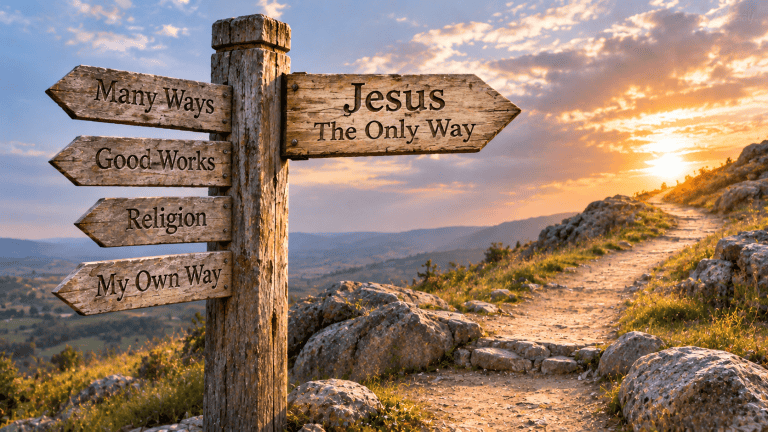
What Is the Gospel of Jesus Christ?
Ask a lifelong churchgoer to explain the gospel in a minute, and you’ll often hear a string of church words. Paul calls it the message by which people are saved (1 Corinthians 15:1–2). If you can’t say what it is, you can’t be sure what you’re trusting, so here is what the gospel of Jesus Christ is, where the Bible spells it out, and what it asks of you.
In one sentence: the gospel of Jesus Christ is God’s promise to forgive everyone who repents of their sin and trusts His Son, because Christ died for our sins, was buried, and was raised on the third day, just as the Scriptures foretold (1 Corinthians 15:3–4; Mark 1:15).All Scripture quotations are from the Legacy Standard Bible (LSB).
What Does the Word “Gospel” Mean?
“Gospel” translates the Greek word euangelion, which means good news.
Centuries before Christ, Isaiah pictured a messenger carrying that kind of news, and Paul later quotes this verse about the people who preach the gospel (Romans 10:15):
“How lovely on the mountains Are the feet of him who proclaims good news… Who announces salvation, And says to Zion, ‘Your God reigns!'” (Isaiah 52:7)
The herald on the mountain carried word of what God had done to redeem Zion, and that’s what a gospel is: news of a rescue someone else accomplished.
The same word names the four books about Jesus’ life, because each of them sets down the one gospel. Mark opens his with “The beginning of the gospel of Jesus Christ, the Son of God” (Mark 1:1).
Here’s how the two uses of the word line up:
| “The gospel” | “The Gospels” | |
|---|---|---|
| What it is | The message: Christ died for our sins and rose again | Four books: Matthew, Mark, Luke, and John |
| How many | One (Galatians 1:6–7) | Four |
| What it does | Announces what God has done to save sinners | Records Jesus’ life, teaching, death, and resurrection |
| Where it’s summarized | 1 Corinthians 15:3–4 | Each tells it from its own vantage point |

Where Does the Bible Define the Gospel of Jesus Christ?
Paul defines the gospel most plainly in his first letter to the Corinthians:
“For I delivered to you as of first importance what I also received, that Christ died for our sins according to the Scriptures, and that He was buried, and that He was raised on the third day according to the Scriptures” (1 Corinthians 15:3–4).
Here’s what each phrase means:
- “Christ died for our sins”: His death dealt with the penalty our sins earned.
- “He was buried”: He truly died.
- “He was raised on the third day”: Death couldn’t hold Him.
- “According to the Scriptures”: Paul says it twice. Nothing here was improvised; the Old Testament had promised it.
This is “of first importance,” Paul says, and he received it before passing it on, and many scholars believe verses 3–5 preserve a summary the earliest church was already using in its first years. It sits among the essential Christian beliefs no church can revise.
Near the end of his life Paul is still saying the same thing, telling Timothy to remember Jesus Christ, raised from the dead and descended from David, “according to my gospel” (2 Timothy 2:8).
Why Is the Gospel Good News?
The gospel is good news because the cross lets God forgive guilty people and remain just. The bad news comes first: all have sinned and fall short of the glory of God (Romans 3:23), and a righteous judge can’t pretend otherwise. That’s one reason the gospel still offends people who believe they’re basically good.
Romans 3 explains how God answered the problem. God displayed Christ publicly “as a propitiation in His blood through faith,” a sacrifice that turns away God’s anger against sin, “so that He would be just and the justifier of the one who has faith in Jesus” (Romans 3:25–26). The justifier is the one who declares a person right with Him, the way a judge declares a verdict.
Then comes the exchange: “He made Him who knew no sin to be sin on our behalf, so that we might become the righteousness of God in Him” (2 Corinthians 5:21). Christ was counted guilty of what we did, and the believer is counted righteous with what Christ did. Romans 4:25 ties both halves together: Jesus “was delivered over on account of our transgressions, and was raised on account of our justification.”
That payment was made once, by only one Savior, and there’s no second road to go looking for. And forgiveness comes with life that doesn’t end: the wages of sin is death, “but the gracious gift of God is eternal life in Christ Jesus our Lord” (Romans 6:23).

Is the Gospel in the Old Testament?
Yes. The gospel was promised in the Old Testament, and Paul writes that “the Scripture, foreseeing that God would justify the Gentiles by faith, proclaimed the gospel beforehand to Abraham, saying, ‘All the nations will be blessed in you'” (Galatians 3:8).
The promise goes back further than Abraham. Right after the fall, God told the serpent that the woman’s offspring would strike his head, while the serpent would strike his heel (Genesis 3:15). Christians since the early church have read that verse as the first announcement of the gospel, and the 1689 London Baptist Confession puts it this way:
“God was pleased to give forth the promise of Christ, the seed of the woman, as the means of calling the elect, and begetting in them faith and repentance; in this promise the gospel, as to the substance of it, was revealed” (chapter 20, paragraph 1).
That’s the gospel in seed form: God’s first promise of a Savior, and the means He uses to bring His chosen people to faith and repentance. The promise came in Eden, and Christ fulfilled it.
Is the Gospel About Jesus as King or Jesus as Savior?
The gospel of Jesus Christ announces Him as both King and Savior, and Scripture doesn’t split them apart.
Some writers today argue that the gospel is mainly the announcement that Jesus reigns as King, and that treating it as a message about how to be saved shrinks it. They point out that Jesus Himself went throughout all Galilee “preaching the gospel of the kingdom” (Matthew 4:23).
The New Testament does announce a King. Paul opens Romans by naming Jesus as the descendant of David, “who was designated as the Son of God in power, according to the Spirit of holiness, by the resurrection from the dead, Jesus Christ our Lord” (Romans 1:3–4).
That King is the one who died for sins and rose. Romans 1:16 calls the gospel “the power of God for salvation to everyone who believes,” and that’s why the news of Christ’s reign is good news: He saves the people He rules. Jesus announced the kingdom in Galilee, then went to the cross to bring people into it.

Is Repentance Part of the Gospel?
Repentance is how a person answers the gospel. The gospel announces what Christ did and promises forgiveness to everyone who repents and trusts Him (Luke 24:47), and “repent and believe” is how Jesus told people to receive that promise (Mark 1:15).
So nobody has to clean up before they can come. Repentance means turning from sin toward God, and it pays for nothing: “For by grace you have been saved through faith, and this not of yourselves, it is the gift of God; not of works, so that no one may boast” (Ephesians 2:8–9).
Even the turning comes from God, as the promise in Eden already showed. When the church in Jerusalem heard that Gentiles had believed, they said God had granted them “the repentance that leads to life” (Acts 11:18).
What Makes a Gospel False?
A gospel turns false when it adds a condition to what Christ finished. Paul wrote to the churches of Galatia, “I marvel that you are so quickly deserting Him who called you by the grace of Christ for a different gospel, which is really not another” (Galatians 1:6–7).
The teachers troubling those churches still talked about Jesus. They added circumcision, and Paul warned that anyone who received it as a requirement for being made right with God would gain nothing from Christ (Galatians 5:2–4). He didn’t soften it: if anyone, even “an angel from heaven,” preaches a gospel contrary to the one they received, “let him be accursed!” (Galatians 1:8).
The same pattern shows up today in a few common forms:
| Message | What it adds | Scripture’s answer |
| “Be a good person and God will accept you” | Your own record | No one is justified by works of the Law (Galatians 2:16) |
| “Jesus, plus our rules” | A ritual, a church, or a list required for salvation | Seeking to be justified by law cuts a person off from Christ (Galatians 5:4) |
| “Complete the steps to become worthy” | A lifelong sequence of requirements | God justifies the one who has faith in Jesus (Romans 3:26) |
The Church of Jesus Christ of Latter-day Saints, for example, teaches that the gospel is Heavenly Father’s plan for His children, lived out through faith, repentance, baptism and receiving the Holy Ghost, and enduring to the end, so that a person can become “worthy” to live in His presence. Held up against Galatians 1, a gospel that ends in becoming worthy is a different gospel. Many Latter-day Saints are sincere and kind, and that’s exactly why it’s worth talking over with a Mormon friend.
How Do I Respond to the Gospel of Jesus Christ?
Turn from your sin and trust Christ. When a jailer in Philippi asked what he must do to be saved, Paul and Silas told him to believe in the Lord Jesus (Acts 16:30–31).
Saving faith rests on the person the gospel announces. James says even the demons believe that God is one, and they shudder (James 2:19), so agreeing with the facts leaves a person standing where the demons stand.
If you’re wondering whether you’ve ever really believed this, that question has an answer, and Scripture shows you how to know whether you’re truly saved. And if you’ve never trusted Christ, the invitation is for you today. Jesus said, “Come to Me, all who are weary and heavy-laden, and I will give you rest” (Matthew 11:28).
Stop leaning on your own record. Repent and trust Christ, and rest on what He finished.
Still Have Questions? Let’s Talk
If the gospel of Jesus Christ still raises questions for you, or for someone you love, I’d be glad to hear from you. Send me a note and I’ll answer personally or pray with you about it.
Blessings in Christ, Wally
Common Questions About the Gospel
Three more questions come up once the basics are clear.
Is the gospel the same thing as the Bible?
No. The gospel is the central message the whole Bible points to, which is why the risen Jesus explained to two of His disciples what all the Scriptures said about Him (Luke 24:27).
Why is the gospel named after Jesus Christ?
It’s about Him from start to finish. Paul says God’s gospel concerns His Son (Romans 1:1–3), and Jesus both preached the gospel and is the one it announces (Mark 1:1, 14).
Do Christians still need the gospel after they’re saved?
Yes. Paul told believers in Rome he was eager to proclaim the gospel to them too (Romans 1:15), and he urged believers to go on living in Christ the same way they first received Him (Colossians 2:6).
Keep Reading in This Series
- What Must I Do to Be Saved? Faith, Repentance, Baptism, and Works
- Is Jesus the Only Way to Heaven?
- Why the Gospel Still Offends (And Why That’s a Good Thing)

Walt Roderick is a Christian writer who cares more about biblical clarity than online applause. He writes to strengthen believers and confront spiritual drift.