Annihilationism vs Eternal Conscious Torment: A Biblical Comparison Without Conclusions
Author’s note:
This article does not argue for annihilationism or eternal conscious torment. Its purpose is to explain how the two views arise, where they agree, where they diverge, and why the debate exists at all. The goal is clarity, not persuasion, so readers can assess the issue on biblical grounds rather than inherited assumptions.
Why This Comparison Matters
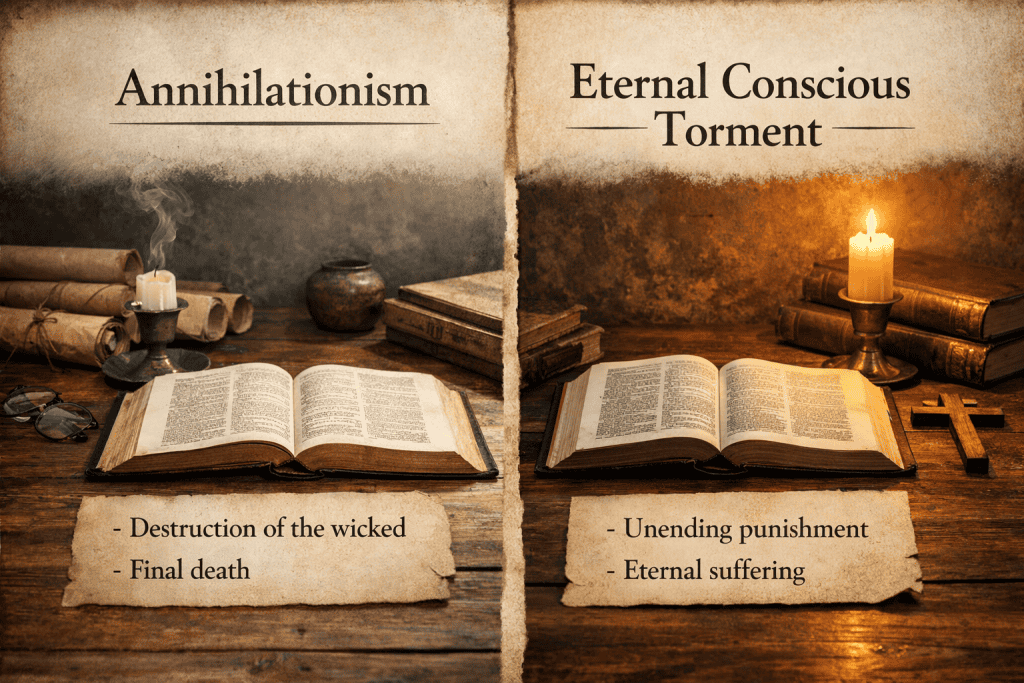
Few theological debates generate as much certainty with as little shared definition as the debate over annihilationism and eternal conscious torment. Many Christians assume the issue is settled simply because they have heard one position more often than the other.
Scripture itself does not encourage that kind of confidence.
Both views claim to take the Bible seriously. Both appeal to God’s justice. Both insist they are honoring the words of Jesus and the apostles. Yet they arrive at very different conclusions about the final fate of the wicked.
That raises an obvious question. If Scripture is authoritative for both sides, why does the disagreement persist?
The answer is not found in emotional preference or modern discomfort, but in how Scripture’s language of judgment is read, defined, and connected across the biblical canon.
What the Two Views Actually Agree On
Before examining where annihilationism and eternal conscious torment differ, it is important to note how much they share.
Both views affirm that final judgment is real. God does not overlook evil, excuse rebellion, or treat sin as insignificant. Judgment is personal, deliberate, and just. Scripture does not portray it as symbolic or optional.
Both views also affirm that judgment is irreversible in outcome. There is no suggestion in either position that the wicked eventually escape judgment or are restored after it is complete. Whatever judgment means, it is final.
Both positions further agree that salvation is found only in Christ. No one avoids judgment through morality, effort, or religious identity. The disagreement is not about how people are saved, but about what happens to those who are not.
These shared commitments matter. They show that the debate is not between belief and unbelief, but between two attempts to explain Scripture’s own descriptions of judgment.
How Annihilationism Understands Final Judgment
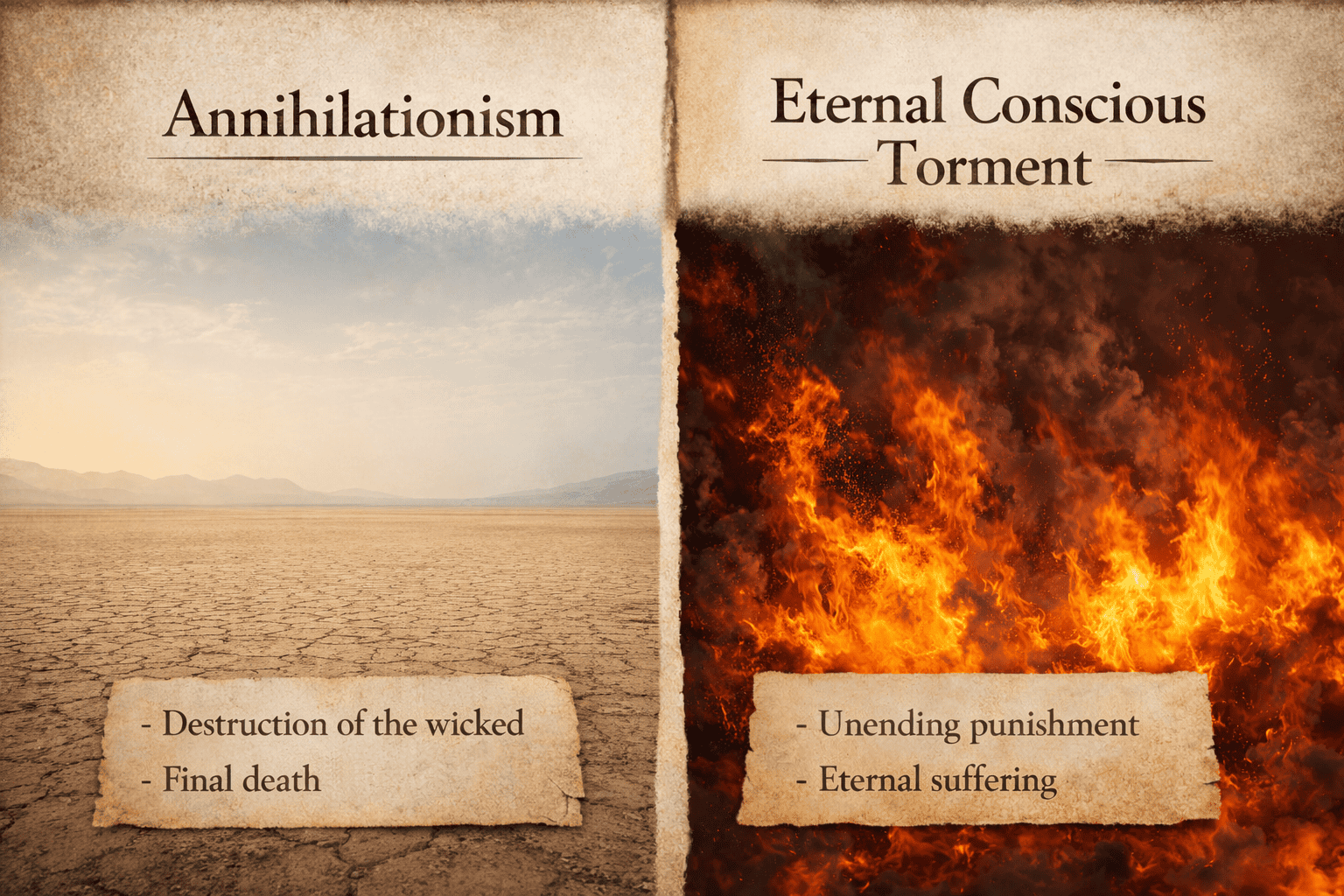
Annihilationism argues that the Bible’s language of death, destruction, and perishing should be understood in their ordinary sense. Judgment results in the end of life, not the continuation of life under punishment.
According to this view, the wicked are judged according to their deeds and then destroyed. They cease to exist. Eternal punishment refers to the permanence of the outcome, not the duration of conscious suffering.
Some annihilationists allow for a period of punishment prior to destruction. That punishment may vary in severity, reflecting God’s justice and proportionality. What annihilationism denies is that punishment itself is everlasting or that the wicked continue endlessly in conscious torment.
In this framework, death is not redefined as separation while existence continues. Death means death. Destruction means destruction. Perishing is final.
Annihilationists often argue that this reading aligns more closely with the Old Testament’s consistent language about judgment and death, where the wicked die and are no more. They also argue that it preserves the seriousness of judgment without requiring eternal conscious suffering.
How Eternal Conscious Torment Understands Final Judgment
Eternal conscious torment understands judgment as resulting in continued existence under punishment. The wicked do not cease to exist but remain conscious forever, experiencing the consequences of their rebellion.
In this view, biblical terms such as death and destruction describe relational separation from God rather than the end of being. The punishment is eternal in duration, not merely in result.
Advocates of eternal conscious torment often emphasize the gravity of sin against an eternal God. They argue that judgment reflects the seriousness of rejecting infinite goodness and authority. From this perspective, ongoing punishment is consistent with divine justice.
This view also appeals strongly to New Testament passages that speak of eternal punishment and unquenchable fire. Eternal conscious torment argues that these descriptions naturally imply continued conscious experience rather than cessation.
Like annihilationism, this view insists it is grounded in Scripture rather than philosophical speculation. The disagreement is not whether God has the right to judge eternally, but whether Scripture teaches that He does so.
Where the Two Views Actually Diverge
When the two positions are placed side by side, the core disagreement becomes clear. It is not first about God’s character or the seriousness of sin. It is about how Scripture’s judgment language is meant to function.
Annihilationism understands judgment as leading to death in the full sense of the word. After judgment, the wicked are destroyed. Conscious punishment may occur, but it does not continue forever.
Eternal conscious torment understands judgment as leading to unending conscious punishment. Death and destruction describe a condition, not an end. The wicked remain under judgment eternally.
This difference turns on definitions rather than emotions. What does Scripture mean by death? What does destruction describe? Does eternal refer to duration, result, or consequence? These questions shape the debate long before individual passages are examined.
There is also a difference in how God’s justice is framed. Annihilationism often emphasizes proportional justice that culminates in final destruction. Eternal conscious torment emphasizes the seriousness of sin and the enduring nature of judgment.
Importantly, neither view denies God’s authority to judge as He wills. The disagreement is not about what God could do, but about what Scripture teaches that He will do.
At this stage, the debate cannot be resolved by appealing to a single verse or instinct. It requires careful attention to how Scripture speaks across its whole witness.
That brings the discussion to its most difficult point.
Why the Hard Texts Cannot Be Avoided
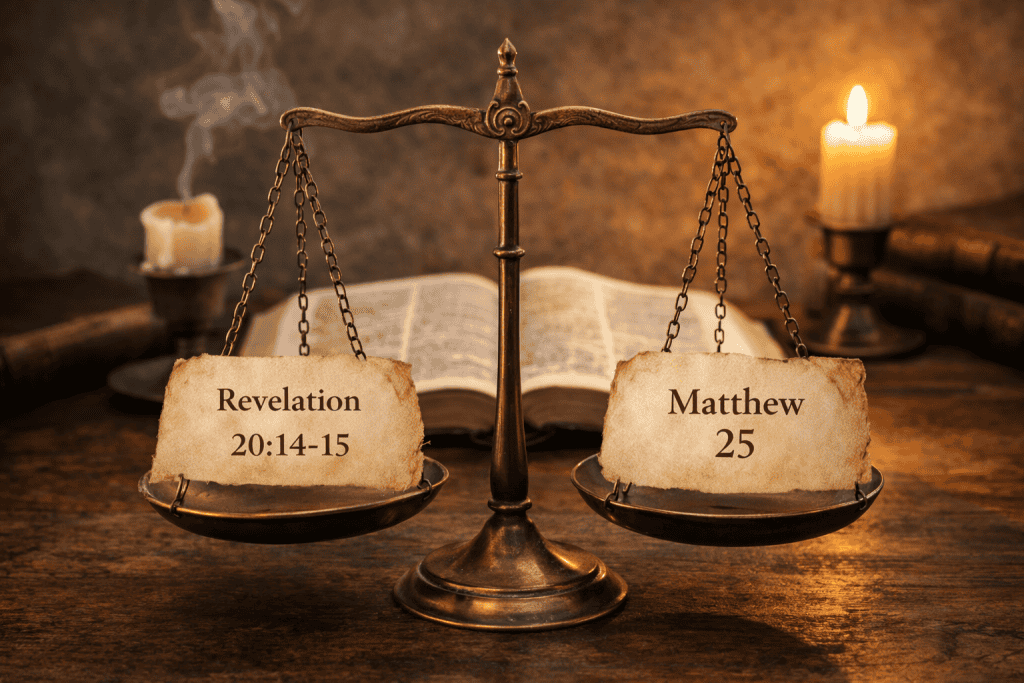
Both views acknowledge that certain biblical passages carry exceptional weight in this discussion. These texts are often cited as decisive, yet they are also the most disputed.
Until those passages are examined carefully, any conclusion remains incomplete. Avoiding them produces shallow certainty. Rushing through them produces confusion.
The debate ultimately stands or falls on how Scripture itself describes final judgment when it speaks most directly.
That is where this discussion must go next.
Where the Discussion Goes Next
This article has compared annihilationism and eternal conscious torment at the level of definition, structure, and biblical language. It has not argued for either position.
The next article will focus on the specific texts most often cited as decisive, including passages from the Gospels and Revelation. Those texts will be examined carefully, without dismissing their weight or forcing premature conclusions.
Only then can the debate be assessed on biblical grounds rather than inherited assumptions.

Walt Roderick is a Christian writer who cares more about biblical clarity than online applause. He writes to strengthen believers and confront spiritual drift.