Free Will vs Predestination: What the Bible Actually Teaches
The debate over free will vs predestination has divided Christians for centuries. It shows up in Reformation history, in denominational distinctions, in seminary classrooms, and in casual conversations after church. Most people have a position. Fewer have thought through why.
The reason the debate persists is not that the Bible is unclear. It is that what the Bible says is difficult to accept. Both sides of this debate cite Scripture. But one side follows the text where it leads. The other stops short of the places the text becomes uncomfortable.
This is an attempt to follow it all the way.
Why the Question Matters
Before getting into the texts, it is worth understanding what is actually at stake in the free will vs predestination debate. This is not an abstract theological argument with no practical consequences.

How you answer this question shapes how you understand the gospel — whether salvation is ultimately God’s work or a cooperative effort between God and the human will. It shapes how you evangelize — whether you are trying to persuade someone across a line or proclaiming truth and trusting God to work. It shapes your assurance — whether your standing before God depends on the persistence of your faith or the faithfulness of God’s electing purpose.
These are not minor differences. They touch the center of what Christianity is.
What Predestination Actually Means
Predestination gets misrepresented constantly, so it needs a clean definition before the texts are examined.
Predestination does not mean that God arbitrarily assigns people to heaven or hell with no regard for justice. It does not mean that human choices are meaningless or that responsibility disappears. It does not mean that the gospel should not be proclaimed to everyone.
What predestination means, in the biblical sense, is that God’s sovereign purposes determine outcomes — including the outcome of who comes to saving faith — and that this determination is not based on foreseen human merit or foreseen human choice, but on God’s own will and purpose.
Ephesians 1:4-5 is the clearest statement: God “chose us in him before the foundation of the world… having predestined us for adoption to himself as sons through Jesus Christ, according to the purpose of his will.” The choosing happened before creation. Before any human act existed to foresee. The basis is God’s will, not human decision.
What the Bible Says About Predestination
Romans 9 is the passage that decides this debate if you are willing to read it on its own terms.
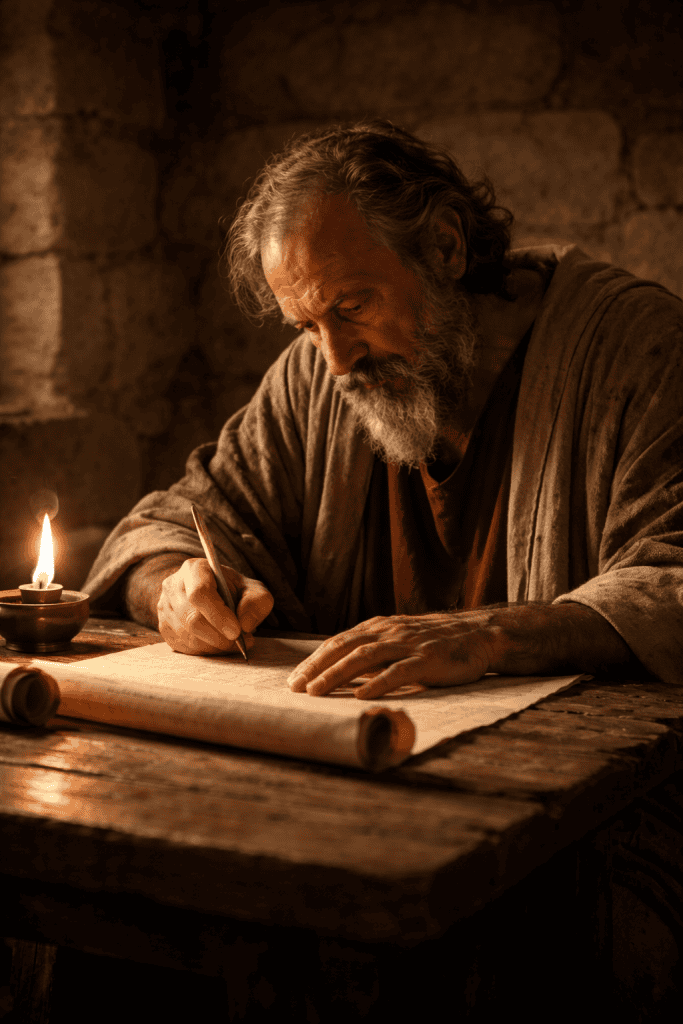
Paul uses two examples. The first is Jacob and Esau — chosen before birth, before either had done anything good or bad, “so that God’s purpose of election might continue, not because of works but because of him who calls” (Romans 9:11). The point Paul is making is explicit: the basis of God’s choice is not human action or character. It is God’s own calling.
The second example is Pharaoh. God says to him, “For this very purpose I have raised you up, that I might show my power in you, and that my name might be proclaimed in all the earth” (Romans 9:17). Pharaoh was not an accident. He was not simply someone God knew would harden his heart. He was raised up for a purpose.
Then Paul anticipates the objection — and this is critical. He does not say “I know this sounds like God is unjust, but here is how it is actually fair.” He says: “You will say to me then, ‘Why does he still find fault? For who can resist his will?’ But who are you, O man, to answer back to God?” (Romans 9:19-20).
Paul’s answer is not a resolution. It is a redirection. The creature does not get to sit in judgment over the Creator’s electing purposes. That is not an evasion. It is the only honest answer to a question that goes beyond human comprehension.
What the Bible Says About Free Will
As the previous post in this series established, free will is real. Human beings make genuine choices and bear genuine responsibility for them. The Bible affirms this throughout.
But free will always operates on the basis of desire. No one chooses what they do not first desire. The will follows the heart. And the unregenerate heart — the heart outside of God’s regenerating work — does not desire God, does not seek him, and cannot generate that desire on its own.
Romans 3:11 — “No one seeks for God.” Not some people. Everyone. The natural human will does not move toward God because the natural human heart does not want him.
John 6:44 — “No one can come to me unless the Father who sent me draws him.” Coming to Christ is not a difficult thing for the natural will. It is an impossible thing — until the Father acts first.
This is not a contradiction of free will. It is a precise description of what free will in a fallen creature actually is. The unregenerate person freely chooses sin because sin is what the unregenerate heart desires. The regenerate person freely chooses Christ because God has given them a new heart that desires him. Both choices are free. Both are real. But the second one only happens because God moved first.
Where the Two Truths Meet
The place where free will and predestination come together in Scripture is not a tidy resolution. It is a both/and that the Bible holds without apology.
Acts 2:23 — the crucifixion happened “according to the definite plan and foreknowledge of God,” and the men who carried it out were guilty of lawless murder. Fully planned by God. Fully the responsibility of the men who did it. The text does not explain how both are true simultaneously. It simply states both and moves on.
This is the consistent pattern of Scripture. Joseph’s brothers freely chose to sell him into slavery. God sovereignly used that free choice to position Joseph in Egypt to save lives. “You meant evil against me, but God meant it for good” (Genesis 50:20). The evil intention was real. The free choice was real. The sovereign purpose was real. All three at once.
The Arminian position resolves this tension by limiting God’s sovereignty — his predestination is based on foreseen human choices, so ultimately the human will determines the outcome. This preserves human autonomy but at the cost of what Romans 9 plainly teaches.
The Reformed position holds both without resolving the mechanism — God sovereignly ordains outcomes, including salvation, through the genuine free choices of genuine human beings. How exactly this works is a mystery the Bible does not fully explain. What the Bible does not do is explain it by subordinating God’s will to human choice.
The Passages That Get Used on Both Sides
A fair treatment of free will vs predestination has to reckon with the passages that seem to support human autonomy in salvation.
Deuteronomy 30:19 — “Choose life.” Joshua 24:15 — “Choose this day whom you will serve.” Revelation 3:20 — “If anyone hears my voice and opens the door, I will come in.” These are genuine calls to genuine choice. They are not pretend invitations.
The Reformed position does not deny these passages. It reads them as genuine calls addressed to responsible human beings — calls that God’s regenerating work makes it possible to respond to. The invitation is real. The choice is real. What precedes the choice — the new heart, the new desire — is God’s sovereign gift.
John 3:16 — “For God so loved the world that he gave his only Son, that whoever believes in him should not perish but have eternal life.” This verse is often used against predestination. But notice what it says: whoever believes will have eternal life. It does not say that believing is something every person is naturally capable of. It says that the ones who believe — however God brings that about — will not perish. The promise is universal in scope. The ability to respond is not assumed to be universal by nature.
Why This Is Not an Excuse for Passivity
The most common objection to predestination is practical: if God has already determined who will be saved, why evangelize? Why pray? Why do anything?

Paul answers this in Romans 10. He has just finished the most thorough treatment of election in the New Testament in Romans 9. Then he immediately says: “How then will they call on him in whom they have not believed? And how are they to believe in him of whom they have never heard? And how are they to hear without someone preaching?” (Romans 10:14).
The same Paul who wrote Romans 9 is the most aggressive evangelist in the New Testament. He did not see election as a reason for passivity. He saw it as the guarantee that his preaching would not be in vain — that God would use the proclamation to call out the ones he had chosen.
Election does not make evangelism unnecessary. It makes evangelism certain to produce results. God has chosen to bring his elect to faith through the preaching of the gospel. That means the preaching matters absolutely.
Where This Leaves You
If you are a believer reading this, the doctrine of predestination is not a threat to your assurance. It is the foundation of it.
Your salvation does not rest on the persistence of your will or the strength of your desire. It rests on the electing purpose of a God who chose you before the foundation of the world, gave you a new heart that could desire him, and will complete what he began.
Philippians 1:6 — “He who began a good work in you will bring it to completion at the day of Jesus Christ.”
He began it. He will complete it. Your will was the instrument. His purpose was the cause.
If you are not a believer reading this, the doctrine of predestination is not a reason to conclude that the decision has been made for you and nothing you do matters. The call of the gospel is real. The invitation is genuine. And the fact that you are reading this at all may be exactly how God is drawing you.
Keep Reading in This Series
- What Does the Bible Say About Free Will?
- Does God’s Election Cancel Free Will?
- What Is Saving Faith According to the Bible?

Walt Roderick is a Christian writer who cares more about biblical clarity than online applause. He writes to strengthen believers and confront spiritual drift.