Is Doubt a Sin? How Jesus Responded to Doubting Believers
Is Doubt a Sin? How Jesus Responded to Doubting Believers
Is doubt a sin? Not every question, uncertainty, or season of weak faith is sinful, but Scripture does rebuke distrust that refuses what God has clearly revealed. The Gospels show the difference because Jesus did not respond to every doubter the same way—He gave evidence to some, corrected others, opened the Scriptures, showed mercy, and confronted hardened unbelief.
Is Doubt a Sin?
Having a question is not the same thing as sinning. Not understanding what God is doing is not the same thing as rejecting Him. Scripture gives us believers who ask difficult questions, struggle to understand, and even waver in faith.
But is doubt a sin when a person begins distrusting what God has clearly said? It can be. Jesus rebuked Peter with, “You of little faith, why did you doubt?” (Matthew 14:31). He told Thomas, “Do not be unbelieving, but believing” (John 20:27). He called the Emmaus disciples “foolish” and “slow of heart to believe” what the prophets had spoken (Luke 24:25).
So the Bible will not let us say that all doubt is harmless.
The better distinction is between struggling faith and unbelief. A believer can wrestle with what God is doing, struggle to understand Scripture, or cry out with the father in Mark 9, “I do believe; help my unbelief.” The danger comes when doubt hardens into distrust of what God has revealed and finally into refusal to believe Him.
Saving faith can be weak. What saves is not the strength of our faith but the Christ in whom that faith rests. If you are unsure what Scripture means by saving faith in the first place, see What Is Saving Faith According to the Bible? What Is Saving Faith According to the Bible?
What About Romans 14:23?
Someone asking is doubt a sin in the Bible may immediately think of Romans 14:23: “But he who doubts is condemned if he eats, because his eating is not from faith; and whatever is not from faith is sin.”
Romans 14:23 is about conduct, not the mere existence of a question. Paul describes someone who cannot eat with a clear conscience but goes ahead and eats anyway. The sin lies in acting without faith before God. The verse does not turn every unresolved question in a Christian’s mind into sin.
That still matters. “Everyone has doubts” is no excuse to act against conscience or ignore what God has made clear.
What About James 1:6–8?
James gives another strong warning. He tells the person asking God for wisdom to “ask in faith, doubting nothing,” and describes the doubter as being like a wave of the sea, driven and tossed by the wind (James 1:6).
Again, Scripture does not praise doubt for its own sake. James is describing someone asking God for wisdom while wavering over whether to trust Him. The answer to doubt is not to celebrate uncertainty but to bring the uncertainty to God and trust what He has revealed.
So when someone asks, “Is it a sin to doubt God?” the answer depends on what kind of doubt we’re talking about. Having a question is not the same as refusing to trust what God has made clear.
Doubt vs. Hardened Unbelief: Where Jesus Drew the Line
Doubt and hardened unbelief can both involve questions, but the posture toward Christ is different.
Struggling faith brings the question to Him.
Hardened unbelief demands that Christ submit to its terms while already refusing Him.
Jesus showed very little patience for people who demanded signs while testing Him. When scribes and Pharisees asked for a sign, He called them an evil and adulterous generation and said no sign would be given except the sign of Jonah (Matthew 12:38–39).
Later, Pharisees and Sadducees again came testing Him and asked for a sign from heaven. Jesus gave essentially the same answer and then left them (Matthew 16:1–4).
In His hometown, people who had watched Him grow up took offense at Him. Mark says He did no miracle there except laying His hands on a few sick people and healing them, and “He was marveling at their unbelief” (Mark 6:5–6).
The issue wasn’t simply who had questions.
The issue was what they did with Christ.
There is a world of difference between saying, “Lord, I believe; help my unbelief,” and saying, in effect, “Perform for me and maybe I’ll believe.”
Jesus’ own responses make the distinction plain.
How Did Jesus Respond to Doubt?
Jesus responded with truth, evidence, correction, Scripture, mercy, and patience, depending on what the person needed. He did not pretend doubt did not matter, but neither did He treat wavering believers as though they were hardened enemies.
John the Baptist in Herod’s Prison
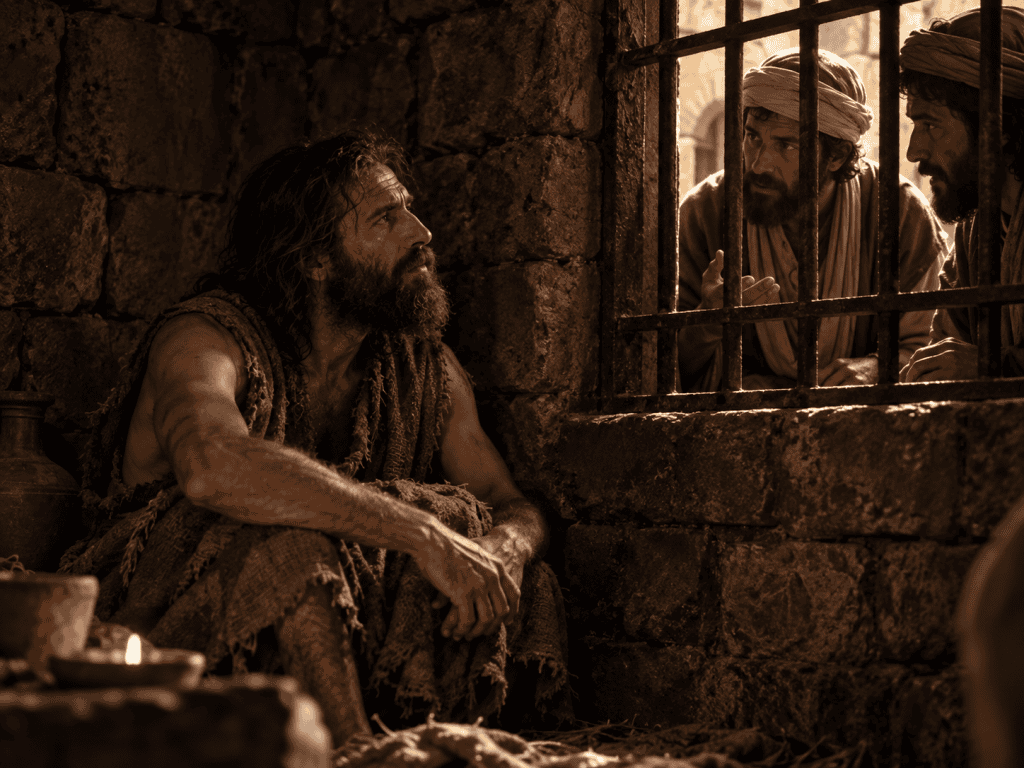
Jesus answered John the Baptist’s question from prison with evidence, then praised him in public.
Locked up for confronting Herod (Matthew 14:3–4), the man who had called Jesus the Lamb of God (John 1:29) sent his disciples to ask, “Are You the One who is to come, or shall we look for someone else?” (Matthew 11:3).
Interpreters differ over whether this reflects John’s own struggle or whether he asked for the benefit of his disciples. Either way, Jesus sent the answer back to John.
He told the messengers to report what they were seeing: the blind receive sight, the lame walk, lepers are cleansed, the deaf hear, the dead are raised, and the poor have the gospel preached to them (Matthew 11:4–5).
That list echoes Isaiah’s picture of the Messiah’s work (Isaiah 35:5–6; 61:1). Jesus pointed John to what Scripture said the Messiah would do and to what was happening.
He added a gentle warning: “Blessed is he who does not take offense at Me” (Matthew 11:6).
Then, after John’s messengers left, Jesus told the crowd that among those born of women there had not arisen anyone greater than John the Baptist (11:11).
John brought Jesus a question. Jesus answered it without throwing John away.
Peter Sinking in the Storm
Peter’s doubt came in the middle of an act of faith.
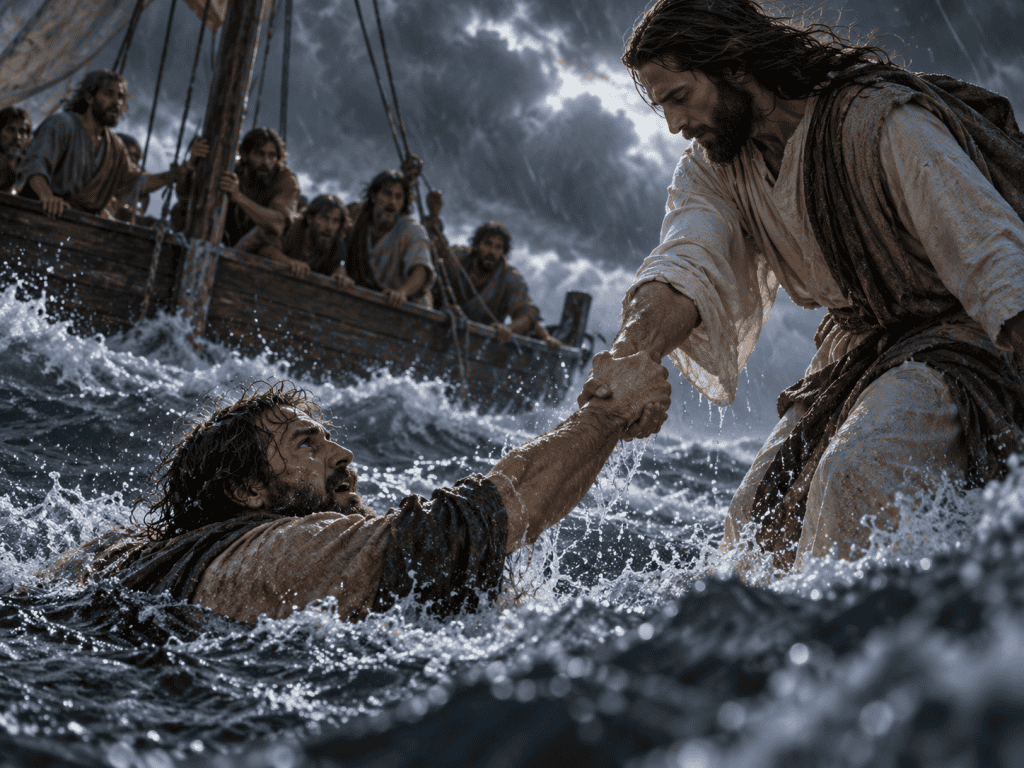
He asked Jesus to call him out onto the water, stepped over the side of the boat, and walked toward Him. Then Peter saw the wind, became afraid, and began to sink (Matthew 14:28–30).
He cried, “Lord, save me!”
Matthew says Jesus immediately stretched out His hand and took hold of him. Only afterward did Jesus ask, “You of little faith, why did you doubt?” (14:31).
Jesus rescued Peter without pretending the doubt did not matter. Peter was not left to sink while Jesus made His point, but the rescue did not eliminate the correction.
Once they were back in the boat, the wind stopped, and those in the boat worshiped Jesus, saying, “You are truly God’s Son!” (14:32–33).
Matthew’s word for doubt there, distazō, carries the idea of wavering or hesitating. Matthew uses it only once more, at the end of his Gospel.
Two Disciples on the Emmaus Road
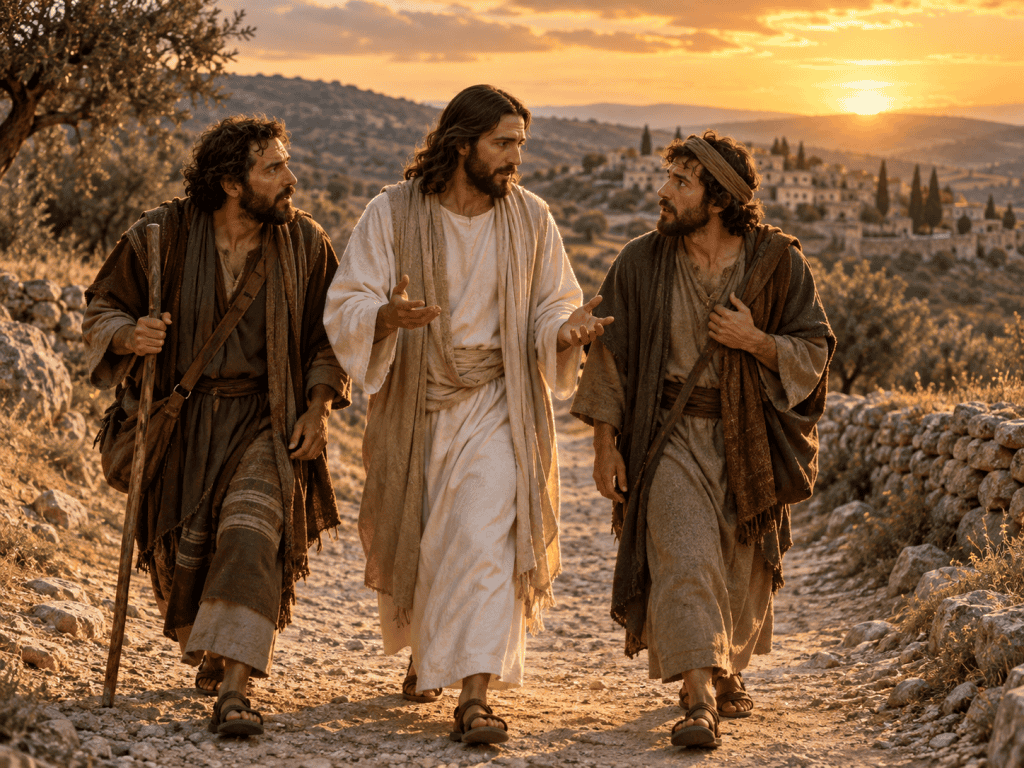
On the day of the resurrection, two disciples walked toward Emmaus, about seven miles from Jerusalem, talking over everything that had happened (Luke 24:13–14).
One of them, Cleopas, told the stranger walking beside them, “We were hoping that it was He who was going to redeem Israel” (24:21).
Their hope had slipped into the past tense.
The stranger was Jesus, although they didn’t recognize Him.
Jesus did not simply reassure them that everything would work out. He rebuked them: “O foolish ones and slow of heart to believe in all that the prophets have spoken!” (24:25).
Then, beginning with Moses and all the Prophets, He explained the things concerning Himself in all the Scriptures (24:27).
Before they recognized Him, He showed them from Scripture why the cross and resurrection had to happen.
Later they remembered, “Were not our hearts burning within us while He was speaking to us on the road, while He was opening the Scriptures to us?” (24:32).
Jesus answered their confusion with the Word of God.
If your doubt centers on whether Scripture itself can be trusted, I’ve dealt with that separately in Is the Bible True? Is the Bible True? and Is the Bible Reliable? Is the Bible Reliable?
The Father Who Said, “Help My Unbelief”
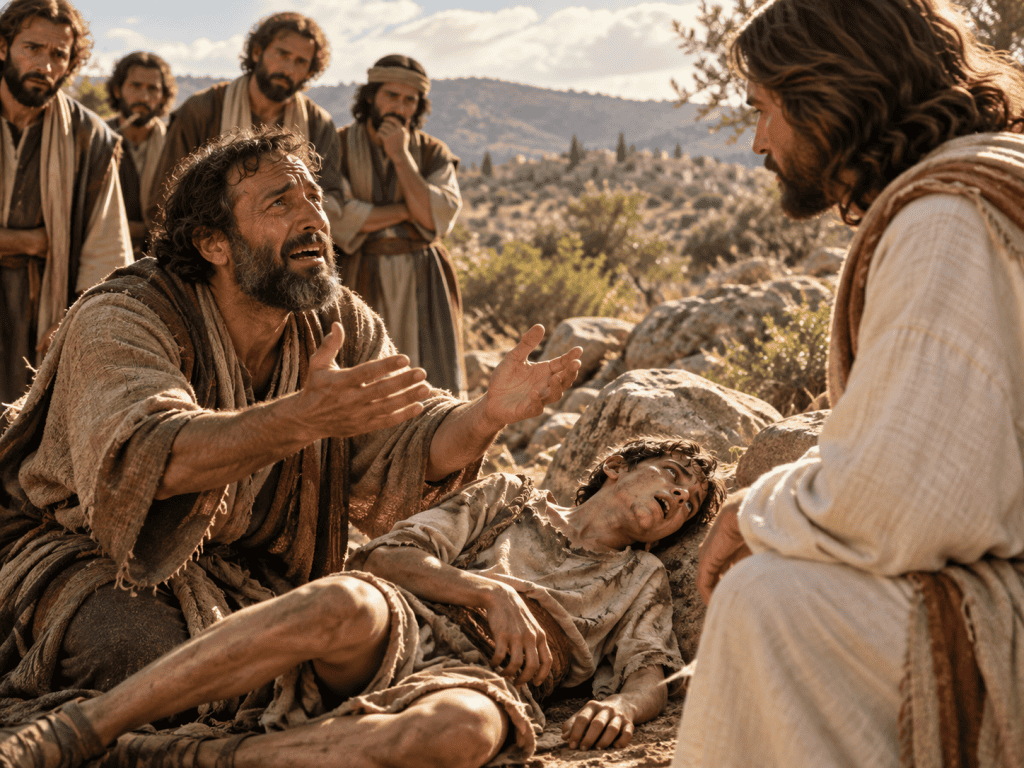
One of the most honest prayers in Scripture came from a desperate father.
His son had been tormented since childhood, and Jesus’ disciples had been unable to help him. The father finally said to Jesus, “If You can do anything, take pity on us and help us!” (Mark 9:22).
Jesus caught the words immediately:
“If You can? All things are possible to him who believes.” (Mark 9:23)
The father didn’t pretend to have stronger faith than he had.
He cried out:
“I do believe; help my unbelief.” (Mark 9:24)
Jesus did not send him away until he could produce a cleaner confession. He healed the man’s son.
That doesn’t mean Jesus approved of the unbelief. His challenge—“If You can?”—shows otherwise.
But this man brought his mixed-up faith and unbelief to the right Person.
That matters for someone wondering whether doubt disqualifies him from coming to Christ. You don’t wait until your faith feels strong before you come to Him. You bring Him the faith you have and ask Him to help what is weak.
Thomas and the Eight-Day Wait
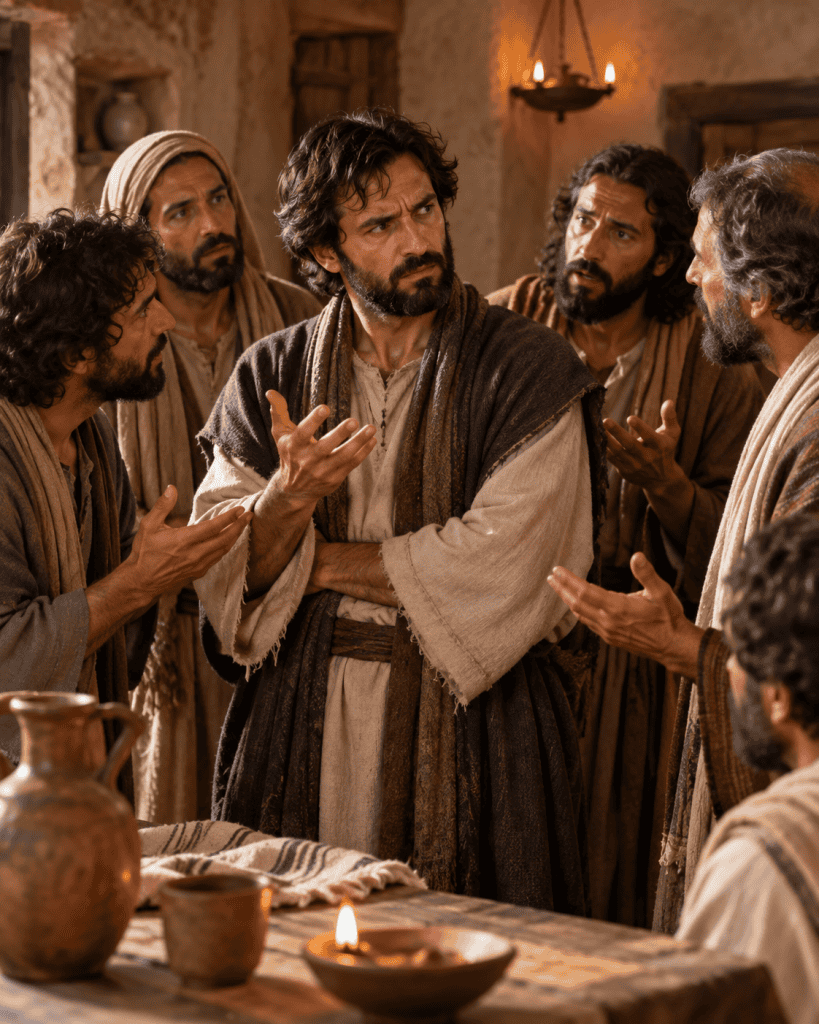
Jesus met Thomas’s doubt by confronting the very conditions Thomas had set for believing.
Thomas missed Jesus’ first appearance to the disciples. When the others told him they had seen the Lord, he answered plainly: unless he saw the nail marks, put his finger into them, and put his hand into Jesus’ side, he would not believe (John 20:24–25).
Then came something easy to skip over.
Eight days passed.
Jesus knew Thomas’s doubt, but He did not answer it on Thomas’s schedule.
When Jesus came through the shut doors, He turned directly to Thomas:
“Bring your finger here, and see My hands; and bring your hand here and put it into My side; and do not be unbelieving, but believing” (John 20:27).
Jesus hadn’t been standing in the room when Thomas laid down those conditions, but He knew them.
Thomas answered:
“My Lord and my God!” (John 20:28)
Jesus did not condemn Thomas for doubting, but He did not leave his doubt unchallenged. He gave Thomas the evidence he had demanded, and the command was clear: believe.
Then Jesus turned the lesson toward everyone who would come later:
“Blessed are those who did not see, and yet believed” (John 20:29).
Hard questions can lead a person toward Christ, but Christ does not call us to make a home in doubt. He calls us to believe.
If your struggle is more basic—whether Christianity itself is true—start with Unsure About Christianity? Here’s the Truth. Unsure About Christianity? Here’s the Truth
“Some Doubted” at the Great Commission
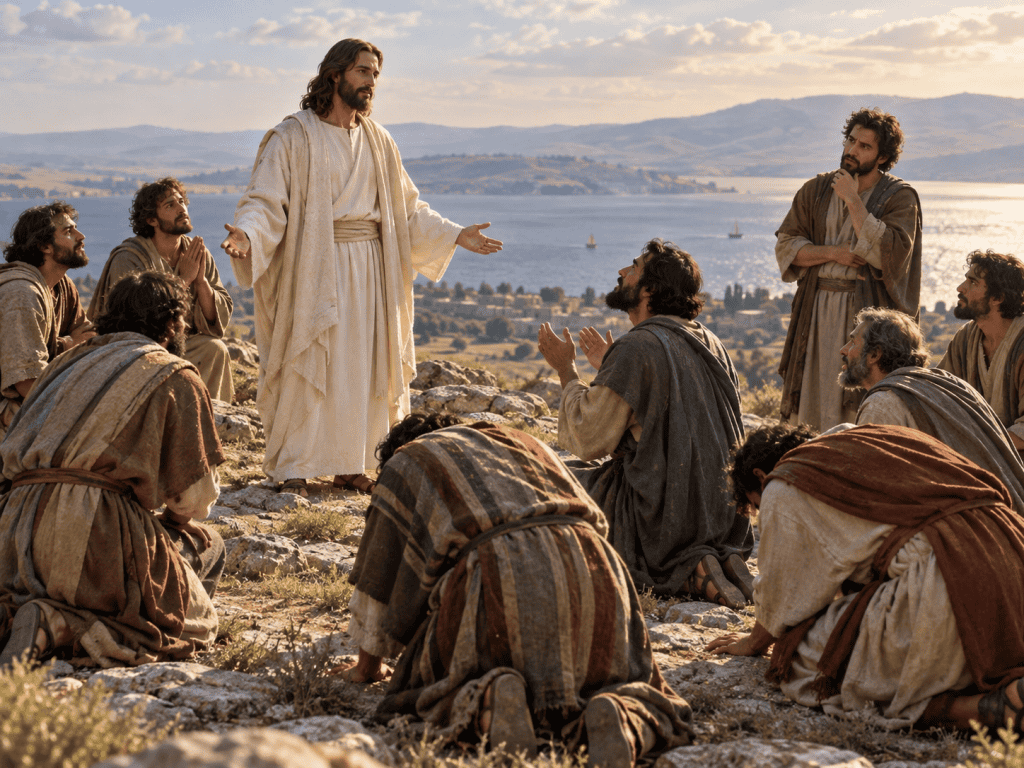
Matthew gives us one of the strangest details in the resurrection accounts.
The Eleven went to the mountain in Galilee where Jesus had directed them. “And when they saw Him, they worshiped Him; but some doubted” (Matthew 28:17).
Matthew names the Eleven. Some interpreters propose a larger gathering, but the text itself names only the Eleven.
Either way, the statement is remarkable.
They were looking at the risen Jesus.
And some still wavered.
The word is distazō again—the same word Matthew used when Peter wavered on the water.
What did Jesus do?
He came to them.
Then He said:
“All authority has been given to Me in heaven and on earth.” (Matthew 28:18)
And He sent them to make disciples of all nations, baptizing and teaching them, with the promise that He would be with them always, even to the end of the age (28:19–20).
Jesus did not wait until every trace of wavering had disappeared before giving His church its mission.
What Jesus’ Different Responses Tell Us About Doubt
Put these scenes beside Jesus’ responses to hardened unbelief and the pattern becomes clearer.
| Who | What They Brought to Jesus | How He Responded |
|---|---|---|
| John the Baptist | A question from prison | Evidence from Scripture and His works |
| Peter | Faith that wavered | Rescue, then correction |
| Emmaus disciples | Confusion after the cross | Rebuke, then Scripture |
| Father in Mark 9 | Belief mixed with unbelief | Challenge, then mercy |
| Thomas | Conditions for believing | Evidence, then a command to believe |
| Disciples in Galilee | Wavering before the risen Christ | His authority, mission, and presence |
| Religious leaders | Demands for signs while testing Him | Rebuke and refusal |
The people in that table did not all have the same problem, so Jesus did not give them all the same response. That is why the question “Is doubt a sin?” needs more than a one-word answer. Scripture makes us look at what is being doubted, what God has already revealed, and whether the person is moving toward Christ or resisting Him.
Doubt left unattended can move toward tearing faith down. Deconstructing Faith: Navigating Doubt and Rediscovering Belief That’s why the answer isn’t to romanticize doubt. It’s to bring it to Christ.
Does Jesus Pray for Believers Whose Faith Is Weak?
He does, and Luke gives us one of the clearest examples the night before the cross.
Jesus told Peter:
“Simon, Simon, behold, Satan has demanded to sift all of you like wheat. But I have prayed earnestly for you, that your faith may not fail; and you, once you have returned, strengthen your brothers.” (Luke 22:31–32)
In Greek, the first “you” is plural. Satan wanted all of them.
But when Jesus said, “I have prayed earnestly for you,” He addressed Peter personally.
Hours later Peter denied Him three times.
His courage certainly failed.
But Jesus had already said Peter would turn back.
After the resurrection, Christ restored him by the Sea of Galilee and commissioned him to care for His sheep (John 21:15–17).
A doubting believer ultimately stands on Christ’s faithfulness, not on the strength of his own grip.
Hebrews says Jesus “always lives to make intercession” for those who draw near to God through Him (Hebrews 7:25). His intercession is one of the grounds of the perseverance of the saints. Perseverance of the Saints
The Westminster Confession Westminster Confession of Faith describes saving faith as differing in degrees, weak or strong, and says it “may be often and many ways assailed, and weakened, but gets the victory” (14.3).
That victory doesn’t come because the believer finally becomes good at believing.
It comes because Christ keeps His people.
What Should You Do When You Doubt?
If you’re wrestling with doubt right now, the Gospel scenes give you somewhere to start.
Bring the doubt to Christ. John sent his question to Jesus. The father in Mark 9 said exactly where he was: “I believe; help my unbelief.” You don’t have to clean the question up before you bring it.
Open the Scriptures. Jesus answered John with the works Isaiah had promised and the Emmaus disciples with Moses and the Prophets. Faith isn’t strengthened by staring harder at your own faith. It grows as you look at Christ in His Word.
Ask God for wisdom. James says that if anyone lacks wisdom, he should ask God, who gives generously (James 1:5).
Look at the evidence. If the question is whether Christianity is actually true, don’t treat it as though it were merely an emotional problem. Christianity makes historical claims. Thomas’s doubt centered on the resurrection, and the resurrection is where the evidence has to be examined. Start with Unsure About Christianity? Here’s the Truth. Unsure About Christianity? Here’s the Truth
Stay with God’s people. Thomas was with the disciples when Jesus came back on the eighth day. Doubt can tempt a Christian to withdraw from church and struggle alone. That’s usually the worst place to go.
Keep obeying what you already know. The disciples on the mountain were sent out even while some were wavering. You don’t have to solve every theological question before you pray, worship, read Scripture, love your family, serve your church, and do what Christ has already made clear.
And don’t measure Christ’s patience by the strength of your faith today.
Peter was sinking when Jesus grabbed him.
How to Help Someone Who Doubts
Don’t panic when someone you love admits he’s doubting.
And don’t answer a question he didn’t ask.
Listen long enough to find out what the actual problem is. One person may be struggling with the resurrection. Another may be angry because someone he loved died. Another may have watched Christians behave terribly and confused Christ with people who bear His name.
Those aren’t the same problem.
Jude told believers, “And on some, who are doubting, have mercy” (Jude 22).
That doesn’t mean treating truth as though it doesn’t matter. It means answering the real question with patience, opening Scripture, pointing the person toward Christ, and recognizing when the issue is moving from honest struggle toward settled rejection.
Pray for him.
Jesus prayed for Peter.
Common Questions About Doubt and Unbelief
Is Doubt a Sin?
Not every experience of doubt is sinful. A believer can have questions, weak faith, or difficulty understanding what God is doing. Doubt becomes sinful when it turns into distrust or rejection of what God has clearly revealed.
Can a Christian Have Doubts and Still Be Saved?
Yes. Saving faith can be weak and heavily tested. A believer’s assurance may fluctuate, but salvation rests on Christ rather than the believer’s ability to maintain perfect certainty. The father in Mark 9 could say both, “I believe” and “help my unbelief.”
For the larger question of whether a true believer can finally fall away, see Perseverance of the Saints. Perseverance of the Saints
Did Jesus Condemn Thomas for Doubting?
No, but neither did Jesus tell Thomas his doubt was harmless. He gave Thomas the evidence he had demanded and then commanded him, “do not be unbelieving, but believing” (John 20:27). Thomas responded, “My Lord and my God!” (John 20:28).
Does Doubting Mean I Don’t Have Real Faith?
Not necessarily. Peter doubted while walking toward Jesus on the water. John the Baptist questioned from prison. The issue is not whether a Christian ever struggles, but where he takes that struggle and whom he ultimately trusts.
What Is the Difference Between Doubt and Unbelief?
Doubt often describes wavering or struggling within faith. Hardened unbelief refuses Christ despite what has been revealed. Scripture does not always use the English words as neat technical categories, so the person’s posture toward Christ matters more than the label.
Keep Reading in This Series
- I’m Agnostic, I Don’t Need Jesus: Can an Agnostic Be Saved? I’m Agnostic, I Don’t Need Jesus: Can an Agnostic Be Saved?
- Perseverance of the Saints Perseverance of the Saints
- Deconstructing Faith: Navigating Doubt and Rediscovering Belief Deconstructing Faith: Navigating Doubt and Rediscovering Belief
Wrestling With Doubt? Let’s Talk
If you’re in a season of doubt, or you’re praying for someone who is, I’d be glad to hear from you. Send me a note Send Me a Note and I’ll answer personally.
Real questions deserve straight answers. And if the question is hard, we can start there.
Blessings in Christ,
Wally
Editorial / CMS Handoff Notes

Walt Roderick is a Christian writer who cares more about biblical clarity than online applause. He writes to strengthen believers and confront spiritual drift.