Jezebel in the Bible: Who She Was, What She Did, and Why Her Name Still Matters
Most people know Jezebel in the Bible. Fewer know the actual story.
She gets reduced to a symbol — of wickedness, manipulation, sexual immorality. Her name gets attached to a “spirit” in certain charismatic circles that has taken on a life of its own, often with little connection to the biblical text.
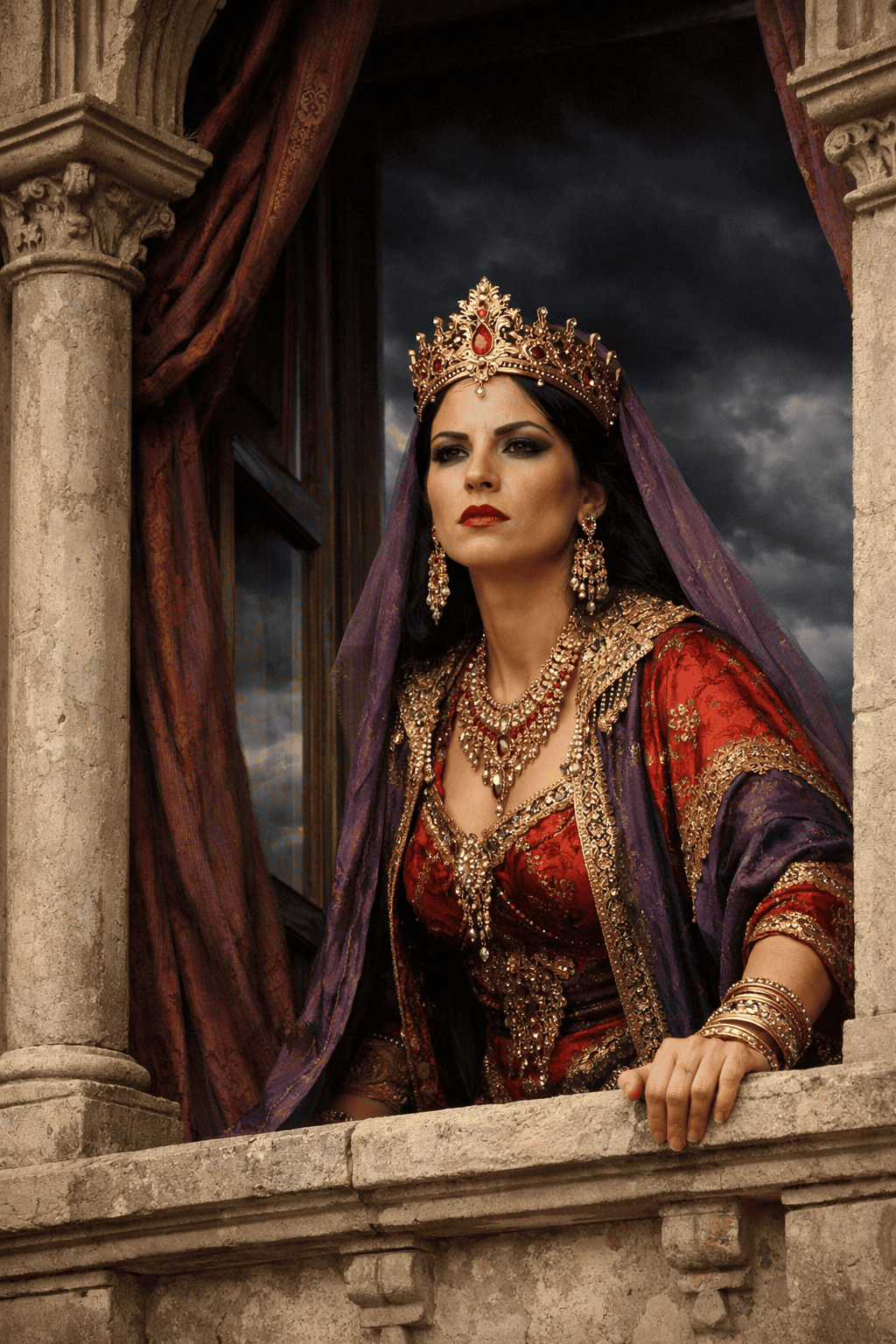
But the real Jezebel is more dangerous than the caricature. She was a politically shrewd Phoenician princess who walked into Israel and systematically dismantled its covenant identity — not through seduction, but through power. She funded a state religion, eliminated the competition, and nearly succeeded in replacing the worship of Yahweh with the cult of Baal permanently.
Understanding Jezebel in the Bible means understanding what she actually did, why she was so effective, and what the New Testament means when it invokes her name centuries later.
Where She Came From
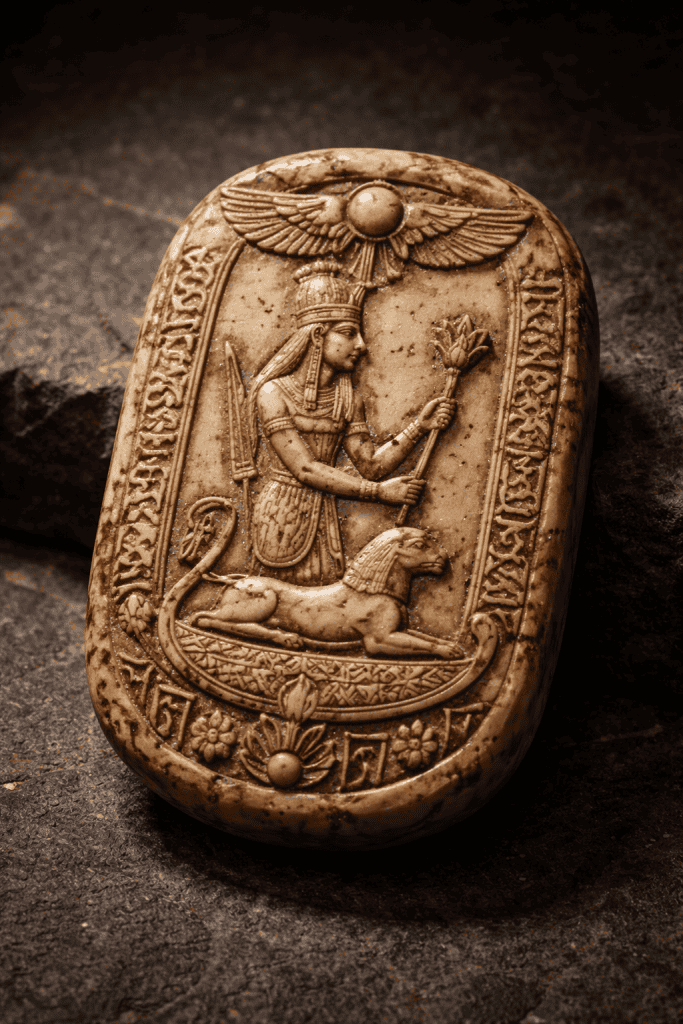
Jezebel was the daughter of Ethbaal, king of Sidon — a Phoenician ruler whose very name means “with Baal.” Her father had not always been king. Ancient sources, including the Jewish historian Josephus, identify Ethbaal as a priest of Astarte who seized the throne by assassinating the previous king. Jezebel grew up in that world — one where religion and political power were inseparable, where Baal worship was the air people breathed.
When she married Ahab, king of Israel’s northern kingdom, it was a political alliance. Ahab’s father Omri had built Samaria and established Israel as a regional power. An alliance with Phoenicia made strategic sense — trade routes, military cooperation, economic stability. Jezebel was the price and the prize of that deal.
What Ahab didn’t fully reckon with was what she brought with her.
What She Built in Israel
Jezebel didn’t quietly adapt to her new home. She imported her religion wholesale.
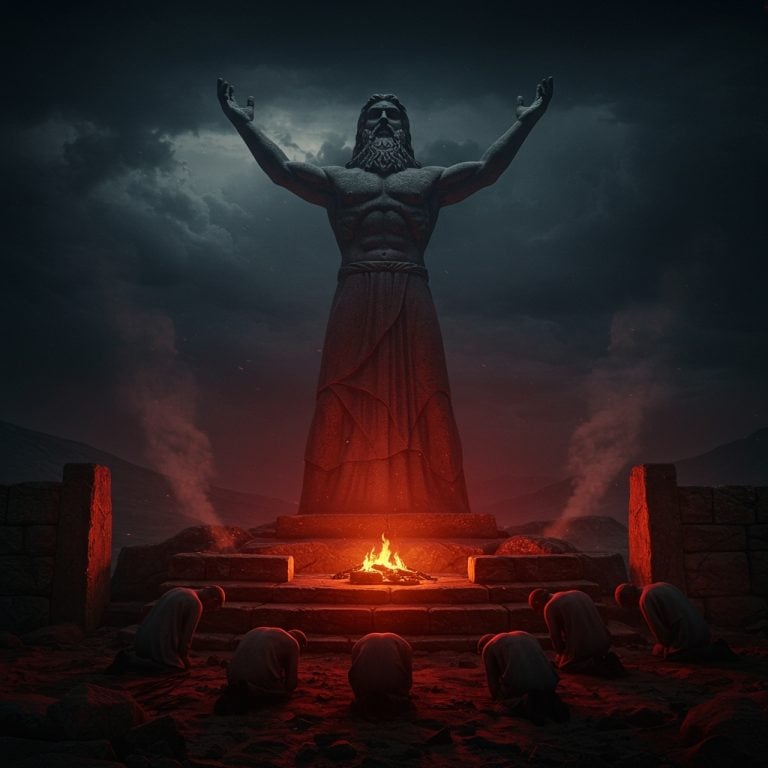
Ahab built a temple for Baal in Samaria at her direction (1 Kings 16:32). She brought 450 prophets of Baal and 400 prophets of Asherah to Israel — all of them eating at the royal table, funded by the crown (1 Kings 18:19). This was not private faith. It was state religion, institutionalized and paid for by the government of Israel.
Then she went after the competition.
While the Baal priesthood was being established, Jezebel was systematically hunting down and killing the prophets of Yahweh. Not tolerating them. Not suppressing them. Killing them. One of Ahab’s officials, Obadiah, hid a hundred prophets in caves and supplied them with food and water at personal risk — because the alternative was death (1 Kings 18:4).
By the time Elijah walked back onto the scene, the situation in Israel looked like this: Jezebel’s prophets had the palace, the funding, and the religious infrastructure. Yahweh’s prophets were dead or in hiding. And the people of Israel were doing what people always do when the culture and the government go one direction — they went along with it.
This is what made Jezebel so dangerous. She wasn’t just personally wicked. She had built a system.
Her Confrontation With Elijah
The Mount Carmel confrontation in 1 Kings 18 is often told as Elijah vs Baal — and it was. But behind the 450 prophets standing on that mountain was Jezebel. She had recruited them, funded them, and given them the backing of the most powerful woman in Israel.
When the fire fell and the people declared Yahweh as God, when Elijah ordered the execution of all 450 prophets — Jezebel lost her entire religious apparatus in a single afternoon.
Her response was immediate. She sent Elijah a message: by this time tomorrow you’ll be dead like one of them.
It worked. Elijah ran. The man who had just called fire from heaven fled into the wilderness because of a message from Jezebel. That tells you something about the kind of fear she commanded. She had already killed prophets. This wasn’t an empty threat.
What’s worth noting is that Jezebel never repented, never wavered, never showed a moment of doubt after Mount Carmel. The fire didn’t move her. The slaughter of her priests didn’t break her. She doubled down.
That’s who she was.
Jezebel in the Bible: The Vineyard of Naboth
If the Mount Carmel story shows Jezebel’s religious agenda, the story of Naboth’s vineyard shows how she operated politically.
Ahab wanted a vineyard that belonged to a man named Naboth — it was adjacent to the palace and Ahab wanted it for a vegetable garden. Naboth refused. It was his ancestral inheritance, and under Israelite law, he had every right to keep it.
Ahab went home and sulked. Lay on his bed, turned his face to the wall, wouldn’t eat.
Jezebel found him like that and said, essentially — you’re the king of Israel. Get up. I’ll get you the vineyard.
She wrote letters in Ahab’s name, sealed them with his seal, and sent them to the elders of Naboth’s city. The instructions were precise: call a fast, seat Naboth in a prominent position, then produce two witnesses to testify that he cursed God and the king. Then take him out and stone him.
They did exactly what she said. Naboth was dead within days. Jezebel told Ahab to go take possession of the vineyard.
This was not impulsive wickedness. It was calculated, legally structured murder — designed to look like the proper application of Mosaic law while being a complete perversion of it. She used the forms of covenant justice to destroy a covenant man.
Elijah met Ahab in that vineyard and delivered God’s verdict: the place where dogs licked Naboth’s blood would be the place where dogs licked Ahab’s blood. And Jezebel — the dogs would eat Jezebel by the wall of Jezreel.
How She Died

Ahab died in battle against Syria, his blood running into the floor of his chariot, later washed out at a pool in Samaria — where dogs licked it, exactly as Elijah had said.
Jezebel outlived him. She continued as queen mother through the reigns of two of her sons. It took years for the judgment to come.
It came through Jehu, a military commander anointed by the prophet Elisha to wipe out the house of Ahab. Jehu moved fast — killed Jezebel’s son Joram, then drove toward Jezreel where Jezebel was.
She knew he was coming. She painted her eyes, arranged her hair, and looked out an upper window. When Jehu entered the gate, she called down to him: “Is it peace, you Zimri, murderer of your master?” — referencing a previous usurper who had lasted seven days on the throne. She was mocking him to the end.
Jehu looked up and called out to the eunuchs at the window: “Who is on my side? Who?” Two or three looked out. He said — throw her down. They did. Her blood splattered on the wall and on the horses. Jehu went in, ate and drank, and said — bury her, she’s a king’s daughter.
When they went to bury her, there was almost nothing left. Dogs had eaten her flesh. Only her skull, her feet, and the palms of her hands remained.
Elijah’s prophecy. Word for word.
Jezebel in the New Testament
Here’s where most treatments of Jezebel stop short.
Her name appears once in the New Testament — in Revelation 2:20, in Christ’s letter to the church at Thyatira:
“I have this against you: you tolerate that woman Jezebel, who calls herself a prophetess and is teaching and seducing my servants to practice sexual immorality and to eat food sacrificed to idols.”
This is not a reference to the historical Jezebel. It’s a name applied to a false teacher inside the church — someone whose influence mirrors the original Jezebel’s pattern exactly. She claimed prophetic authority. She led God’s people into sexual immorality and idol worship. And the church at Thyatira tolerated her.
The rebuke is not just to the false teacher. It’s to the church for tolerating her.
That word — tolerate — is the same diagnosis Elijah made on Mount Carmel. Israel wasn’t fully committed to Baal. They were limping between two opinions, trying to hold both. Thyatira wasn’t worshiping idols outright. They were allowing someone to teach that a little compromise was acceptable.
Jezebel’s pattern is not just ancient history. It shows up whenever the church softens what God requires in order to accommodate the culture around it. Whenever a teacher gains influence by making the narrow road seem wider than it is. Whenever tolerance of false teaching gets reframed as grace.
What Made Her So Effective
It’s worth asking the question directly — why was Jezebel so effective at what she did?
She had resources and she used them. She had the royal treasury, the king’s authority, and the political infrastructure of a major nation behind her. She knew how to work systems.
She was completely committed. There was no ambivalence in Jezebel. No hedging. No limping between opinions. She believed in what she was doing and she pursued it with everything she had — including murder.
And she was patient. The Baal system she built didn’t collapse at Mount Carmel. It took Jehu’s brutal purge years later, after Ahab was dead and two of her sons had reigned and died, before it was finally dismantled.
Commitment to the wrong thing, sustained over time, does enormous damage. That’s the lesson Jezebel’s life teaches — and it runs in both directions.
Keep Reading in This Series
- What Is Ba’al Worship? A Biblical and Historical Overview
- The Cult of Baal: What It Was, What It Did, and Why It Matters Now
- Elijah vs Baal: The Showdown on Mount Carmel That Settled the Question

Walt Roderick is a Christian writer who cares more about biblical clarity than online applause. He writes to strengthen believers and confront spiritual drift.