The Cult of Baal: What It Was, What It Did, and Why It Matters Now
The cult of Baal was not a fringe movement. It was not a handful of rebels running some strange ceremony on the edge of Israelite civilization.
It was organized. It had temples, priests, a calendar, political backing, and royal funding. For centuries it competed directly with the worship of the living God for the hearts of His own people.
If you want to understand why the Old Testament keeps coming back to this — why the prophets were so angry, why the judgments were so severe — you have to understand what this cult actually was. Not the sanitized version. The real thing.
What “Cult of Baal” Actually Means
People hear the word “cult” and picture something shadowy and secretive. That’s not what this was.
In the study of ancient religion, “cult” just means an organized system of worship — its rituals, its priests, its sacred sites, its calendar. By that definition, the cult of Baal was one of the most dominant religious systems in the ancient Near East. It was mainstream. Respectable. It had thousands of years of cultural momentum before Israel ever set foot in Canaan.
That’s what made it so dangerous.
The Infrastructure of the Cult
Temples and High Places
Baal worship needed physical infrastructure, and it had it. Temples were built in cities — including eventually in Samaria itself, where Ahab put one up as part of his political alliance with Phoenicia (1 Kings 16:32). Outside the cities, worship happened at “high places” — hilltop shrines, outdoor altars, groves of trees.
These sites had standing stones, wooden poles representing the goddess Asherah, and altars for sacrifice. They were staffed and maintained. And they were everywhere.
Even after revivals like Hezekiah’s reforms, the prophets kept warning about the high places. They weren’t just hard to tear down physically — they represented a way of thinking about the world that had been there before Israel arrived and survived most of Israel’s attempts to root it out.
A Professional Priesthood
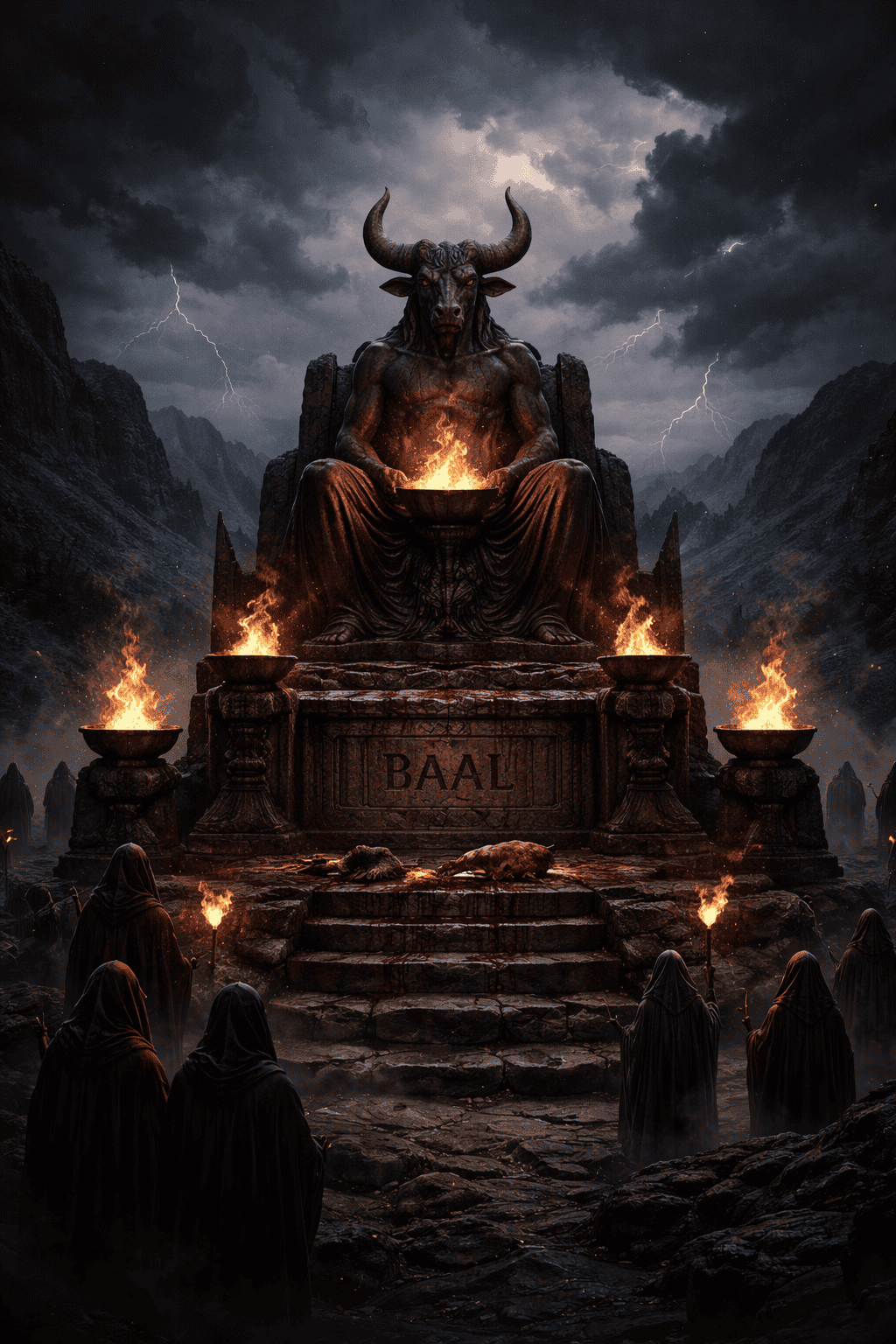
The cult of Baal had a professional class of priests. The 450 prophets of Baal on Mount Carmel were not volunteers. These were men who had given their lives to this system — trained, organized, and in Ahab’s day, paid from the royal treasury.
By 1 Kings 18, the cult had a government-backed priesthood operating inside Israel. Not in Canaan. Not in Phoenicia. In the northern kingdom. Jezebel brought it from her homeland and Ahab gave it official standing.
That’s not just idolatry. That’s a hostile takeover of Israel’s religious identity.
What the Rituals Actually Involved
To understand why God responded the way He did — and why the prophets speak with such urgency — you have to look at what this cult actually required of people.
Frenzied Devotion
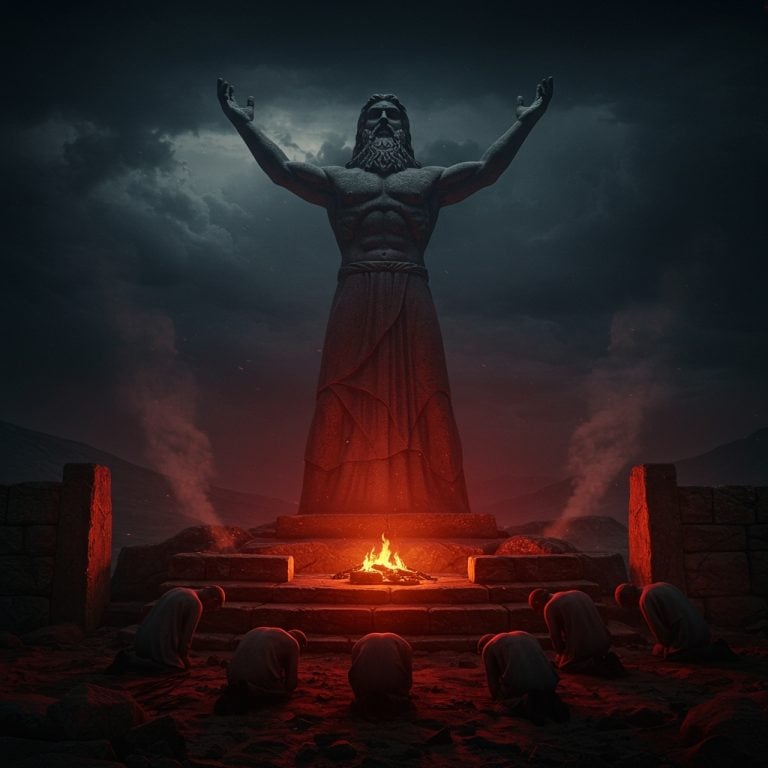
The prophets of Baal on Mount Carmel cried out, danced, and cut themselves with swords and lances until the blood ran down them (1 Kings 18:28). This was not a dramatic one-time display. It was their normal worship. The idea was to get Baal’s attention — to work themselves into enough of a frenzy that he would have to respond.
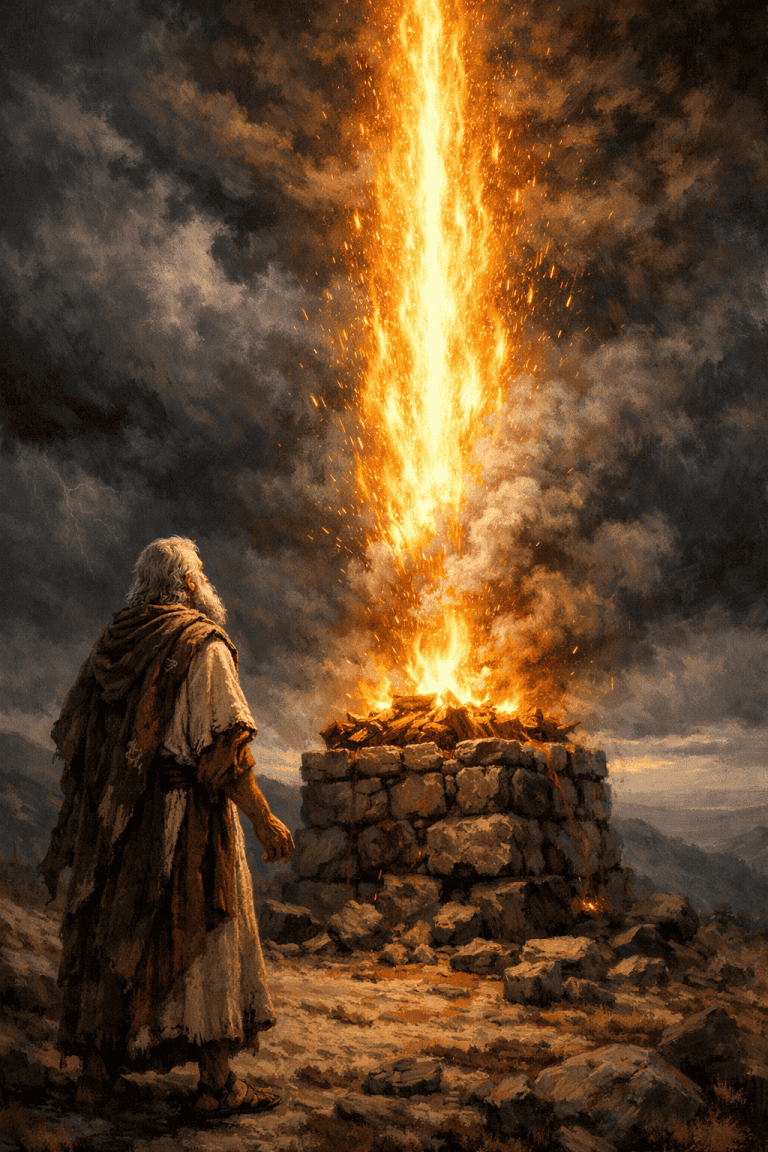
Elijah didn’t match any of that. He prayed once. Calmly. And the fire fell. Four hundred fifty prophets, all day, nothing. One man, one prayer, done.
Sex Was Built Into This Religion
Sex was built into this religion. That wasn’t a side effect — it was the point. The idea was that what happened at the temple would move the gods to send rain and make the land fertile. So there were cult prostitutes at the shrines. Men and women both. And people went.
That’s what Hosea is describing when he uses marriage language. It’s not a metaphor he’s reaching for. Israel was literally going to these places. God calls it adultery because that’s what it was — a covenant people chasing something else.
Child Sacrifice
This is where the cult confronts us most directly. In its most extreme forms — particularly where Baal was identified with Molech — the cult demanded the sacrifice of children. Parents burned their own infants as offerings.
God’s response in Jeremiah 19:5 is worth reading carefully: “They built the high places of Baal to burn their sons in the fire as burnt offerings to Baal, which I did not command or decree, nor did it come into my mind.”
Three clauses. Each one more emphatic than the last. This wasn’t disapproval. It was brokenhearted grief.
Archaeology confirms it happened. Excavations at Carthage and other Phoenician sites have uncovered burial grounds containing the cremated remains of infants, with inscriptions confirming they were sacrifices. The biblical account is not exaggerated. The clay tablets found at Ugarit in Syria tell the same story from the other side — Baal as hero, rain-giver, conqueror of death. World History Encyclopedia has a solid overview if you want the historical detail.
The Political Dimension
One of the things that gets missed is how thoroughly political the cult of Baal was. It wasn’t just a personal spiritual choice. It was tied to foreign policy, royal marriages, and trade alliances.
Ahab married Jezebel, daughter of the king of Sidon, to cement an alliance with Phoenicia. Phoenicia was Baal country. Jezebel brought her religion with her — and the resources to fund it. She put 450 prophets of Baal and 400 prophets of Asherah on the royal payroll (1 Kings 18:19).
That made the cult a matter of state. To challenge it was to challenge the crown. Elijah understood this. That’s why the confrontation on Carmel was so high-stakes — and why Jezebel’s death threat came immediately after.
This pattern ran through Israel’s history. When a king wanted to signal goodwill to a foreign ally, adopting their religious practices was the easiest way to do it. The prophets weren’t just preaching personal holiness. They were going up against a system.
How God Dismantled It
The most direct dismantling of the cult came through Jehu in 2 Kings 10. He used deception — announced a great sacrifice for Baal, invited the entire priesthood and all the worshipers, waited until he had confirmed no servant of Yahweh was inside, then ordered the slaughter. The temple was demolished and turned into a latrine.
Decisive. Total. And still not enough to change Israel’s heart permanently.
That’s the hard part of this story. The external cult could be destroyed. The pull toward false gods — toward systems that promised blessing without holiness, control without covenant — that survived every purge. The prophets understood that. Jeremiah wrote about the need for a new covenant written on the heart. Ezekiel watched the glory of God depart the temple, then promised a day when God would give His people a new spirit.
You can tear down an altar. Only God can replace what the cult corrupted on the inside.
The Cult of Baal in the New Testament
The New Testament doesn’t use the phrase “cult of Baal” — but the reality shows up.
Paul quotes 1 Kings 19 in Romans 11, using the 7,000 who had not bowed to Baal as an illustration of the remnant God always preserves. His point isn’t historical trivia. He’s showing that God’s purposes hold even when His people have been seduced by false systems — and that the same principle applies to Israel’s current state in Paul’s day.
In Revelation 2:20, the church at Thyatira is rebuked for tolerating a “Jezebel” who was leading people into immorality and idolatry. The reference is not accidental. The pattern of the cult — sensuality, false teaching, compromise with the surrounding culture — had shown up inside the church.
The names changed. The structure stayed the same.
What This Looks Like Today

Here’s the honest question: does the cult of Baal have a modern version?
It does. Not with priests and altars — but with the same basic offer. Blessing without holiness. Worship without covenant fidelity. A religion that serves self while calling itself devotion to God.
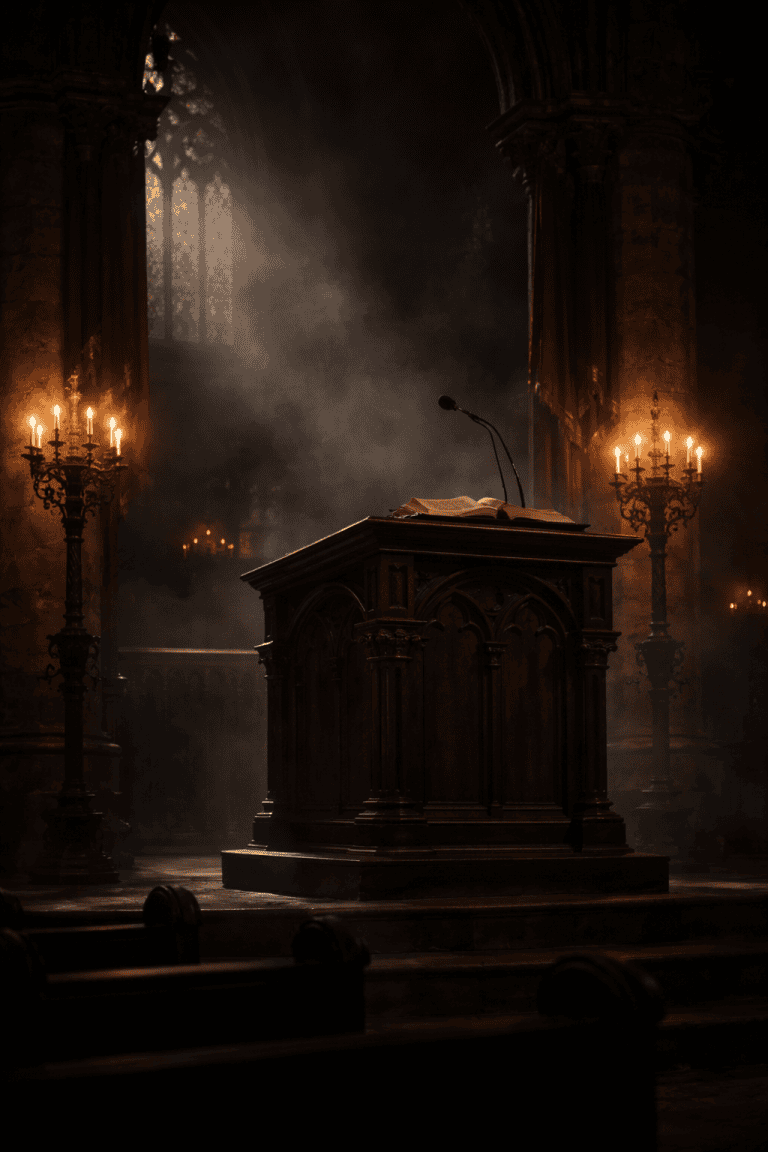
The prosperity gospel is the most obvious form. It promises health and wealth in exchange for offerings — a transaction where God becomes obligated to perform when you follow the right steps. That’s Baal with a microphone.
But it’s not only the prosperity gospel. Anytime a church softens God’s demands to keep people comfortable — anytime the worship service is designed around what the audience wants rather than what God requires — the same logic is running underneath it. The cult of Baal was compelling because it was accommodating. It didn’t demand holiness. It didn’t require trusting an invisible God. It gave people something to do, something to see, and results they could measure.
That offer hasn’t gone away. It just stopped needing an altar.
The Remnant Who Refused
One more thing before we close, and it matters.
Even at the lowest point — when Elijah thought he was the only one left — God told him there were 7,000 in Israel who had not bowed to Baal. Seven thousand people, unrecognized, holding to covenant faith in a culture that had abandoned it.
The cult looked dominant. It had royal backing, a funded priesthood, and cultural momentum. But it couldn’t touch the 7,000. And in the end, the cult was demolished — not the remnant.
That principle hasn’t changed either.
Keep Reading in This Series
- What Is Ba’al Worship? A Biblical and Historical Overview
- Why Did Israel Worship Baal Again and Again?

Walt Roderick is a Christian writer who cares more about biblical clarity than online applause. He writes to strengthen believers and confront spiritual drift.