Why Do I Keep Sinning?
If you’ve ever sat in silence after failing God—again—you’ve likely asked the question: why do I keep sinning?
Not once. Not twice. But over and over.
Maybe it’s anger. Lust. Gossip. Pride. Fear. You promised God you’d stop. You even wept over it. But here you are again—staring at the ruins of what you just did.
You’re not alone.
This question isn’t new. The Apostle Paul asked it too. And the Bible doesn’t dodge it. It meets it head-on—with truth that convicts and grace that restores.

You’re Not the Only One Asking
Many Christians wrongly assume they should’ve “graduated” from sin by now. They confuse justification with sinlessness. But Scripture tells a more honest story.
Paul writes in Romans 7, “I do not understand my own actions. For I do not do what I want, but I do the very thing I hate… Wretched man that I am! Who will deliver me from this body of death?” (vv.15, 24)
Sound familiar?
Even with new desires and a renewed heart, you’re still at war with your flesh. Sin hasn’t disappeared. It’s been dethroned—but it hasn’t surrendered.
Which brings us back to the question: why do I keep sinning if I’ve been born again?
You Keep Sinning Because Sin Still Lives in You
Not as a ruler. Not as your master. But as a parasite.
Your new nature delights in God’s Word, but your old nature still whispers lies. Sin entices. It tempts. It promises life while delivering death.
That’s why James 1 says sin begins with desire. You don’t stumble into rebellion. You want it. You believe—on some level—that sin offers something God is withholding.
This is not a surface-level struggle. It’s a soul-level war.
Sin Is Deceptive Because It Promises Pleasure
John Piper once said, “The power of sin is the promise of pleasure.” That’s why we fall. Not because we forget sin is wrong, but because in the moment, we believe it’s worth it.
We think venting our anger will feel better than keeping quiet. We think looking at that image will satisfy more than purity. We think holding that grudge will protect us from being hurt again.
But sin always lies.
It overpromises and underdelivers. Every time.
So the real battle is not behavior management. It’s a war of worship. You sin because you love something more than you love Christ in that moment.
You’ve Been Set Free—But You’re Still in the Fight
Let’s be clear: if you are in Christ, you are not defined by your sin.
You’ve been justified—declared righteous by faith. That status doesn’t fluctuate with your performance. God’s verdict over you is final, not fragile.
But sanctification is different. It’s ongoing. Progressive. Gritty.
Sanctification is the process of becoming what you already are in Christ.
That means growth will be uneven. Some days you’ll resist temptation with joy. Other days you’ll fall flat and run back to God in tears.
This isn’t failure. It’s formation.
How to Break the Cycle and Fight Back
So how do you stop living on repeat? How do you move forward when the struggle feels never-ending?
Here are four biblical steps:
1. Confess Honestly
Stop pretending. Stop blaming. Stop minimizing. Own it.
1 John 1:9 says, “If we confess our sins, He is faithful and just to forgive us…” Confession isn’t a performance. It’s a return. God doesn’t need your groveling. He wants your heart.
2. Walk by the Spirit
Galatians 5:16 commands, “Walk by the Spirit, and you will not gratify the desires of the flesh.” You can’t fight sin with flesh-powered willpower. You need Spirit-empowered obedience.
That means you need God’s Word daily. You need prayer that’s real, not ritual. And you need to depend on His strength, not your own.
3. Starve the Sin, Feed the Soul
Whatever tempts you—starve it. Don’t flirt with it. Don’t manage it. Kill it.
And then replace it with better food. Worship. Scripture. Accountability. Service. Fill your life with things that stir your affection for Christ.
You won’t overcome sin by saying no more. You’ll overcome it by saying yes to something better.
4. Don’t Fight Alone
Sin thrives in the dark. Drag it into the light.
Find someone you can talk to. A mentor. A friend. A pastor. Confess your sins to one another, and pray for one another, as James 5:16 commands.
God designed the church to be a community of strugglers—not a museum of saints.
Even the Giants Struggled
Think your failure disqualifies you?
David committed adultery and murder—and still wrote psalms of repentance that shaped generations. Peter denied Jesus to a servant girl—and then preached at Pentecost. Paul called himself the “chief of sinners”—and yet became the greatest missionary the world has ever known.
You are not disqualified by your sin. You are invited to come clean.
And when you do, grace meets you—not condemnation.
Why Do I Keep Sinning? Here’s the Real Answer
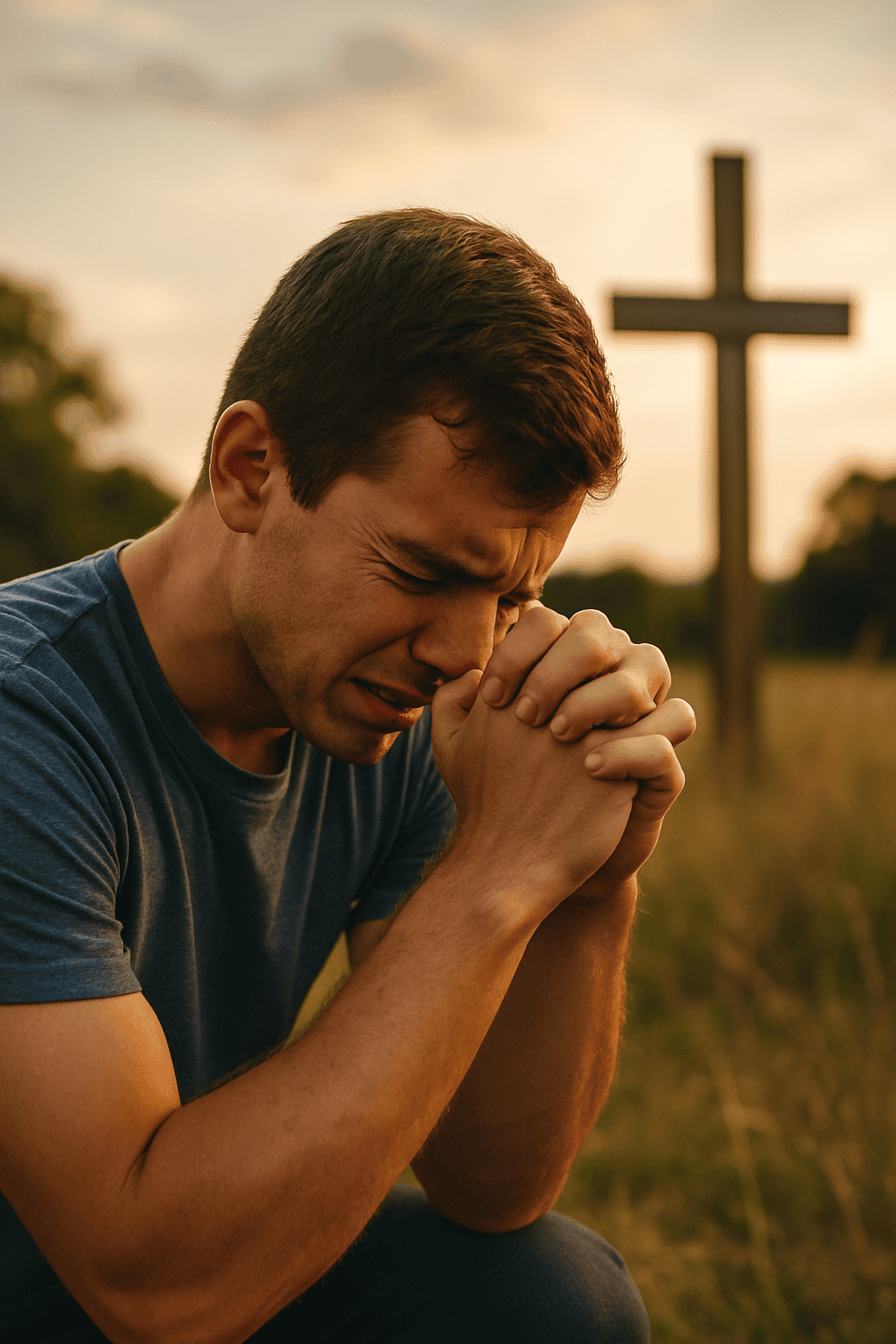
Because you’re still in process.
Because sin still whispers.
Because your flesh still wants what your spirit hates.
But also because God is not finished with you. He is sanctifying you. Patiently. Faithfully. Powerfully.
Luke Kjolhaug, in his book Sinner Saint, reminds us that the Christian is “one hundred percent sinner and one hundred percent saint.”¹ That paradox doesn’t minimize our sin—it magnifies grace. You are not two people. You are one person, living in the tension of two natures.
Your old nature is real—but it is not ultimate. Your sin is present—but it is not final. And the very fact that you feel the tension is itself a mark of spiritual life. Kjolhaug puts it plainly: the time to worry is not when the struggle continues, but when the struggle disappears.¹
So when you ask, why do I keep sinning?, remember this: the battle is the evidence. Dead hearts don’t wrestle. Alive ones do.
You are not condemned. You are not cast off. You are not alone.
You are being changed—even when you can’t see it.
What Now?
Don’t quit. The struggle is proof of life.
Don’t hide. Freedom comes when you walk in the light.
Don’t compromise. God didn’t save you to leave you stuck.
Christ is enough—not just to forgive your sin, but to change your desires.
So get up. Cry out. And walk forward by grace.

Walt Roderick is a Christian writer who cares more about biblical clarity than online applause. He writes to strengthen believers and confront spiritual drift.