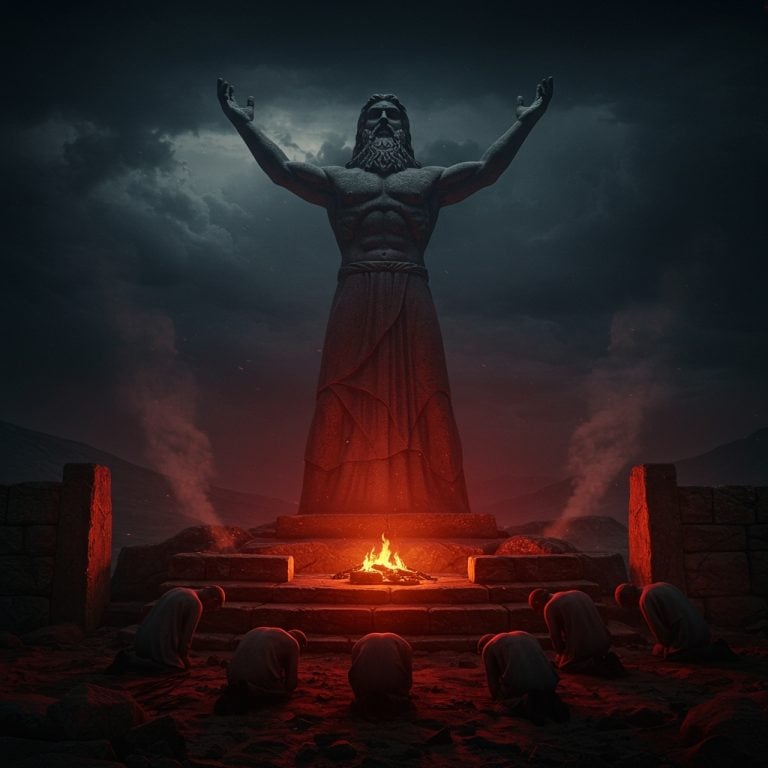
Aliens & the Bible: What Scripture Really Says (Debunking the Myths)
The idea of aliens, UFOs, and life beyond Earth grabs people’s imaginations. But for many Christians, an uneasy question lingers: Does the Bible say anything about aliens? In a world where cosmic speculation meets Scripture claims, confusion runs deep. In this article, I survey what Scripture actually says — and exposes why the Bible never endorses the alien-UFO theories filling pop culture. If you’re tired of speculation and want clarity, read on.
And as a believer who’s lived long enough to watch new ideas come and go, I’ve learned this: whenever the world starts talking about something “out there,” Christians need to be clear about what’s solid, what’s speculation, and what Scripture already told us long before the news cycle caught up.

So let’s talk plainly.
Because if alien beings exist the way our culture says they do—biological creatures from another planet—then every part of the gospel story suddenly needs reevaluating. And if that’s not what we’re dealing with, then we need another category. Thankfully, Scripture gives us one.
Before we chase the theories, we need to start with the question itself: what does the Bible say about aliens?
More than people realize.
Why This Question Matters for Christians
Whenever I hear someone say, “Well, if aliens are real, that doesn’t change my faith,” I understand the instinct. But the truth is more complicated.
If extraterrestrials exist as natural life on another planet, it raises questions that reach into every corner of Christian theology:
- Did Adam’s fall affect them?
- Do they have sin?
- Did Jesus die for them too?
- Are they immortal?
- Are we still the image-bearers God speaks about?
- Are they part of creation’s redemption?
- Are they outside the gospel story—or inside it?
Every doctrine—creation, fall, incarnation, redemption, resurrection—is tied to humanity, to the Earth, and to the story God told through Israel and Christ.
If you introduce another race of beings, you’re not adding a chapter. You’re rewriting the entire book.
And that’s why Christians can’t shrug this off like it’s harmless curiosity.
But here’s the good news: the Bible doesn’t leave us hanging.
It just gives us a different category than the one Hollywood offers.
And the ancient world was filled with spiritual interpretations of strange phenomena — something we see clearly in the archaeological evidence of Baal worship and other pagan religions that shaped the ancient Near East.
When People Say “Aliens,” They Often Mean Something the Bible Already Talks About
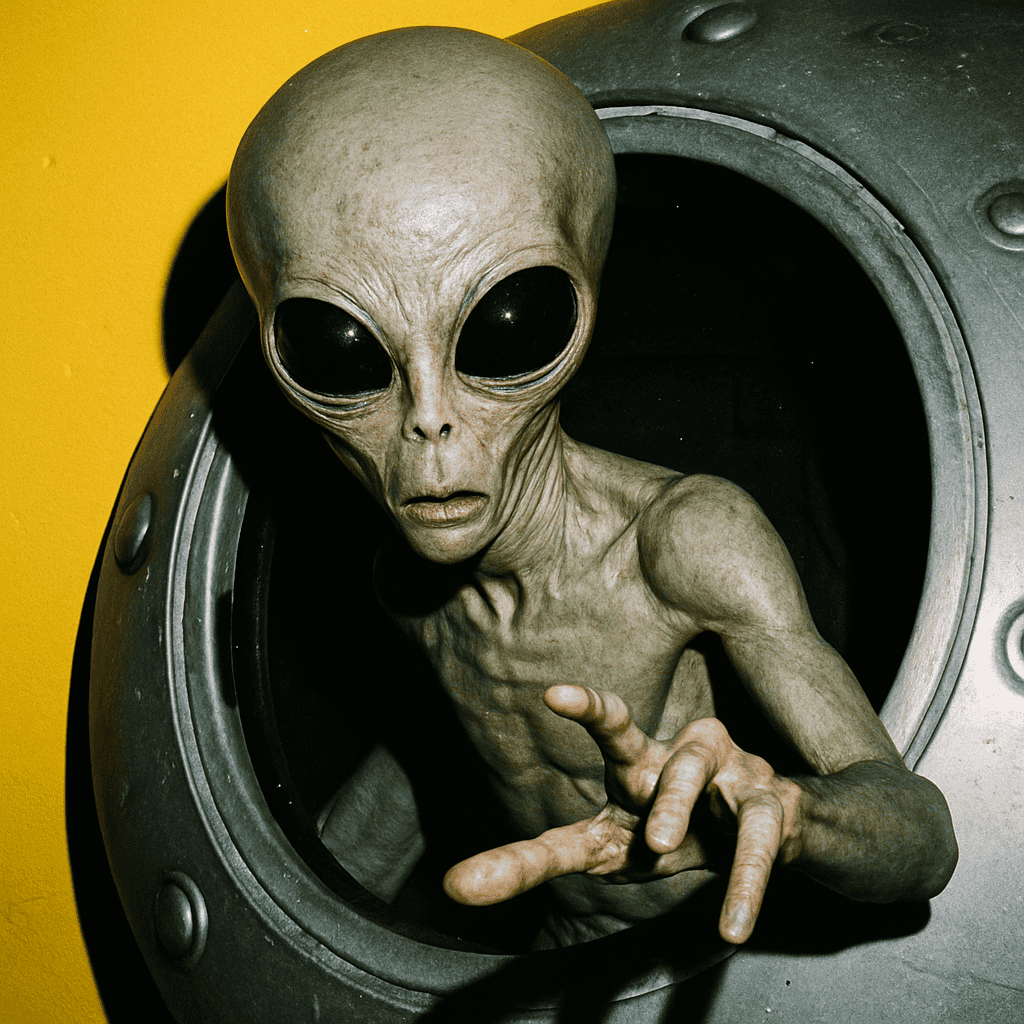
Many Christians hear “alien” and immediately picture a gray creature stepping out of a spacecraft. But if “alien” simply means not from planet earth, Scripture already has a fully developed category:
angels
fallen angels
spiritual beings
powers and principalities
beings who appear in strange forms
beings capable of deceiving, appearing, disappearing, and interacting with humans
The ancient world didn’t lack a category for “non-human intelligences.”
We’re the ones who narrowed our imagination to biology and planets. Some people try to connect modern UFO and alien ideas to the giants or “mighty men of old” in Genesis 6 — but those passages refer to spiritual or hybrid beings in a fallen world, not extraterrestrial biology.
The Bible has had the language for this all along.
And when you frame the question correctly—what does the Bible say about aliens?—you quickly see that the closest biblical match isn’t “life from another star system,” but angelic or fallen angelic beings.
When I read Genesis 6, Jude, and Peter, I don’t see a universe filled with creatures needing salvation. I see spiritual beings crossing boundaries God never gave them permission to cross.
Let’s walk through those passages.
Genesis 6, Jude, and Peter: The Other Category of “Not From Here”

I’ve heard the scoffing. “You’re saying aliens are demons?”
No, I’m not trying to oversimplify anything. I’m saying Scripture already gives us a better category than biological extraterrestrials.
Genesis 6:1–4
The “sons of God” came down, crossed into human territory, and caused such corruption that God judged the entire world with a flood.
These beings weren’t human. They weren’t from Earth.
They weren’t aliens from another solar system, but they weren’t earthly either.
Cities Church makes this same point: these beings were angelic, not imaginary. Their rebellion was real, visible, and devastating.
Jude 6–7
Jude describes these beings leaving “their proper dwelling” and being judged for stepping into a realm God never assigned to them.
2 Peter 2:4
Peter talks about angels who sinned and were bound because of their corruption on Earth.
Does this sound like a biblical category for “beings not from here”?
Absolutely.
This doesn’t mean every UFO sighting is spiritual. But if someone asks what does the Bible say about aliens, the most honest answer is:
It points us toward spiritual beings, not extraterrestrial biological life.
If Aliens Are Biological Life From Another Planet, the Gospel Gets Complicated Fast
Let me say this plainly—I’m not afraid of scientific discovery. I’m not bothered by telescopes or talk about habitable planets. But I’ve lived long enough to see how fast new ideas catch fire when people are already drifting spiritually.
If extraterrestrials exist—with bodies, cultures, languages, and moral agency—then humanity is no longer the center of the story God told.
Think about what that does to core doctrines:
1. The Incarnation
Jesus took on human flesh.
Not the flesh of multiple species across the cosmos.
2. The Fall
Adam’s sin affected this world.
Would alien beings have their own “Adam”?
Their own fall?
Their own Savior?
3. Redemption
If Jesus died once for all, who is included in the “all”?
Humanity?
Every species ever created?
4. Resurrection
Scripture says the resurrection is tied to Adam’s race, not every possible race God might have created on another planet.
You see the problem.
And if you want clarity on what Scripture says about eternity, it’s worth asking who actually goes to heaven and who doesn’t.
If aliens exist the way our documentaries describe them, you’re not tweaking Christianity—you’re rebuilding it.
And that’s why the simpler, more biblical category—spiritual beings—is far more consistent with Scripture.
If you want a deep dive into the core doctrines that shape this conversation, here’s a good place to revisit: five essential beliefs of Christianity.
What Scripture Actually Tells Us About Beings Beyond Humanity
When I read the Bible without forcing modern categories into it, I see:

- Beings who serve God (Hebrews 1:14)
- Beings who rebel (Revelation 12)
- Beings who deceive (2 Corinthians 11)
- Beings who take on forms (Genesis 18, Luke 24)
- Beings who travel between realms (Daniel 10)
- Beings who appear as something they’re not (2 Corinthians 11:14)
When someone today says, “I saw something not human,” that doesn’t automatically mean extraterrestrial biology.
It might simply mean what the Bible has said for thousands of years:
There are spiritual beings—not from here—who interact with us.
The culture calls them “aliens.” Scripture calls them something else.
How Should a Christian Respond to Alien Claims?
I don’t dismiss every report. I don’t believe everyone is lying. But I don’t swallow these claims whole either. I look at them through the only lens that makes sense of reality: Scripture.
Here’s the grid I use:
1. Does the claim agree with Scripture’s categories?
If it sounds more like a spiritual encounter than a biological one, Scripture gives us language for that.
2. Does the experience lead a person toward God—or away?
Truth draws people to Christ.
Deception pulls them away.
3. Does it contradict the gospel?
Anything that undermines the Cross, human uniqueness, or the authority of Christ is not from God.
4. Does the claim create new revelation outside the Bible?
Spiritual deception loves “new messages” and “hidden knowledge.”
God does not.
5. Does it fit the pattern of fear, confusion, or spiritual oppression?
Those are biblical markers of demonic activity—not extraterrestrial intelligence.
What About the Scientists and Theologians Engaging This Topic?
Even mainstream Christian thinkers are trying to wrap their heads around this. I read the recent Christianity Today piece on aliens and theology, and one thing struck me:
The more seriously people take this topic,
the more they realize the biblical worldview is the only one equipped to handle it.
Not because Christians are afraid of discovery.
But because Scripture already explains realities bigger than we’re used to dealing with.
So… What DOES the Bible Say About Aliens?
After walking through this, here’s the no-nonsense answer:
1. The Bible never teaches the existence of biological extraterrestrial civilizations.
Not hinted. Not implied.
2. The Bible does teach the existence of non-human intelligences that interact with Earth.
Angels, fallen angels, principalities, powers.
3. If something “not from here” appears to humans, Scripture’s closest category is spiritual, not biological.
4. The gospel centers on humanity because that’s where God chose to anchor His story.
That’s not arrogance—it’s revelation.
5. Any being—whether seen in the sky, in a story, or in a documentary—that undermines the gospel is not from God.
If you want my personal summary after watching this conversation rise and fall over the years, here it is:
I’m not worried about aliens.
I’m concerned about deception.
And Scripture has prepared us for that far more than our documentaries have.
Final Word

The next time someone asks what does the Bible say about aliens, you can tell them:
“It tells us everything we need to know about beings that aren’t from here—and none of it shakes the gospel.”
And if you want to get grounded in what Christians actually stand on, start here:
Five essential beliefs of Christianity
Curiosity is fine.
Speculation has its limits.
But truth holds steady because God does.

Walt Roderick is a Christian writer who cares more about biblical clarity than online applause. He writes to strengthen believers and confront spiritual drift.