Mighty Men of Old: Understanding Genesis 6’s Most Mysterious Figures
Genesis 6 sits near the top of the list of passages that make people pause mid-reading. You’re moving through genealogies, early human history, the growth of the world—and suddenly you hit a verse about the mighty men of old. The sentence appears, hints at something ancient and important, and disappears almost as quickly. And for years I tried to force the passage to give up more detail than it actually offers. The older I get, the more careful I am to let Scripture say only what it says, especially in places where it deliberately holds back.
That’s why the question still matters:
Who were the mighty men of old—and why does Genesis mention them right before the flood?
It’s tempting to chase theories or build stories around them. But the Bible gives us the right posture—humility. Genesis isn’t written to satisfy curiosity; it’s written to show the depth of human corruption and the seriousness of God’s response. These men were real figures living in the real pre-flood world, and understanding them begins with understanding the text that introduces them.
Where the Bible Mentions the Mighty Men of Old
The phrase appears in one place:
“The Nephilim were on the earth in those days, and also afterward, when the sons of God came in to the daughters of man and they bore children to them. These were the mighty men of old, the men of renown.” — Genesis 6:4
The placement is intentional. Genesis 6:1–4 forms a unit, a short window into the corruption that filled the world before the flood. Two phrases define these figures—mighty ones and men of renown. Whatever else we say, these were people known for strength, dominance, or influence. Their reputations were large enough to be remembered—yet not large enough for Scripture to linger on them.
And part of understanding them is recognizing the broader context. This passage stands alongside the discussion of the sons of God in Genesis 6:1–2, a subject explored deeply in your article on who the sons of God in Genesis 6 actually are. That passage matters here because these ancient figures appear connected to the same moment of boundary-crossing corruption.
Genesis gives us just enough to understand the seriousness of the world Noah lived in. These weren’t ordinary days, and these weren’t ordinary people.
What the Nephilim Have to Do With This
You can’t explore this passage without addressing the Nephilim. Genesis links the concepts even if it doesn’t equate them. The verse begins, “The Nephilim were on the earth in those days…” and ends with a reference to people whose reputations endured.
The Nephilim appear in connection with the sons of God and the daughters of man, and the timing suggests a relationship. The root of the word is often tied to the idea of “fallen ones,” though the exact nuance is debated. What’s clear is that these were real people, not metaphors or mythological additions. Scripture presents them as part of the historical world before the flood—part of a moment when the created order was violated in ways we can’t fully reconstruct.
I’ve learned over time not to speak where God has not spoken. Genesis doesn’t give us the height, shape, or appearance of the Nephilim. It doesn’t offer a list of feats or stories. It simply places them in the narrative to show the depth of a world unraveling.
For those who want to understand the spiritual implications of beings like the sons of God, my article on biblically accurate angels provides a grounded place to start.
The Nephilim matter here because they mark a world spiraling into corruption—a world where power, violence, and spiritual rebellion were shaping human history.
What the Phrase “Mighty Men of Old” Most Likely Means
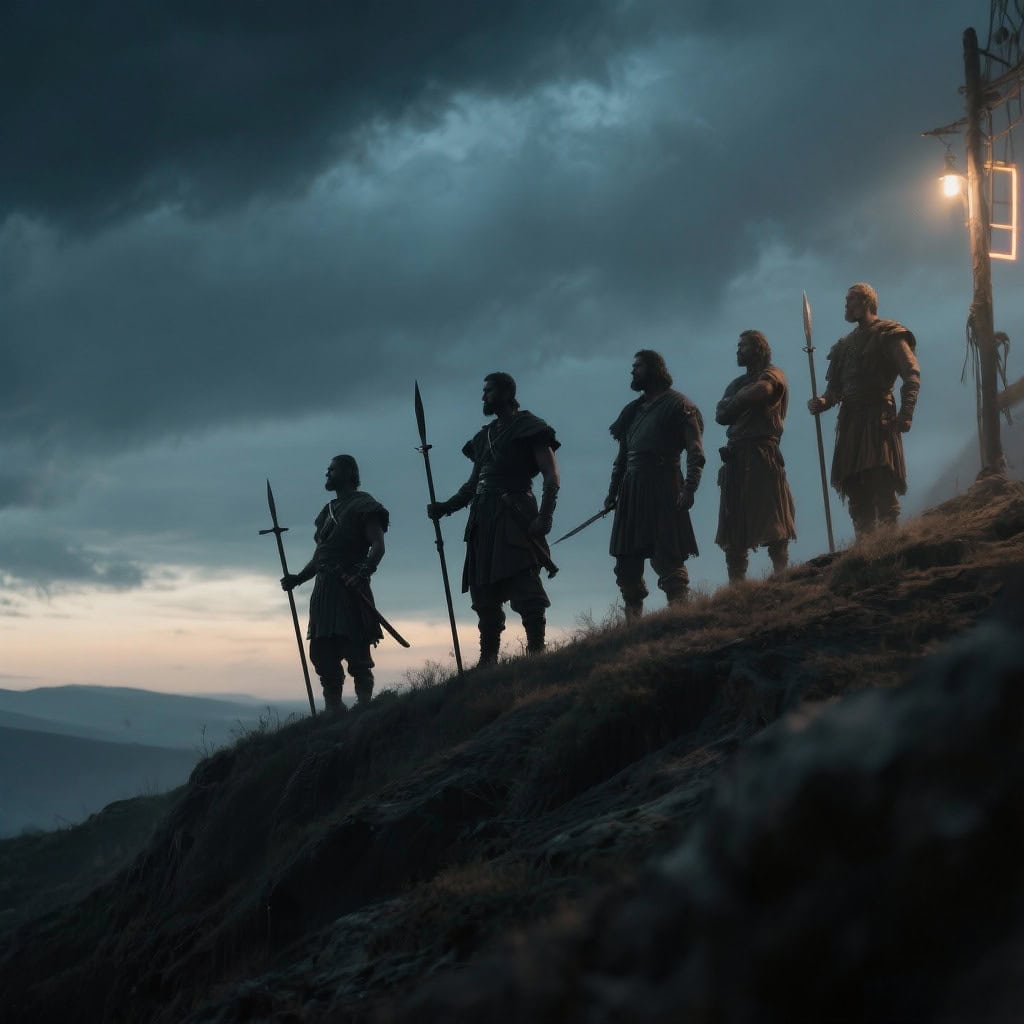
Warriors with Reputation
The plain meaning of the term points toward people who were known for strength, influence, and dominance. In the ancient world, “mighty” didn’t always refer to size; it often referred to force—warriors, leaders, or individuals who shaped events through power. The phrase “men of renown” drives this home. These were people the ancient world remembered, for reasons Scripture doesn’t glorify.
They were part of the cultural and moral landscape that preceded the flood—figures who left a mark on early human history.
Possible Connection to “Fallen Ones”
Some connect the term to the meaning behind the word “Nephilim,” often tied to the idea of “fallen ones.” If that’s the case, the phrase may point to a group marked by moral or spiritual corruption as much as physical power. But the Bible doesn’t build a system around that definition. It simply allows the word to stand in its place, giving us enough to recognize the seriousness of the situation without inviting speculation.
The World Before the Flood
What Genesis does emphasize is the condition of humanity. The world before the flood was marked by violence, arrogance, and boundary-breaking rebellion. Every time I slow down and read the passage, I’m reminded how easily human beings chase strength and recognition while ignoring the God who made them.
These well-known figures fit into that environment. They were famous, powerful, and influential—and part of a world that had turned away from God at every level.
The Numbers 13 Connection — And Why It Doesn’t Control Genesis 6
The Nephilim appear one more time in Scripture in Numbers 13:33, where the spies report seeing people who made them feel like grasshoppers. But the context matters. The spies were terrified. Their description reflects fear, not objective measurement. The entire chapter shows them exaggerating to discourage faith.
So while the Numbers passage uses the word “Nephilim,” it isn’t meant to control our understanding of Genesis 6. It’s a later encounter, shaped by fear, not a detailed account of the original group.
If someone searches for giants in the Bible, they’ll often land in a swirl of speculation. But Genesis roots the discussion not in fascination, but in moral corruption. The emphasis is not on size—it’s on the condition of the human heart. Though size can certainly be a consideration given the overall context (always room for discussion!).
Major Interpretations in Christian Thought
Genesis 6:4 has been debated for centuries. But a sober look shows there are three main views, each attempting to explain the identity of the people mentioned.
The “Warrior Figures” View
This interpretation sees them as powerful human warriors—dominant individuals who shaped the pre-flood world. It emphasizes reputation and violence, fitting the theme of corruption found in the rest of the chapter. This view is partially true; they were certainly powerful and influential men.
The “Heavenly Beings” View (Most Consistent with the Old Testament)
This view connects these figures to the union described in Genesis 6:1–2, where the sons of God—a phrase consistently used in the Old Testament to describe heavenly beings—take human wives. The result is a crossing of boundaries between the spiritual and human realms, producing people who stood out in strength, influence, or corruption.
This reading aligns most clearly with the OT use of “sons of God,” which always refers to heavenly beings in Job 1–2 and Job 38:7. It also fits the flow of Genesis 6, where the focus is not on physical features but on the escalation of wickedness.
This is the view your previous article affirmed, and it remains the most straightforward reading of the passage.
The “Ancient Kings” View (A Minority Interpretation)
Some suggest these men were simply kings or rulers—“men of name,” meaning individuals with power and fame. While this reading attempts to avoid the supernatural elements of the passage, it doesn’t fit the Old Testament pattern of the phrase “sons of God.” It also doesn’t naturally explain why this moment in history is tied directly to the flood narrative.
What Scripture Does—and Does Not—Tell Us About These Men
Genesis is clear:
- They were real figures, not metaphors.
- They lived in the pre-flood world, not in a mythological realm.
- They were connected to a supernatural boundary-breaking event.
- They contributed to a culture of violence and corruption.
Scripture is equally clear about what it doesn’t say:
- It doesn’t say they were not demons.
- It doesn’t say they were not aliens or extraterrestrial beings (for a biblical look at that subject, see my article on what the Bible says about aliens).
- It doesn’t say they were not immortal hybrids wandering the earth.
- It doesn’t say they were not described as giants.
The Bible gives us enough to understand their place in Genesis 6—and enough restraint to be willing to accept alternate viewpoints.
Why Genesis Mentions These Men at All
Genesis includes the mighty men of old not to fascinate us, but to warn us. The early chapters of Scripture describe a world unraveling—violence spreading, spiritual rebellion deepening, human pride reaching its peak.
Every time I read the passage, I’m struck by how easily strength becomes a substitute for obedience, and how quickly reputation can take the place of righteousness. These were people known, remembered, and likely admired—but their fame was part of a world heading for judgment.
Genesis 6 isn’t about heroes. It’s about the seriousness of sin and the depth of human and maybe angelic corruption. The mighty men of old were examples of what happens when creation breaks its God-given boundaries.
And as the flood narrative unfolds, it becomes clear that strength couldn’t save them. Reputation couldn’t protect them. Human achievement couldn’t delay judgment.
Only God’s grace preserved Noah. Only righteousness mattered. And only the ark—God’s provision—made survival possible.
In a world that still worships strength and celebrates self-made reputation, Genesis quietly reminds us that salvation has never come from human might.
Conclusion

The mighty men of old were real figures living in the shadow of a world God was preparing to judge. They were powerful, influential, and remembered—but not in a way the Bible celebrates. Their presence in Genesis 6 shows us the depth of human corruption, the reality of supernatural rebellion, and the seriousness of sin in the pre-flood world.
For readers wanting to explore the related themes, my article on the sons of God in Genesis 6, helps pull the entire picture together through a biblical lens.
Genesis gives us only what we need—and what it gives is enough. The mighty men of old remind us that human strength fades, human stories fall short, and only God’s righteousness endures.

Walt Roderick is a Christian writer who cares more about biblical clarity than online applause. He writes to strengthen believers and confront spiritual drift.