Nephilim in the Bible: Who They Were and Why It Matters
The Nephilim in the Bible appear in four verses in Genesis 6 and one verse in Numbers 13. That’s it. Five verses total, and they have generated more speculation, more bad theology, and more movie plots than almost any other passage in Scripture.
Most of the popular treatment of the Nephilim runs in one of two directions — either dismissing them as mythology or chasing them down rabbit trails of fallen angel conspiracy theories and ancient alien speculation. Neither approach takes the text seriously.
What the text actually says is specific enough to answer the important questions. Who were they? Where did they come from? Why does the Bible mention them? And which of the three major interpretations best fits what Scripture actually teaches?
That last question has a defensible answer — and this post makes the case for it.
What the Text Says
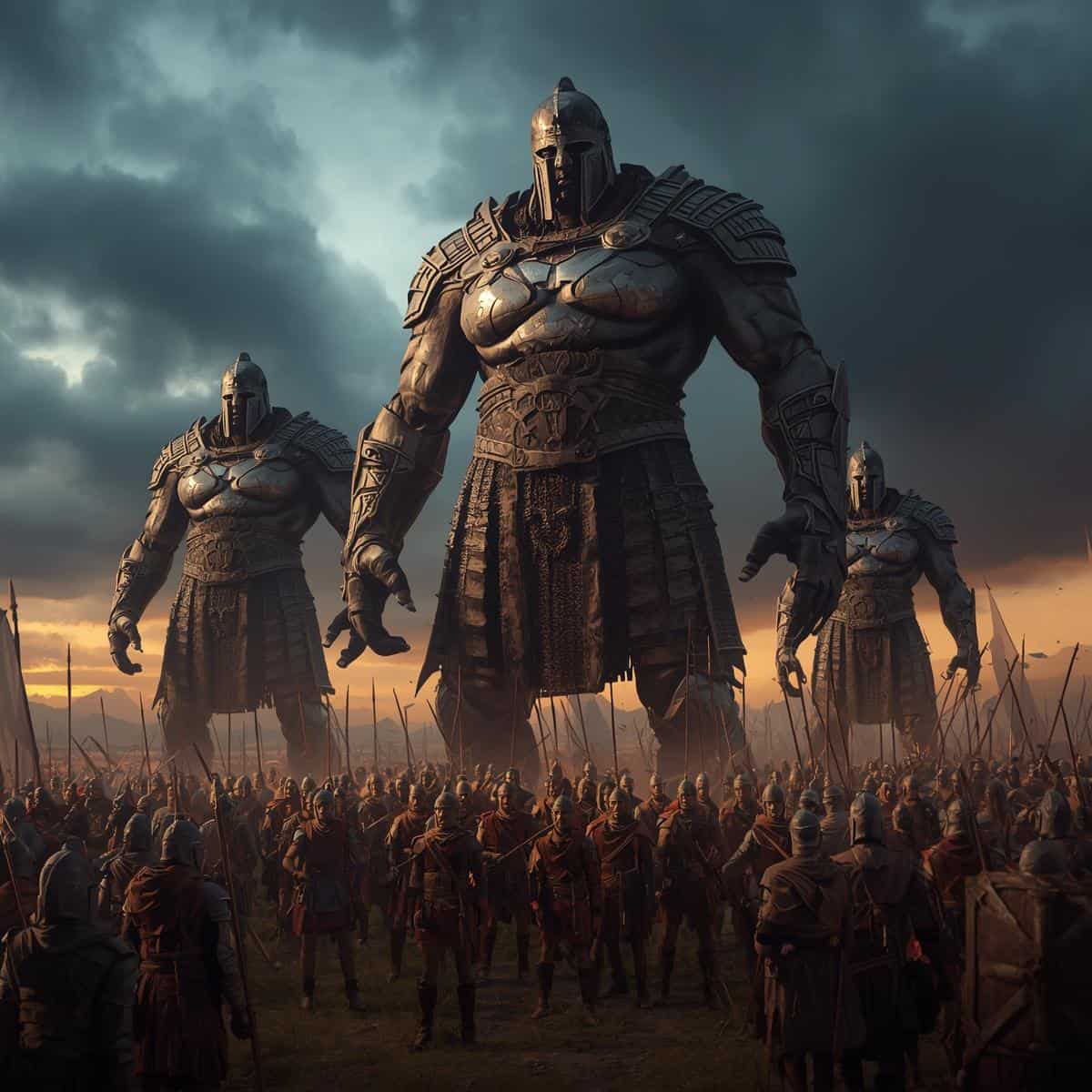
Genesis 6:1-4 — “When man began to multiply on the face of the land and daughters were born to them, the sons of God saw that the daughters of man were attractive. And they took as their wives any they chose. Then the LORD said, ‘My Spirit shall not abide in man forever, for he is flesh: his days shall be 120 years.’ The Nephilim were on the earth in those days, and also afterward, when the sons of God came in to the daughters of man and they bore children to them. These were the mighty men who were of old, the men of renown.”
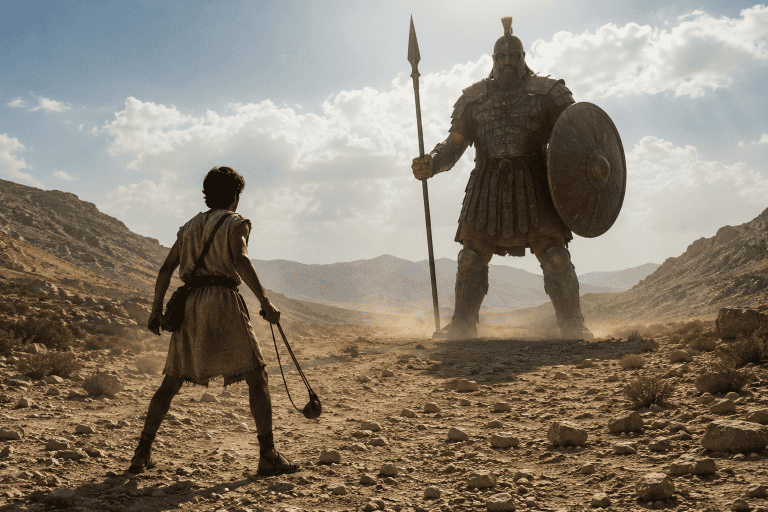
The Nephilim appear again in Numbers 13:33, when the Israelite spies return from Canaan and report — “There we saw the Nephilim (the sons of Anak, who come from the Nephilim), and we seemed to ourselves like grasshoppers, and so we seemed to them.”
Two appearances. One before the flood, one after. Both describing something unusual in size or power. Both connected to the phrase “sons of God.”
The Hebrew word Nephilim comes from the root naphal — to fall. “The fallen ones” is the most straightforward translation. The Septuagint, the early Greek translation of the Old Testament, rendered it as gigantes — giants — which has shaped popular understanding ever since.
The Three Interpretations
Interpretation 1 — Fallen Angels
The oldest interpretation — found in ancient Jewish writings, the early church fathers, and a significant number of modern scholars — is that the sons of God were heavenly beings who crossed a boundary God had established, took human wives, and produced offspring of unusual power.
The textual support is strong. Everywhere else “sons of God” appears in the Old Testament it refers to members of the divine council — heavenly beings, not humans. Job 1:6 — “the sons of God came to present themselves before the LORD.” Job 38:7 — “the morning stars sang together and all the sons of God shouted for joy.” In both cases the reference is clearly to heavenly beings.
The New Testament connections reinforce this. 2 Peter 2:4-5 — “God did not spare angels when they sinned, but cast them into hell… if He did not spare the ancient world, but preserved Noah.” Jude 6 — “the angels who did not stay within their own position of authority… He has kept in eternal chains under gloomy darkness until the judgment.” Both passages place angelic sin in the era of Noah. The connection to Genesis 6 is not explicit but it is close enough that most scholars who take the text seriously acknowledge the link.
Interpretation 2 — The Line of Seth
The second interpretation reads the sons of God as the descendants of Seth — Adam’s godly line — intermarrying with the daughters of Cain’s ungodly line. Covenant compromise leads to corruption, which leads to judgment.
This view is attractive because it keeps everything within the human sphere and fits the broader biblical theme of God’s people mixing with the ungodly and losing their distinctiveness. It also avoids the difficulty of heavenly beings reproducing with human women.
Its fatal weakness is the offspring. If the sons of God are simply godly men from Seth’s line marrying ungodly women from Cain’s line, why do their children become the Nephilim — mighty men of renown, beings of unusual power and size? Ordinary intermarriage between human lines, however spiritually compromised, does not produce that result. The Seth view cannot account for what the text says about the offspring without significantly straining the narrative logic.
The language problem compounds this. The phrase “sons of God” simply does not refer to human beings anywhere else in the Old Testament. Forcing it to mean “descendants of Seth” requires the phrase to work differently here than it does everywhere else it appears.
Interpretation 3 — Powerful Human Rulers
The third interpretation reads the sons of God as powerful kings or rulers — men who treated themselves as godlike and took any woman they wanted, exercising coercive power in the way ancient Near Eastern rulers commonly did.
This view has some cultural support — ancient kings were regularly described as sons of the gods in the surrounding cultures. The language of “took as their wives any they chose” does carry the flavor of unchecked power.
But it shares the Seth view’s fatal weakness. Powerful human rulers taking women by force does not explain Nephilim offspring. The text is making a claim about the nature of the children, not just the behavior of the fathers. Human rulers, however powerful, do not produce beings described as “mighty men of renown” in a way that requires specific explanation.
Which Interpretation the Text Supports
The fallen angel interpretation is the one that best fits what the text actually says — and here is why.
The language of “sons of God” in the Old Testament consistently refers to heavenly beings. That is not a minor point. When an author uses a phrase that has a consistent meaning throughout a body of literature, you need a compelling reason to read it differently in a specific instance. Neither the Seth view nor the ruler view provides that reason.
The offspring argument is decisive. The whole reason Genesis 6:1-4 requires explanation is that something unusual happened — something that produced Nephilim, beings the text treats as requiring special identification. If the sons of God were simply Seth’s descendants or powerful human rulers, the offspring would be human children. Remarkable perhaps, but human. The text is not describing remarkable human children. It is describing something that the narrative needs to account for specifically.
The New Testament connections in Peter and Jude place angelic sin in Noah’s era. They do not solve every question about Genesis 6, but they provide the strongest corroboration for the fallen angel reading.
The Matthew 22:30 objection — that angels do not marry — is real but not decisive. Jesus is describing angels in their proper state in heaven. The beings in Genesis 6 are precisely those who abandoned that proper state. An angel functioning within God’s design does not marry. That says nothing about what an angel in rebellion against that design might do.
What Happened to the Nephilim
Genesis 6:4 notes that the Nephilim were on the earth “in those days, and also afterward” — which means some survived into the post-flood period. Numbers 13:33 confirms this, with the Israelite spies describing the inhabitants of Canaan as Nephilim.
How did Nephilim survive the flood if the flood was global and only Noah’s family survived? The text doesn’t explain this directly. The most straightforward reading is that the same conditions that produced Nephilim before the flood — fallen beings interacting with human women — could produce them again afterward. The Numbers 13 reference to the sons of Anak as Nephilim suggests this happened in Canaan, which would explain why God’s instructions for the conquest were so total. Deuteronomy 2 and 3 contain references to the Rephaim — another group of giant warriors — which the text connects to the same general category.
Joshua’s conquest was not simply about punishing Canaanite sin. It was the elimination of a corrupted line that had no place in the land God was giving his people.
What the Nephilim Are Not
Given how much popular culture has built on this passage, it is worth stating clearly what the text does not say.
The text does not describe the Nephilim as demons. Whether fallen angels and demons are the same category is a question Scripture doesn’t fully resolve — but it’s worth noting that the Bible does not depict all fallen angels as confined. The beings in Jude 6 and 2 Peter 2:4 are specifically imprisoned — chained, in darkness, awaiting judgment. These appear to be the Genesis 6 offenders judged for that specific transgression. But Ephesians 6:12 describes principalities, powers, and rulers of darkness that are clearly active and unconfined right now. Satan himself roams — 1 Peter 5:8 calls him a roaring lion seeking whom he may devour. So the picture Scripture gives is not all fallen angels in chains. It is a specific group confined for a specific sin, while others remain active in the spiritual realm.
Where demons fit in that picture is not definitively answered by the text. Some early theologians argued that demons are the disembodied spirits of the Nephilim offspring — beings that had no proper place after death, neither heaven nor the angelic realm, and became the roaming unclean spirits the Gospels describe. It resolves the behavioral difference between the confined angels of Jude and the host-seeking demons Jesus casts out. But Scripture doesn’t state this explicitly. The honest answer is that the origin of demons is one of the questions Genesis 6 raises without fully answering. The Nephilim were the offspring of the sons of God and human women — corrupted in nature, human in some sense. Beyond that the text doesn’t go.
The text does not support ancient alien theories. The “ancient aliens” reading of Genesis 6 imports a framework the text has no interest in. The passage is not describing extraterrestrial visitors. It is describing the consequences of heavenly beings violating the boundary God established between the spiritual and human realms.
The text does not tell us how tall the Nephilim were, what they looked like, or how long they lived. Scripture gives us the shape of the story without satisfying every curiosity the story raises. Reading more into the text than it says produces bad theology regardless of how interesting the speculation is.
Why This Passage Is in the Bible
Genesis 6:1-4 is not there to satisfy curiosity about the supernatural. It is there to establish the depth of corruption that preceded the flood — corruption so comprehensive that it crossed the boundaries between the spiritual and human realms, produced offspring that required specific identification, and contributed to a world so broken that God decided to judge it.
It is also there to show that God’s boundaries matter. Whatever the sons of God were, they stepped outside the limits God had established. The judgment that followed — eternal chains, gloomy darkness, the flood — is the answer to that transgression.
And right in the middle of that judgment, God preserved Noah. The corruption was total. The grace was specific. That pattern runs from Genesis 6 all the way to the gospel.
Keep Reading in This Series

Walt Roderick is a Christian writer who cares more about biblical clarity than online applause. He writes to strengthen believers and confront spiritual drift.