What Are the Sons of God in Genesis 6? A Biblical Look at a Difficult Passage
If you’ve ever read Genesis 6 and stopped at the phrase “sons of God”, you probably felt that familiar pause—the one where you say, “What in the world is going on here?” I’ve been there myself. More than once. And the older I get, the more I realize Scripture includes things that stretch us on purpose, not to confuse us but to humble us as we read.
The sons of God in Genesis 6 are one of those places. The passage is brief—only four verses—but it sits right at the point where the world tips into judgment. Something serious happens, something that crosses a line God had drawn, and the fallout becomes part of the reason the flood came.

So what does the text actually say? And who are these “sons of God”? Angels? Men? Rulers? Something else?
Let’s take a slow, honest look. Not to chase mysteries, but to hear what Scripture is saying—and what it still calls us to consider today.
The Text Itself: What Genesis 6:1–4 Actually Says
Here’s the passage:
“When man began to multiply on the face of the land and daughters were born to them, the sons of God saw that the daughters of man were attractive. And they took as their wives any they chose.
Then the LORD said, ‘My Spirit shall not abide in man forever, for he is flesh: his days shall be 120 years.’
The Nephilim were on the earth in those days, and also afterward, when the sons of God came into the daughters of man and they bore children to them. These were the mighty men who were of old, the men of renown.” (Genesis 6:1–4, ESV)
These four verses introduce three major pieces:
- the sons of God
- the daughters of man
- the Nephilim, the “mighty men of old”
And then immediately, the story shifts to God looking at the earth and seeing that human evil had reached a breaking point. Judgment follows.
Whatever happened here, it wasn’t minor. It contributed to a world so broken God said, “No more.”
And that’s why Christians have wrestled with the meaning of sons of God in Genesis 6 for centuries.
View 1: “Sons of God” as Heavenly Beings

The oldest interpretation—often found in ancient Jewish writings, early Christian teachers, and many modern scholars—says the sons of God in Genesis 6 were heavenly beings, and were understood as angels who rebelled against God’s design.
Why do people hold this view?
1. The phrase itself.
Elsewhere in the Old Testament, “sons of God” almost always refers to heavenly beings, not humans (Job 1:6; Job 38:7). Even if the passage is strange, the language is consistent.
2. The broader scriptural connections.
Peter and Jude both mention angels who sinned in ways that connect back to the days of Noah (2 Peter 2:4–5; Jude 6). It’s not proof on its own, but it’s strong context.
3. The narrative weight.
Genesis 6 describes something unusually corrupt—something that pushed the world toward flood-level judgment.
Now, I’ll be honest: the first time I came across this view, it unsettled me. As I became familiar with the text (and a simpler reading of Genesis), I wasn’t sure what to do with the idea of heavenly beings stepping over boundaries God had set. But the more I studied, the more I understood why so many believers have held this interpretation.
Objections exist.
Some point to Jesus saying angels do not marry (Matthew 22:30). But that passage refers to angels in heaven, not necessarily angels who have rebelled. Still, it’s a fair point and keeps us humble.
This view makes sense of the language, but it also raises questions—questions Scripture doesn’t fully answer.
View 2: “Sons of God” as the Godly Line of Seth
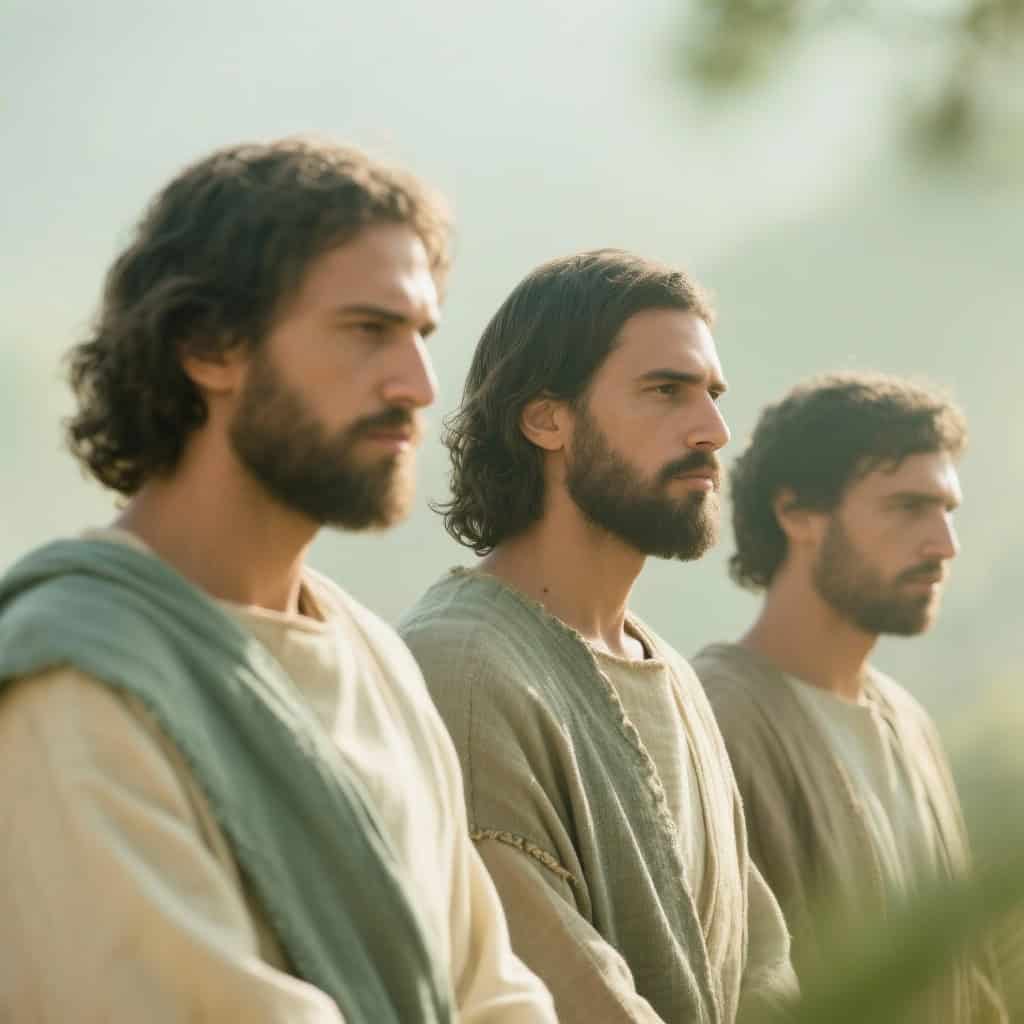
A more familiar interpretation for many Christians is that the sons of God in Genesis 6 refers to the descendants of Seth (Adam’s godly line), while the “daughters of man” refers to the descendants of Cain (the ungodly line).
This view emphasizes covenant compromise—the godly intermarrying with the ungodly and losing their distinctiveness.
And Scripture does give us reason to pay attention to generational compromise. If you’ve lived long enough, you’ve probably watched this play out in real life. I’ve seen families drift over time—not because of dramatic rebellion, but because of small decisions that pulled hearts away from the Lord inch by inch.
The strength of this view is its moral clarity: people ignored God’s design, and corruption followed.
But it has weaknesses, too.
The biggest one is language. The phrase “sons of God” just doesn’t normally refer to humans in the Old Testament. It can feel like a forced fit.
Still, many Christians hold this view because it stays fully grounded in human sin and doesn’t require crossing the spiritual-human boundary.
View 3: “Sons of God” as Powerful Human Rulers
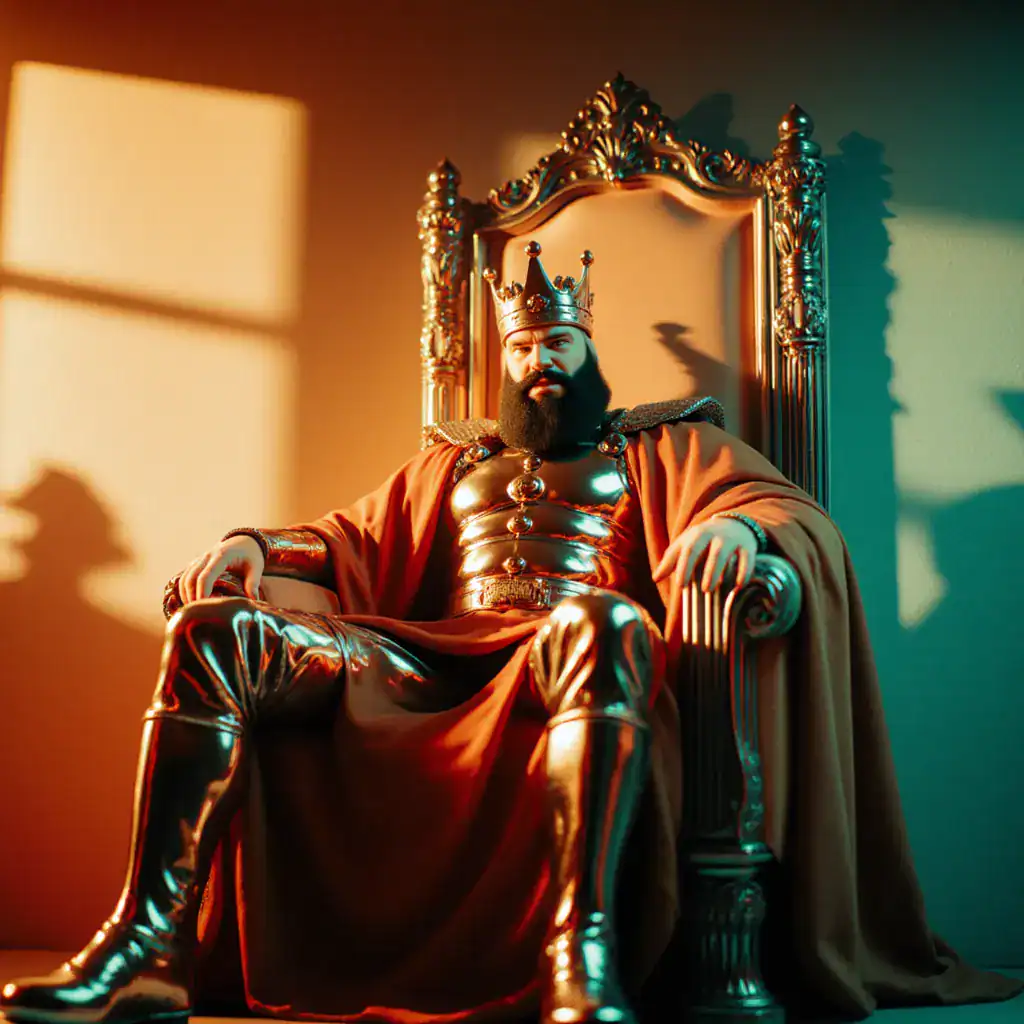
A third interpretation sees the sons of God in Genesis 6 as powerful kings or rulers—men who treated themselves as “godlike,” abusing power and taking any woman they wanted.
This would fit the ancient world, where rulers were often described as “sons of the gods.”
It also matches the text’s language about taking “any they chose,” which echoes the oppressive behavior God regularly condemns in Israel’s kings later in Scripture.
If you’ve ever worked around men who let power go to their heads, you know how destructive it can become. I’ve been in rooms where authority was used like a hammer instead of a gift, and it never ended well. That same thing seems to be going on here: men with influence taking what God never gave them permission to take.
This view keeps everything human while explaining the violence and corruption that follows.
Its downside?
The phrase “sons of God” still sits a little awkwardly. But the moral logic is strong.
What About the Nephilim?
The Nephilim appear twice in Scripture—here in Genesis 6, and later in Numbers 13:33 when the Israelite spies describe the giants in Canaan.
The word itself likely means “fallen ones” or refers to warriors of unusual strength or stature. Scripture doesn’t give us their height, their weight, or even their exact nature. It just tells us they were “mighty men,” people with a reputation.
Were they the literal offspring of the sons of God and daughters of men?
Maybe. The text is short enough that we shouldn’t build more than it allows.
Were they simply powerful warriors who lived during this era?
Equally possible.
Scripture leaves us with the shape of the story without filling in all the details. And sometimes that’s exactly what God intends.
(For deeper study, Ligonier offers a solid overview of the main interpretations:
https://learn.ligonier.org/articles/who-are-sons-god-genesis-6)
What We Can Say With Confidence
When you set every interpretation side by side, some things remain clear whether the sons of God in Genesis 6 were angelic beings, powerful rulers, or the line of Seth.
1. A boundary was crossed.
Something happened that God had set a limit around. Whether divine beings or men with power, the crossing was willful.
2. Marriage was twisted away from God’s design.
These men “took” wives—not in covenant faithfulness, but in self-centered desire.
3. The corruption helped lead the world to judgment.
Genesis 6 isn’t just background. It’s a diagnosis. The world was spiraling deeper into wickedness—and God saw it.
When I look back over my own life, I see how easily boundaries erode. It doesn’t take outright rebellion; it takes small decisions, quiet compromises, a little pride mixed with a little self-protection. Before long you’ve moved farther than you meant to go. Genesis 6 is a reminder that sin doesn’t stay small—and neither do its consequences. It also reminds us that angels can sin as well!
Why This Passage Still Matters Today
Genesis 6 isn’t there to satisfy our curiosity; it’s there to warn us about the cost of crossing lines God has clearly drawn.
1. It warns us about spiritual drift.
Whether it’s covenant compromise, abuse of power, or supernatural rebellion, the point is the same—ignoring God’s boundaries leads to destruction.
2. It prepares us for the unseen world Scripture takes seriously.
If you want a deeper look at what heavenly beings are actually like—without myths or medieval artwork—your best place to start is Scripture itself. I wrote about that here:
https://waltroderick.com/biblically-accurate-angels/
3. It shows us how judgment and mercy sit side by side.
The flood wasn’t random. It was the outflow of a world collapsing under the weight of its own sin. But right in the middle of that darkness, God preserved a remnant.
4. It invites us to deal honestly with what we don’t know.
Genesis 6 leaves room for mystery. The older I get, the more I’m okay with that. I’ve learned that running from mystery doesn’t make me wiser—listening to Scripture does.
And if you want to explore more about how Scripture explains non-human realities (from a different angle), you can read:
https://waltroderick.com/what-does-the-bible-say-about-aliens/
Even though that article tackles a different question, it sits in the same neighborhood of “unseen things Scripture addresses without apologizing for them.”
So Who Were the Sons of God?
Here’s the clearest answer we can give without forcing Scripture to say more than it does:
There are three major interpretations held by faithful believers.

- Scripture leans most naturally toward the heavenly beings interpretation, but the text isn’t explicit enough for dogmatism.
- All three views agree that Genesis 6 describes a world rejecting God’s design so deeply that judgment became necessary
- And this is where other parts of Scripture help fill in the picture.
Job gives us the clearest parallel. When God speaks of creation, He says:
“the morning stars sang together and all the sons of God shouted for joy”
— Job 38:7
There, “sons of God” clearly refers to heavenly beings, not people.
The same is true in Job 1:6, where they “present themselves before the LORD,” something that points to the divine council rather than a human gathering.
Peter and Jude also look back to a moment when some heavenly beings stepped outside God’s design and were judged for it.
Peter writes:
“God did not spare angels when they sinned, but cast them into hell… if He did not spare the ancient world, but preserved Noah…”
— 2 Peter 2:4–5
Jude says it even more directly:
“the angels who did not stay within their own position of authority… He has kept in eternal chains under gloomy darkness until the judgment.”
— Jude 6
These passages don’t answer every question about sons of God in Genesis 6, but they do show that Scripture remembers a moment when some heavenly beings rebelled, and that moment sits in the same era as Noah.
It doesn’t solve the mystery — but it does give the “heavenly beings” interpretation its strongest footing.
And maybe that’s the point.
Genesis 6 isn’t calling us to fascination. It’s calling us to sobriety, humility, and repentance—the very things the people of Noah’s day refused.
When I read this passage now, I don’t walk away feeling like I solved a puzzle. I walk away feeling the weight of a world that forgot its Maker and the mercy of a God who still rescues anyone who listens.
The sons of God in Genesis 6 remind us that boundaries matter.
The flood reminds us that judgment is real.
And the gospel reminds us that grace reaches farther than our worst corruptions.

Walt Roderick is a Christian writer who cares more about biblical clarity than online applause. He writes to strengthen believers and confront spiritual drift.