New Creation in Christ: Why Does the Old Man Still Trouble Me?
Paul writes in 2 Corinthians 5:17 — “Therefore if anyone is in Christ, he is a new creation; the old things passed away; behold, new things have come.”
Most Christians love that verse. They should. It describes something real — a radical change in identity, standing, and direction that happens the moment someone is genuinely united to Christ.
But after more than thirty years of walking with Christ, I’ve found myself asking a question that verse raises more than it answers.
If the old things passed away, why do some of them keep showing up every morning?
What the Term “New Creation in Christ” Is Actually Saying
Before getting to the struggle, the verse needs to be read for what it actually says — because the most common misreading of it is what creates the confusion.
Paul is not saying that every sinful desire instantly disappears at conversion. If he were, every Christian on earth would know from experience that it isn’t true. He is describing a radical change in relationship — union with Christ, forgiveness of sin, a new heart with new desires, a new direction in life. Before salvation, we lived for ourselves. After salvation, we belong to Christ. The old identity is gone. The new one is real.
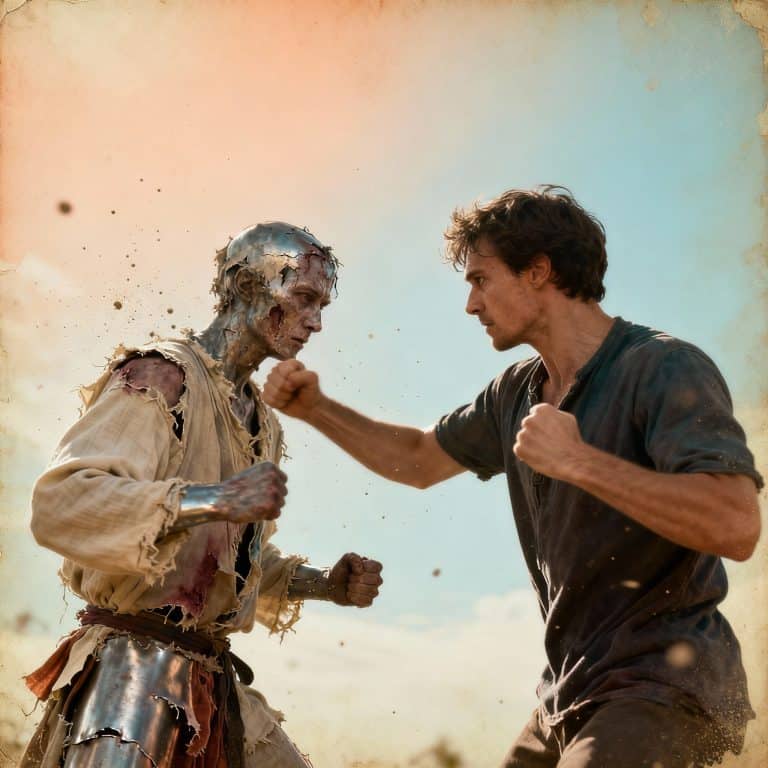
What Paul is not saying is that the battle is over. In fact the new creation is precisely where the battle begins. Before conversion, there is no war — sin wins without a fight. After conversion, there is a war, because something in you now resists what used to go uncontested.
That’s not a problem with your salvation. That’s the evidence of it.
The Question Serious Christians Eventually Ask
New believers often believe spiritual growth will be a steady climb. The sinful habits will fade. Temptation will weaken. Obedience will finally get the upper hand.
Sometimes that happens. Often it doesn’t — at least not the way people expect.
Many Christians discover that certain sins become more troubling after conversion, not less. Pride that seemed normal now becomes offensive. Selfishness that went unnoticed is suddenly obvious. Anger, anxiety, lust, envy — sins that barely registered before — now create real distress. The light of God’s holiness reveals more dirt than most people were prepared to find or willing to admit they were covered with.
This surprises people. It shouldn’t. The man who has never seen his house clearly has no idea how dirty it is. The moment the lights come on, he sees everything.
Romans 6 and Romans 7 Must Be Read Together
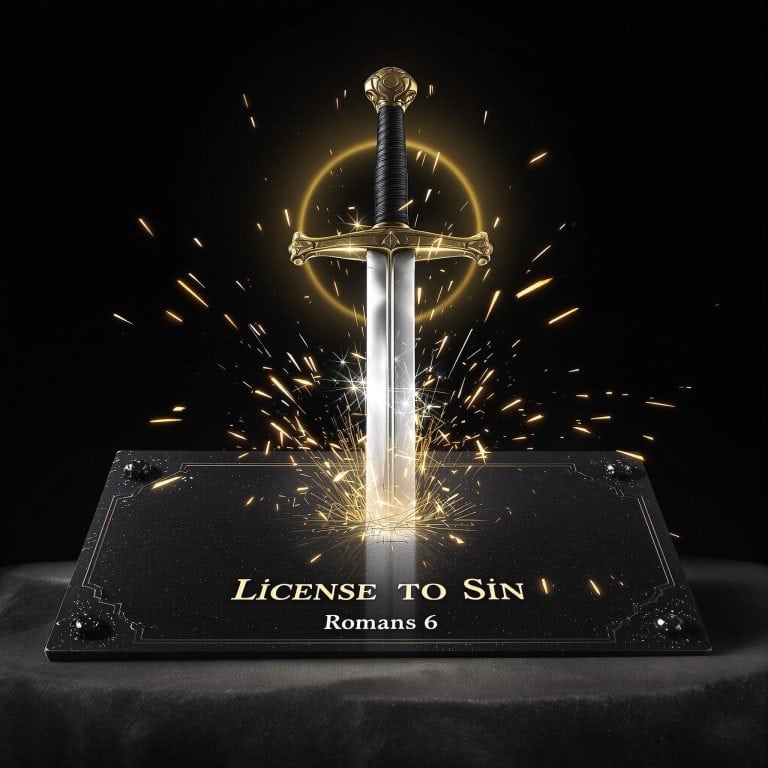
Romans 6 tells you that your old self was crucified with Christ — that you are dead to sin and alive to God. It is one of the most liberating passages in the New Testament.
Romans 7 describes a man who still feels a war raging inside him.
Paul writes — “For the good that I want, I do not do, but I practice the very evil that I do not want.” (Romans 7:19)
Christians have debated the details of Romans 7 for centuries — whether Paul is describing his pre-conversion experience or his present experience as a believer. But every serious Christian recognizes the struggle regardless of how they resolve that debate. We know what it is to want one thing and do another. We know what it is to hate a sin and still battle it. We know what it is to feel like our progress is slower than it should be.
Romans 6 tells you who you are in Christ. Romans 7 tells you what life often feels like while you are still living in a fallen body. Both are true at the same time. The tension between them is not a sign that something has gone wrong. It is the normal experience of a genuinely regenerate person who has not yet been glorified.
As my pastor says, “God doesn’t save the old man. He creates a new one!”
Why God Doesn’t Simply Remove Every Struggle?
This is the question I have wrestled with most.
Over the years I have watched some sins weaken significantly. Others seem to return with the same regularity they always had. At times I have wondered why God simply doesn’t remove them — he certainly has the power.
Paul asked three times for his thorn in the flesh to be removed. God said no. The answer he received was this — “My grace is sufficient for you, for power is perfected in weakness.” (2 Corinthians 12:9)
I’ve come to think that some struggles remain because they keep driving us back to Christ. If God removed every weakness, every temptation, every failure — how long would it take before we started trusting ourselves? That doesn’t make the battle less real. It makes it more purposeful than it looks from the inside.
The Difference Between Struggling and Surrendering
There is a distinction Christians sometimes miss. There is a difference between struggling with sin and surrendering to sin.
The man who has surrendered has made peace with it. He excuses it, defends it, protects it, refuses to fight it. The sin is no longer an enemy — it’s become part of the furniture.
The believer who struggles does something entirely different. He hates the sin. He confesses it. He fights it. He prays about it. He wishes it were gone. The resistance itself — the grief over failure, the returning to confession, the refusal to stop fighting — is not evidence of spiritual failure. It is often the clearest evidence of spiritual life.
Dead men don’t fight wars. The fact that you are fighting is the point.
What the Long Walk Teaches You
One of the surprises of the Christian life is that spiritual maturity doesn’t necessarily make you more impressed with yourself. For many believers it has the opposite effect.
The longer I walk with Christ, the less confident I am in my own strength. I am more aware of my weaknesses today than I was thirty years ago — not because I have become worse, but because I see more clearly.
The older saints in Scripture seem to understand this. Paul calls himself the chief of sinners — not early in his Christian life, but in 1 Timothy, toward the end of it. That is not false humility. That is a man who has spent decades in the presence of God’s holiness and knows exactly what he is without grace.
Perhaps that is part of what sanctification actually looks like. Not merely becoming stronger. Becoming more dependent.
The Hope That Holds
The Christian life is not about achieving sinless perfection in this life. It is about being conformed to the image of Christ — a process that is not finished here.
One day the struggle will end. One day faith will become sight. One day the old man will trouble us no more.
Until then, we continue fighting. We continue repenting. We continue looking to Christ rather than ourselves.
My confidence today is not that I have conquered every sinful habit. It is that Christ has not let go of me. And after more than thirty years of following him, I have learned that his grip is considerably stronger than mine.
FAQ
Does struggling with sin mean I am not saved?
Not necessarily. There is a difference between struggling with sin and surrendering to it. The believer who struggles hates the sin, confesses it, fights it, and wishes it were gone. That resistance is evidence of spiritual life, not spiritual failure. The person with no struggle at all — who has made peace with sin and stopped fighting — has more reason for concern than the one who keeps getting up after falling down.
What does “the old man” mean in the Bible?
The old man is Paul’s term for the person you were before conversion — the self that was ruled by sin, living for its own desires, with no submission to God. Romans 6 tells us the old man was crucified with Christ at salvation and became the new creation in Christ. That does not mean sinful desires instantly disappear. It means the old identity no longer has authority over you. You are no longer defined by it or enslaved to it — even when it keeps making noise.
Keep Reading
- Why Do Christians Keep Sinning?
- What Is Saving Faith According to the Bible?
- Real Faith vs Easy Believism

Walt Roderick is a Christian writer who cares more about biblical clarity than online applause. He writes to strengthen believers and confront spiritual drift.