What Must I Do to Be Saved? Faith, Repentance, Baptism, and Works
Ask five churches how a person gets saved and you may hear five different answers. One says believe, another says be baptized, another hands you a prayer, and an honest person is left wondering whether he’s staking eternity on the wrong one. Scripture records people asking the question outright, what must I do to be saved, and the answer God gives is far clearer than the confusion around it once you look at who asked, what they were told, and why.
What Must I Do to Be Saved? Believe in the Lord Jesus
The Bible’s answer fits in one sentence: “Believe in the Lord Jesus, and you will be saved” (Acts 16:31). To believe is to trust Christ alone—not your own record or anything you can do—to make you right with God.
Plenty of people agree that Jesus lived and the creeds are true; even the demons believe that much and shudder (James 2:19). Saving faith goes further. The Westminster Shorter Catechism calls it a saving grace by which “we receive and rest upon him alone for salvation, as he is offered to us in the gospel.” In plain terms, you put your whole weight on what Christ has done.
What are you saved from? The judgment your sin deserves (Romans 6:23). Christ bore that judgment for all who trust Him, so they are rescued from God’s judgment, brought to God (1 Peter 3:18), and born again, as Jesus told Nicodemus (John 3:3), into a new creation in Christ (2 Corinthians 5:17).
Why Did Paul Tell the Jailer to Believe Instead of Do?
Paul told the jailer to believe because salvation isn’t a task to perform. The jailer asked for a task, and Paul gave him a Person.
The Night the Prison Shook
Hours earlier, Silas and Paul had been beaten with rods and locked in stocks. At midnight they were praying and singing hymns when an earthquake shook the prison, threw open every door, and loosed every chain (Acts 16:25–26).
The jailer woke, saw the doors standing open, and drew his sword to kill himself, since he expected to pay with his own life, as the guards in Acts 12:19 did. Paul shouted that everyone was still there. The man rushed in, fell trembling before them, and asked, “Sirs, what must I do to be saved?” (16:30).
Paul’s answer turned him away from himself, and it wasn’t the end of the conversation. Paul and Silas “spoke the word of the Lord to him together with all who were in his household” (16:32). The jailer had to hear who Jesus is before he could trust Him. That same hour he washed their wounds, and he and his household were baptized (16:33).
Two Conversions in One City
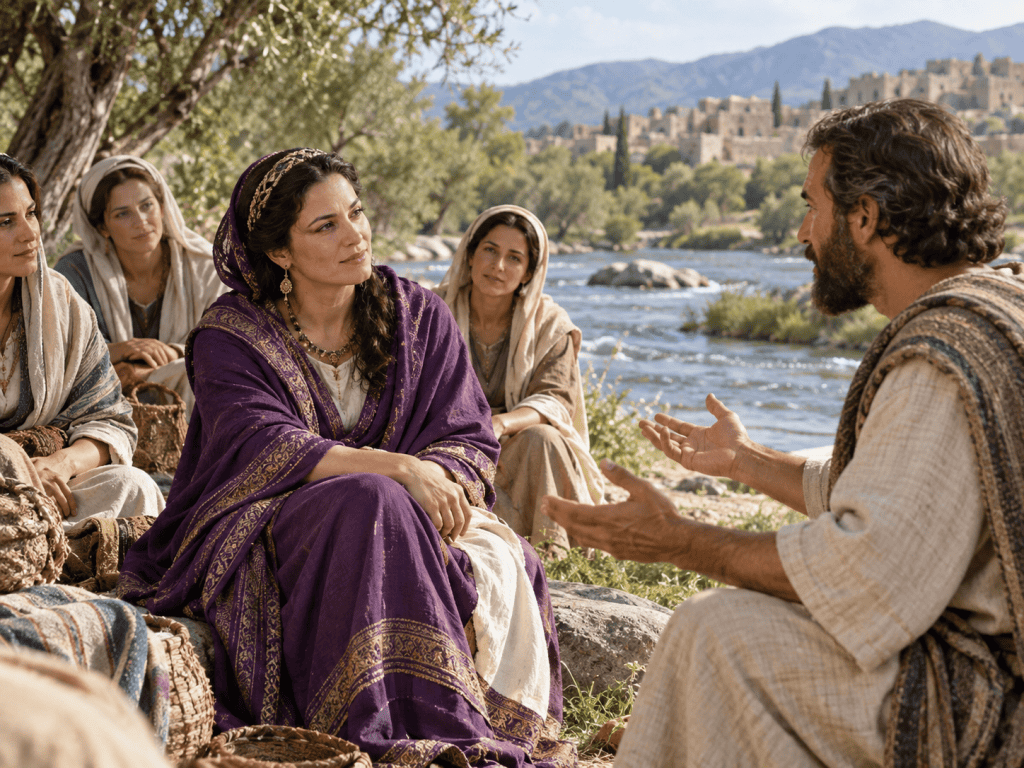
Earlier in the chapter, Luke records another conversion in Philippi. Lydia, a seller of purple fabric from Thyatira, was listening to Paul at a riverside place of prayer, and the Lord opened her heart to pay attention to what he said (16:13–14). One convert came through an earthquake, the other through a quiet talk by the river. Same city, same apostle, same Lord opening both hearts.
Why Does the Bible Seem to Give Different Answers?
Jesus answered people who thought they could earn eternal life by pointing them to the law, and He answered broken people with the gospel. The question shows up several times in Scripture, and the answers only seem to conflict until you notice who was asking.
| Who Asked | The Question | The Answer | Why |
| Crowds to John the Baptist (Luke 3:10) | “Then what should we do?” | Share with the needy, deal honestly (3:11–14) | John was preparing hearts for Christ |
| A scholar of the Law (Luke 10:25) | “What shall I do to inherit eternal life?” | “Do this and you will live” (10:28) | He was testing Jesus and wanted to justify himself (10:29) |
| The rich young ruler (Mark 10:17) | “What shall I do to inherit eternal life?” | Keep the commandments, sell everything, follow Me | It exposed the one thing he wouldn’t give up |
| A crowd in Capernaum (John 6:28) | “What should we do, so that we may work the works of God?” | “Believe in Him whom He has sent” (6:29) | They wanted a work to perform (6:26–28) |
| The crowd at Pentecost (Acts 2:37) | “Men, brothers, what should we do?” | “Repent, and each of you be baptized” (2:38) | They were pierced to the heart |
| The Philippian jailer (Acts 16:30) | “Sirs, what must I do to be saved?” | “Believe in the Lord Jesus” (16:31) | He was trembling and undone |
The Rich Young Ruler
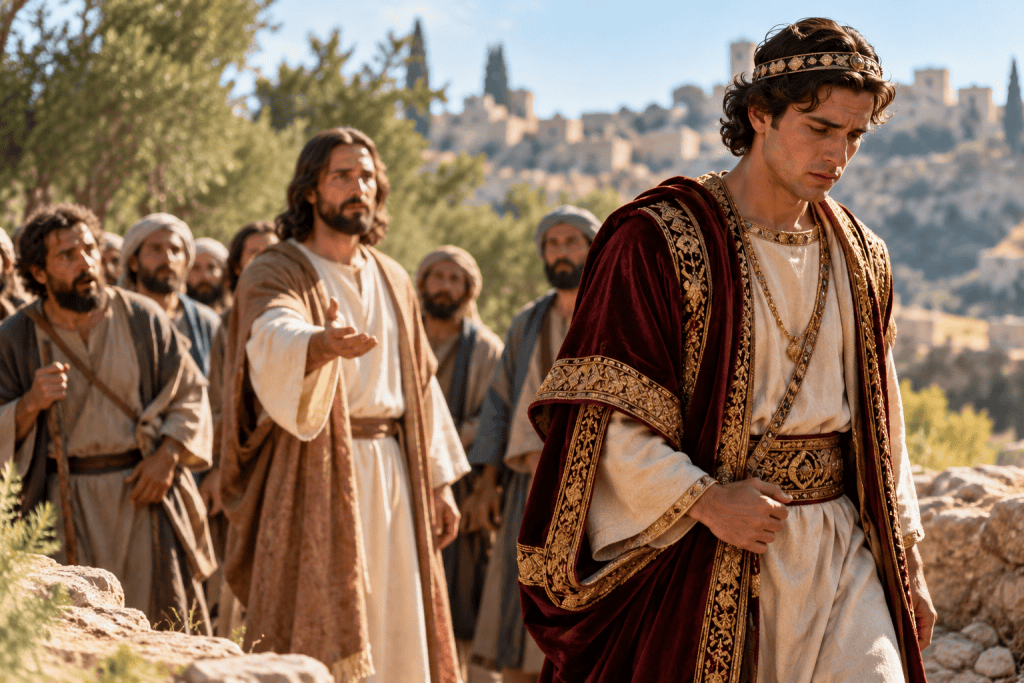
The rich young ruler is the clearest case (Mark 10:17–27; see Matthew 19:20; Luke 18:18). He asked what he had to do, Jesus sent him to the commandments, and the man claimed he had kept them all since his youth. Jesus loved him and told him to sell everything, give to the poor, and follow Him. He went away grieving, because he owned much property (Mark 10:22).
Jesus wasn’t laying out a works plan for heaven. The law was doing what the Westminster Larger Catechism says it does: exposing our inability, humbling us in our sin and misery, and showing us our need for Christ (Q95). In this man, it exposed someone who thought he was ready but would not surrender the thing he loved more than God. The disciples asked who, then, could be saved, and Jesus settled it: “With people it is impossible, but not with God; for all things are possible with God” (Mark 10:27).
Set that beside John 6:29, where the only “work” Jesus names is to believe in the One God sent. Whoever asks how to be saved, proud or broken, Jesus points him to Himself.
Is Repentance Required, or Just Belief?
Yes, repentance is required, and Jesus never treated it as a second payment added to faith. Jesus opened His preaching with “Repent and believe in the gospel” (Mark 1:15), and Paul summed up his ministry as “repentance toward God and faith in our Lord Jesus Christ” (Acts 20:21). They are one turning seen from two sides: you can’t turn toward Christ without turning away from the sin He died for.
So when the Pentecost crowd heard “Repent” and the jailer, on his face before them, heard “Believe,” neither answer left the other out. Biblical repentance is the change of mind that comes with real trust in Christ, not a matter of feeling sorry enough or cleaning yourself up before you come.
Do You Have to Be Baptized to Be Saved?
The New Testament commands baptism without ever making it the thing that saves. If you grew up in a church that teaches baptism is required for salvation, you know the verses, and they deserve a straight answer.
The Verses Behind the Baptism View
Peter told the crowd at Pentecost, “Repent, and each of you be baptized in the name of Jesus Christ for the forgiveness of your sins” (Acts 2:38). Ananias told Paul to “rise up and be baptized, and wash away your sins, calling on His name” (Acts 22:16). Peter later wrote that “baptism now saves you” (1 Peter 3:21), and in Acts, baptism followed conversion promptly, often the same day (Acts 2:41; 16:33).
What the Rest of Scripture Shows
Christians disagree about how “for the forgiveness of sins” connects to baptism in Acts 2:38, but the rest of Scripture keeps these verses from saying more than they say. The thief on the cross was promised paradise with no baptism at all (Luke 23:43). Some answer that he died under the old covenant. Cornelius did not: he and his household received the Holy Spirit while Peter was still preaching, before anyone reached the water, and Peter’s reason for baptizing them was that they had already received the Spirit just as the apostles had (Acts 10:44–47).
First Peter 3:21 also qualifies itself in the same breath: baptism saves “not the removal of dirt from the flesh, but an appeal of a good conscience to God—through the resurrection of Jesus Christ.” Read in context, the risen Christ does the saving, and baptism points to Him.
The Westminster Shorter Catechism (Q85–92) counts baptism among the outward means by which Christ gives us the benefits of redemption. It is a sign and seal of the gospel, a visible pledge of what Christ promises, rather than the thing that saves us. Christ saves; faith receives Him. If you have trusted Christ and haven’t been baptized, obey Him and be baptized, as believers in Acts did. Just don’t trust the water to do what only Christ does.

Is It Faith Alone or Faith and Works?
Faith alone saves, but saving faith is never alone. Paul writes, “For by grace you have been saved through faith, and this not of yourselves, it is the gift of God; not of works, so that no one may boast” (Ephesians 2:8–9). The very next verse says we were created in Christ Jesus “for good works.” Works come after salvation as its fruit, not before it as its price.
James writes that “a man is justified by works and not by faith alone” (James 2:24). He and Paul are answering different questions. Paul asks how a guilty sinner is declared right before God. James asks how anyone can tell a claim of faith is real, which is why he speaks of a man who says he has faith (2:14).
Both men use Abraham. Paul cites Genesis 15, where Abraham believed God and it was credited to him as righteousness (Romans 4:3). James turns to Genesis 22, years later, when offering Isaac showed that Abraham’s faith was alive. A belief that never reaches the life isn’t the faith Scripture calls saving.
If Salvation Is God’s Work, Can I Do Anything?
Yes. God commands all people everywhere to repent (Acts 17:30), and Christ calls every weary sinner to come to Him (Matthew 11:28).
Jesus also said no one comes to Him unless the Father draws him (John 6:44), and Lydia’s story shows God opening a heart before it opened to Him. If that has ever kept you up at night wondering whether you’re one of the chosen, listen to what Jesus said in the same chapter: “the one who comes to Me I will never cast out” (John 6:37). Coming is how you find out God was at work in you all along.
So what must I do to be saved? Stop looking for a task to perform and look to the One who finished it. Turn from your sin, trust Christ alone, and confess Him as Lord (Romans 10:9). God’s invitation through Isaiah still stands: “Turn to Me and be saved, all the ends of the earth” (Isaiah 45:22).
Common Questions About Being Saved
Do I need to say the sinner’s prayer to be saved?
No prayer has power in its wording. Scripture calls you to repent and believe, and praying to Christ is a natural way to express that trust, but the prayer itself isn’t what saves. I’ve talked with people who prayed that prayer a dozen times and still weren’t sure, because they were trusting the prayer instead of the Savior.
Does Acts 16:31 promise salvation to my whole household?
Not apart from their own faith. The same offer reached everyone in the jailer’s home, since Paul and Silas spoke the word to all of them (16:32), and readers differ on what the passage implies for baptizing children.
Can I lose my salvation?
Those whom God truly saves, He keeps (John 10:28–29; Philippians 1:6). That is the perseverance of the saints, and it is no license to live carelessly.
What must I do to be saved if I’m not sure I ever really believed?
Come to Christ now. You don’t need to pin down the date you first believed; you need to trust Him today, and the promise of John 6:37 is for you.
Keep Reading in This Series
- What Does It Mean to Be Saved?
- What Is Saving Faith According to the Bible?
- Is Jesus the Only Way to Heaven?
Still Have Questions? Let’s Talk
If you’re wrestling with any of this, or you’ve just trusted Christ and don’t know what comes next, I’d be glad to hear from you. Send me a note and I’ll answer personally or pray with you about your situation. Nobody should have to sort out eternal questions alone.
Blessings in Christ,
Wally

Walt Roderick is a Christian writer who cares more about biblical clarity than online applause. He writes to strengthen believers and confront spiritual drift.