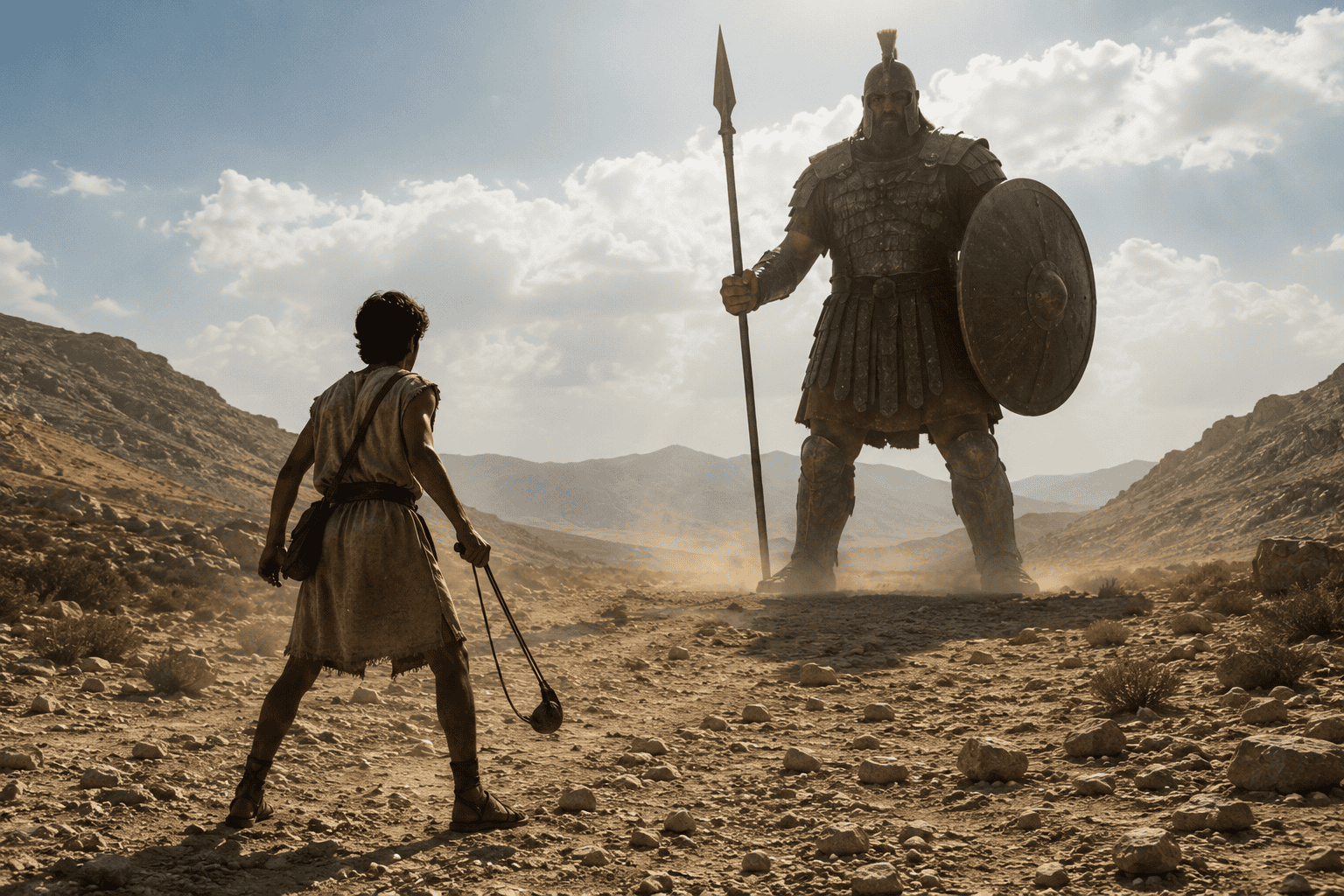
Was Goliath a Nephilim? Tracing the Giant Bloodline From Genesis to the Battlefield
Ask ten Christians whether Goliath was a Nephilim and you’ll get ten different answers, and most of them are guessing. That matters, because getting it wrong in either direction either dismisses real textual evidence tying Goliath to the giant clans of Canaan, or turns a careful genealogical argument into speculation the text never actually makes. Was Goliath a Nephilim? Scripture never calls him one by name — but the text draws a real line from the Nephilim of Genesis 6 to the giant clans of Canaan, and Goliath’s own family shows up at the far end of that line.
The conclusions below assume the supernatural interpretation of Genesis 6 — that the “sons of God” were fallen angels and the Nephilim their offspring — rather than the Sethite view, which reads the “sons of God” as the godly line of Seth intermarrying with Cain’s descendants. If you hold the Sethite view, you’ll likely disagree with several of the genealogical connections that follow. Where Scripture is explicit, this article will be explicit. Where it is not, the conclusions should be understood as interpretation rather than certainty.
How the Nephilim Bloodline Survived Into the Land of Canaan
The connection runs through two names most readers skip past: the Anakim and the Rephaim. When the twelve spies came back from scouting Canaan, they reported giants in the land — the sons of Anak, whom they associated with the Nephilim, the same word used back in Genesis 6. That’s the spies’ own report, not a divine pronouncement on the record, and conservative commentators have long noted that fear may have colored what the ten unbelieving spies claimed to see. Still, Numbers 13:33 is where that association enters the text, and it’s the starting point for everything that follows.
From there the line keeps moving. Deuteronomy names the Rephaim, the Zamzummim, and the Anakim as giant peoples scattered through Canaan and the lands east of the Jordan, and strongly associates them with one another — though the text stops short of stating outright that they’re all one bloodline. Og, king of Bashan, gets singled out as the last of the Rephaim, with a bed reportedly over thirteen feet long.
Og’s title raises the obvious question: if the Rephaim’s bloodline traces back to the same corruption the Flood was sent to wash out, how is anyone still counting survivors of it centuries later? Genesis 6 itself may hint at an answer. It describes the Nephilim as being on the earth “in those days, and also afterward” — language some read as pointing to a recurring pattern rather than a single population erased for good in Noah’s day. Interpreters disagree on what exactly produced that recurrence — renewed angelic incursions, survival through the family line, or simply a name later reattached to giant clans by association. Whichever reading is correct, Numbers and Deuteronomy both describe active giant clans centuries after the Flood, which is the plain textual fact underneath the debate.
Was Goliath a Nephilim? How That Bloodline Reaches Goliath in Gath
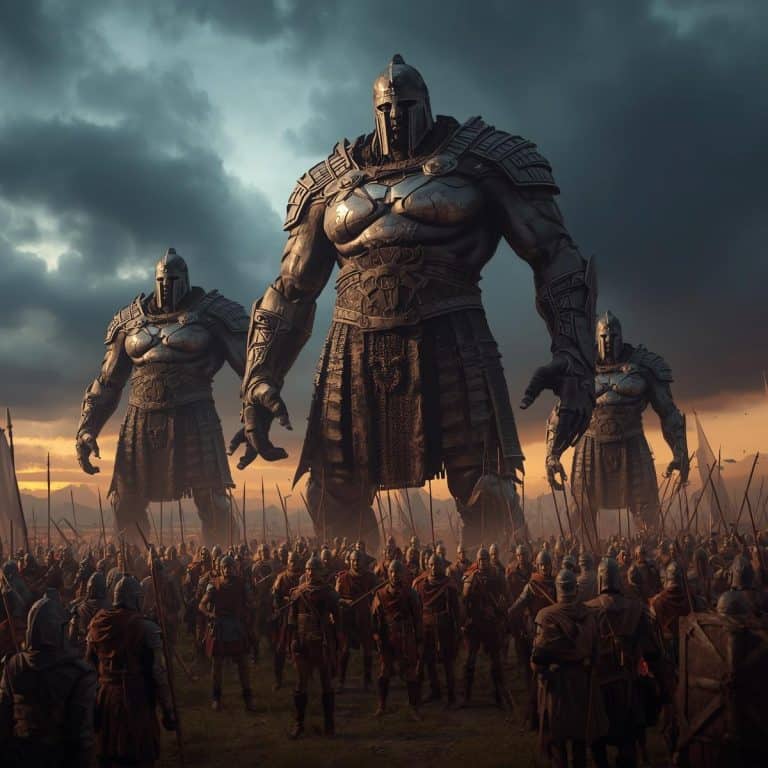
By the time Israel enters the land under Joshua, most of these clans have been driven out or destroyed — except for pockets that survive in Philistine territory, specifically Gaza, Gath, and Ashdod. Gath is where Goliath comes from.
Second Samuel adds one more piece: it describes Goliath’s own kin as descended from “the giant” — Rapha, in the Hebrew — in Gath. Many scholars connect that term to the Rephaim line, though not every scholar accepts the link as certain. One of Goliath’s kin has six fingers on each hand and six toes on each foot. Another carries a spear like a weaver’s beam, the same detail given for Goliath himself. Whatever the precise linguistic connection, the text clearly presents these men as belonging to the same giant family from Gath.
So when people ask whether Goliath was a Nephilim, the honest answer sits in the space between “no” and “not exactly.” He isn’t called a Nephilim. He’s described as descended from Rapha, a name many tie to the Rephaim, who Deuteronomy strongly associates with the Anakim, who the spies in Numbers connected to the Nephilim. The chain has real gaps in it — the label never travels the whole distance cleanly — but the thread holds together well enough to take seriously.
Does that mean Goliath had angelic DNA? Scripture never says so, and this article isn’t claiming more than the text claims. The argument here is genealogical, not biological — a documented family line, not a bloodline test. If the Anakim descended from the Nephilim, as the spies reported, and the Rephaim carry that same lineage forward, Goliath stands at the far end of it. Scripture stops there, and so does this article.
Readers who want the fuller picture of where the Nephilim come from in the first place — and what Genesis 6 actually says about the “sons of God” who fathered them — will find that laid out in more depth in Sons of God in the Bible.
How Tall Was Goliath, Really?
The height question comes up almost as often as the Nephilim question, and it turns out to be a real textual issue, not internet trivia. The standard Hebrew text behind most English Bibles puts Goliath at six cubits and a span — nine feet nine inches tall. But the Dead Sea Scrolls manuscript of Samuel, along with the earliest Greek translation of the Old Testament and the Jewish historian Josephus, all give a shorter figure: four cubits and a span, closer to six feet nine inches. Textual scholars who favor the shorter reading generally point to one thing: the Dead Sea Scrolls manuscript is our oldest surviving Hebrew copy of this passage, older than the Masoretic tradition by roughly a thousand years, and it agrees with the Septuagint and Josephus rather than with the later Hebrew text most English Bibles are translated from.
These aren’t rounding errors — they’re two different manuscript traditions preserving two different numbers, and serious textual scholars are divided on which one reflects the original reading. Six-nine is still exceptional by any standard, tall enough on its own to explain why an entire army froze at the sight of him. The taller reading would put him in the same range as Og of Bashan. Either way, the text isn’t exaggerating for effect. It’s preserving a real, if disputed, number, and the size differential is part of what makes David’s response so jarring — a boy walks toward a wall of a man carrying nothing but a sling.
Why the Giant Line Matters for Reading the Whole Bible
Here’s where the genealogy stops being trivia and starts being theology — for those who hold the supernatural reading of Genesis 6, at least. Genesis 3:15 promises that the seed of the woman will crush the head of the serpent, and that the serpent’s own seed will strike back first. Many who hold the supernatural interpretation see Genesis 6 as showing what a corrupted seed line looks like when it’s allowed to run — the Nephilim, born from the rebellion described in the “sons of God” account, growing into something so pervasive that it helps trigger the Flood. On that reading, the Anakim and Rephaim are what’s left of that same corruption generations later, still standing in the land God promised to Israel, still needing to be driven out.
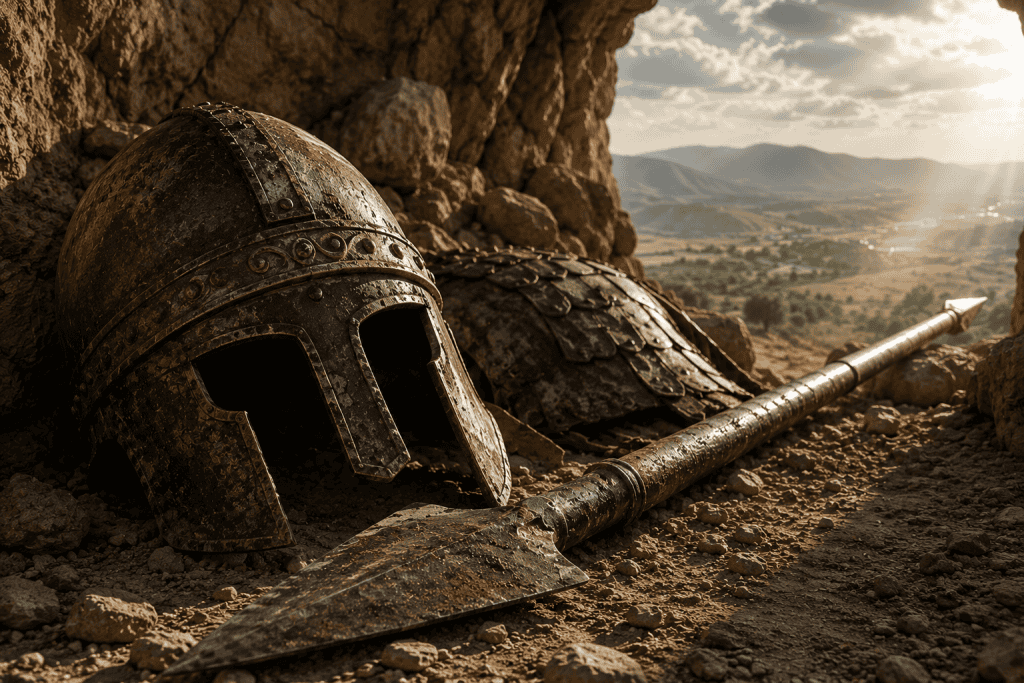
Goliath isn’t the last giant to fall in this story — 2 Samuel 21 records four more from Gath, including Goliath’s own brother, killed by David’s mighty men after Goliath’s own death. But his fight with David is the one Scripture lingers on, and many readers see it as more than a battlefield upset. David doesn’t just defeat a big man. He cuts off the giant’s head with the giant’s own sword, in a scene the text goes out of its way to describe in decapitation detail most modern readers rush past. Many see that as an echo of Genesis 3:15 in miniature — the seed of the woman crushing the serpent’s seed — and it’s part of why the New Testament keeps circling back to David as a type of Christ, though Scripture never states that connection outright.
That’s the piece competing explanations of Goliath’s size tend to leave out entirely. Scripture may never call Goliath a Nephilim outright, but it hands him something more specific — a family line that credible interpreters trace back through Rapha and the Anakim toward the giants of Genesis 6, even if not every step in that chain is stated as plainly as the last one. His death on that battlefield isn’t a footnote to the story. It’s one of the story’s most memorable moments, compressed into one afternoon in the Valley of Elah. Readers who want to see how this giant-clan thread connects to the larger divine council framework running through the Old Testament can pick that up in Divine Council in the Bible.
Keep Reading in This Series

Walt Roderick is a Christian writer who cares more about biblical clarity than online applause. He writes to strengthen believers and confront spiritual drift.